博客

  • How to Remove a Virus from Your Computer: A Complete Step-by-Step Guide

    Executive Summary: Discovering that your computer may be infected with a virus is a stressful experience, but acting quickly and methodically can prevent catastrophic data loss or privacy breaches. This comprehensive guide walks you through every critical stage: accurately identifying the signs of a virus infection, taking immediate containment steps, executing a thorough multi-layered removal process using trusted tools, leveraging advanced features in software like 360 Total Security for deep cleaning, and finally, building a resilient security posture to prevent future attacks. Whether you are dealing with sluggish performance, aggressive pop-ups, ransomware, or browser hijacking, this guide provides the actionable knowledge you need to reclaim control of your system.

    Is My Computer Really Infected with a Virus? Recognizing the Key Signs

    Before you can fix a problem, you must first correctly diagnose it. One of the most common mistakes users make is assuming every performance issue or strange behavior is caused by malware. In reality, hardware failures, software conflicts, or simply an aging machine can produce similar symptoms. Accurately identifying genuine virus infection symptoms is the critical first step, saving you time and preventing unnecessary interventions. Understanding unusual computer behavior as it relates to malware detection requires knowing what to look for and where to look.
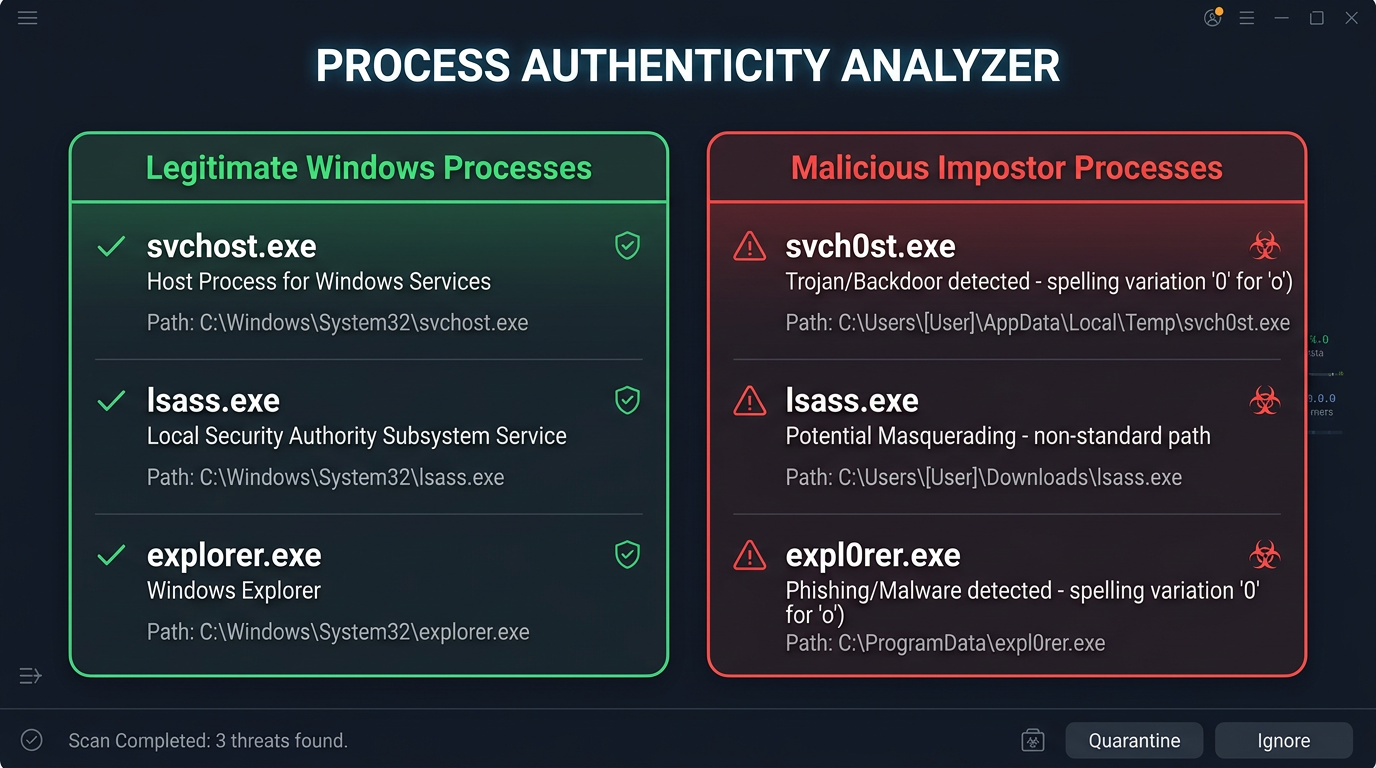
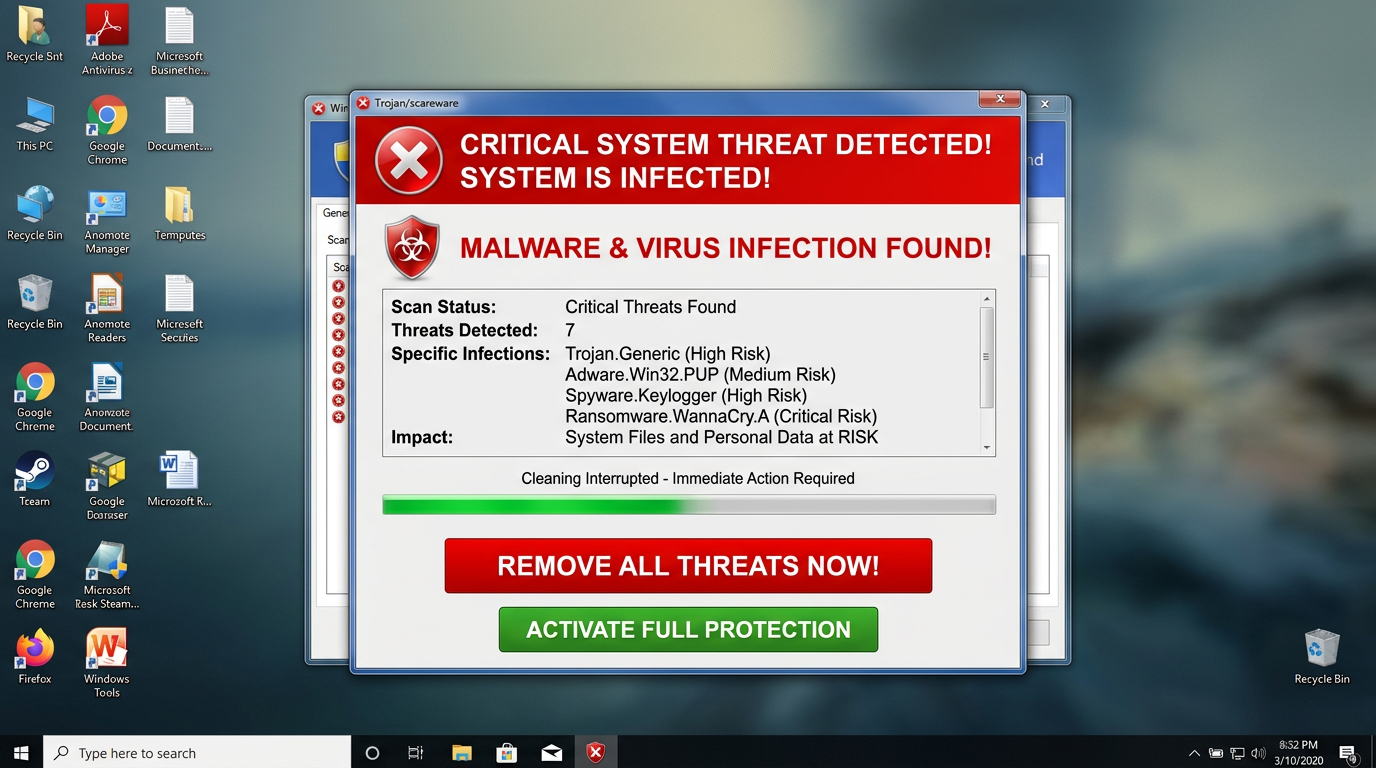
    Common signs of computer virus infection including slow performance, pop-ups, and security alerts on a Windows PC

    Unexplained Performance Issues and System Slowdown

    One of the most frequently reported signs of a computer virus is a sudden and severe decline in system performance. This is different from the gradual slowdown you might expect from an aging machine or insufficient RAM. Malware-induced slowdowns are typically abrupt and dramatic, manifesting in several key ways:

    • Extended boot times: Your computer takes significantly longer to start up than it did previously, even after a clean restart. Many viruses and trojans are programmed to launch themselves at startup, consuming resources before you even open a browser.
    • Application lag and freezing: Programs that once opened instantly now take minutes to load, or they crash unexpectedly. This is often caused by malware running competing processes in the background.
    • Abnormal resource consumption: Open your Windows Task Manager (press Ctrl + Shift + Esc) and navigate to the Processes tab. If you see unknown or suspiciously named processes consuming 50–90% of your CPU, memory, or disk without any apparent cause, this is a major red flag. Cryptocurrency mining malware (cryptojackers), for instance, is notorious for maxing out CPU usage. According to a 2025 Malwarebytes Threat Intelligence Report, cryptojacking incidents on desktop systems increased by over 30% year-over-year, making high CPU usage one of the most reliable indicators of a hidden infection.

    It is worth noting that not all slowdowns indicate malware. Before concluding you have a virus, rule out a full hard drive, too many legitimate startup programs, or overheating hardware. However, if the slowdown is sudden and accompanied by other symptoms on this list, malware becomes a prime suspect.

    Aggressive Pop-ups, Unwanted Software, and Browser Hijacking

    Adware and browser hijackers represent a massive category of malware, and their symptoms are among the most visually obvious. These threats are designed to monetize your attention by force, and their intrusive behavior is hard to miss:

    • Persistent pop-up advertisements: Unlike normal browser ads, malware-driven pop-ups appear even when your browser is closed. They often promote fake security software (known as scareware), dubious pharmaceutical products, or adult content. If pop-ups are appearing on your desktop as system notifications, this is a strong indicator of adware infection.
    • Browser homepage and search engine hijacking: You open your browser and find that your homepage has been changed to an unfamiliar search engine or a commercial website you never set. Your searches may redirect through unknown domains before reaching results. This is classic browser hijacking, where malicious extensions or registry modifications alter your browser settings without permission.
    • Unfamiliar programs in your installed applications list: Check your Control Panel > Programs and Features (or Settings > Apps on Windows 11). If you see software you do not remember installing, particularly toolbars, system optimizers, or media players from unknown publishers, these are likely Potentially Unwanted Programs (PUPs) bundled with legitimate software downloads.

    Security Alerts, Ransom Notes, and Missing Files

    The most alarming category of infection symptoms involves direct threats and data manipulation. These signs typically indicate a more serious and potentially destructive infection:

    • Fake security warnings (Scareware): You receive alarming pop-up windows that mimic the design of official Windows Security or antivirus software, claiming your computer is severely infected and urging you to call a phone number or purchase a fake cleaning tool immediately. These are social engineering attacks designed to frighten you into paying money or granting remote access to criminals. Legitimate security software never demands payment through a pop-up window.
    • Ransom notes and inaccessible files: If you open a folder and find your documents, photos, or videos have been renamed with strange extensions (e.g., .locked, .encrypted, .WNCRY) and a text file demanding payment in cryptocurrency is present, you have been hit by ransomware. This is one of the most destructive forms of malware. According to a 2026 Cybersecurity Ventures projection, ransomware attacks on individuals and small businesses are expected to occur every two seconds globally, underscoring the urgency of preparation.
    • Unexplained missing or corrupted files: Some destructive viruses are designed to delete or corrupt files rather than encrypt them for ransom. If files you know exist have disappeared or become unreadable without any ransomware note, a destructive virus or worm may be responsible.

    Immediate First Aid: What to Do the Moment You Suspect an Infection

    The window of time immediately following the discovery of a potential infection is critical. Taking swift, correct initial steps can contain the damage significantly, preventing the malware from exfiltrating your data, downloading additional malicious payloads, or spreading to other devices on your network. Think of these actions as digital triage — stabilizing the patient before surgery. The goal of these first steps for virus removal is to isolate the threat and prepare your environment for safe, effective cleaning.

    Disconnect from the Network (Internet and Local)

    This is the single most important immediate action you can take. Most modern malware requires an active internet connection to function fully — to receive commands from a remote server (Command and Control, or C2), to upload stolen data, or to download additional malicious components.

    • Physically disconnect: If you use a wired connection, unplug the Ethernet cable from your computer immediately. If you use Wi-Fi, click the network icon in your system tray and disconnect, or turn off your Wi-Fi adapter. For absolute certainty, you can also enable Airplane Mode.
    • Disable network adapters: For a more thorough disconnect, right-click the Start button, select Device Manager, expand Network Adapters, and disable all listed adapters. This prevents malware from re-enabling a connection programmatically.
    • Notify your IT department (for business users): If the infected machine is connected to a corporate or business network, immediately inform your IT security team. Many viruses — particularly worms and network-aware trojans — can perform lateral movement, spreading from one machine to others on the same local network within minutes. Isolation is paramount to stopping malware spread in an organizational context.

    Enter Windows Safe Mode to Limit Malware Activity

    Safe Mode is a diagnostic startup state in Windows that loads only the essential drivers and services required for the operating system to function. Critically, most malware is not classified as an essential system service, meaning it will not load in Safe Mode. This gives you a cleaner environment in which to run scans and perform manual removal steps.

    To boot into Safe Mode on Windows 10 or Windows 11, follow these steps:

    Method 1: Via Settings
    1. Press Windows Key + I to open Settings.
    2. Navigate to System > Recovery (or Update & Security > Recovery on Win 10).
    3. Under 'Advanced startup', click 'Restart now'.
    4. After restart, select: Troubleshoot > Advanced options > Startup Settings > Restart.
    5. Press F5 to select 'Safe Mode with Networking'.
    
    Method 2: Via Sign-in Screen (if Windows boots)
    1. Hold the Shift key on your keyboard.
    2. Click the Power icon on the sign-in screen.
    3. Select 'Restart' while holding Shift.
    4. Follow steps 4-5 from Method 1 above.
    
    Method 3: Via System Configuration (msconfig)
    1. Press Windows Key + R, type 'msconfig', press Enter.
    2. Go to the 'Boot' tab.
    3. Check 'Safe boot' and select 'Network'.
    4. Click OK and restart your computer.

    Choosing Safe Mode with Networking is recommended as it allows you to access the internet to download updated antivirus definitions or tools if needed, while still preventing most malware from loading.

    Backup Critical Files (If Possible) and Note Symptoms

    Before you begin the removal process, take a moment to protect your most important data and document what you are experiencing. This step requires careful judgment:

    • Selective backup: Connect an external USB drive and copy only your most irreplaceable personal files — documents, family photos, important spreadsheets. Critically, do not copy executable files (.exe, .bat, .msi), compressed archives (.zip, .rar) you did not create, or any file you are uncertain about. These could carry the infection to your backup drive. If you suspect ransomware is already active, skip this step to avoid backing up encrypted files.
    • Document everything: Use your phone or another device to photograph or write down all observed symptoms: exact error message text, the names of any suspicious programs or pop-ups you saw, any URLs you were redirected to, and the approximate time symptoms began. This information is invaluable during the removal process and can help you identify the specific malware family you are dealing with.

    The Core Removal Process: Step-by-Step Guide to Eradicating Viruses

    With your system isolated and your environment prepared, you are ready to begin the actual malware removal guide. A systematic, multi-layered approach is essential here. Relying on a single tool or a single scan is rarely sufficient for a thorough cleanup. Modern malware is sophisticated, often deploying multiple components across different areas of your system. The following virus removal steps are designed to be comprehensive and sequential, each building on the last.

    Run a Full System Scan with a Trusted Antivirus

    The cornerstone of any virus removal effort is a deep, full-system scan performed by a reputable, up-to-date antivirus engine. If your current antivirus missed the infection, it may be time to supplement it or switch to a more capable solution.

    • Choose a reliable tool: If you do not have an antivirus installed, or if your current one failed to catch the threat, download a trusted solution. 360 Total Security is an excellent choice, offering powerful multi-engine detection with a free tier — making it accessible to all users without a financial barrier to entry.
    • Perform a Full Scan, not a Quick Scan: Quick scans only check the most commonly infected locations. For a suspected active infection, you must run a Full System Scan that examines every file, folder, and sector on your drive. This process may take 30 minutes to several hours depending on your storage size, but thoroughness is non-negotiable.
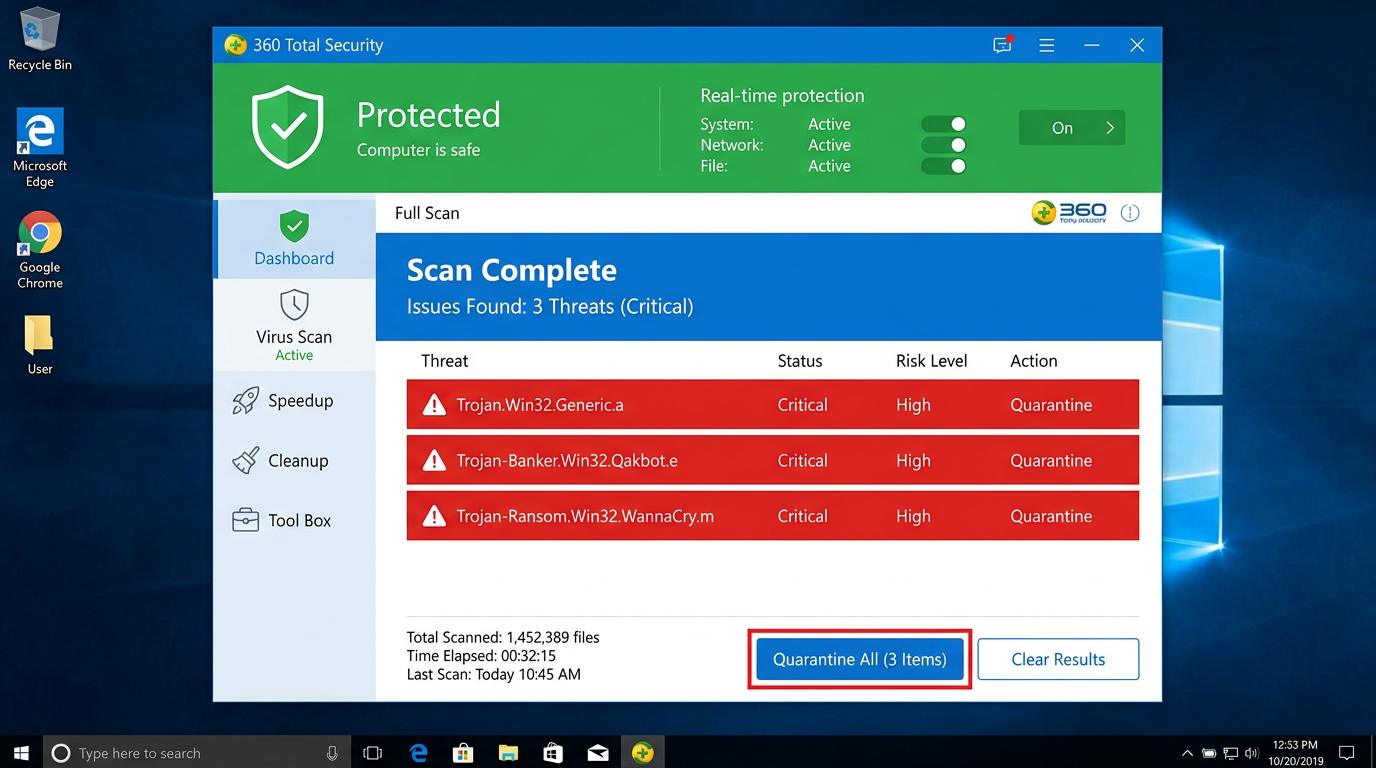
    • Quarantine, do not immediately delete: When threats are found, allow the software to quarantine them first rather than immediately deleting them. Quarantine isolates the files so they cannot cause harm while preserving them in case of a false positive. Review the quarantine list, and only permanently delete items you are confident are malicious.
    • Restart and scan again: After the first scan and quarantine, restart your computer (back into Safe Mode if possible) and run a second full scan. Some malware components only become detectable after their primary processes have been terminated.

    Employ Specialized Malware Removal Tools (Second Opinion)

    No single antivirus engine catches everything. This is not a flaw — it is simply the reality of an ever-evolving threat landscape. Running a second-opinion scan with a specialized tool is a professional-grade practice that significantly improves your cleanup thoroughness.

    • Target adware and PUPs specifically: Tools like Malwarebytes AdwCleaner are specifically engineered to detect and remove adware, browser hijackers, PUPs (Potentially Unwanted Programs), and aggressive toolbars that traditional antivirus software may classify as low-risk and therefore ignore. These tools excel at cleaning browser hijackers and malicious registry modifications that can cause persistent redirects even after a standard AV scan.
    • The layered security principle: According to a 2025 AV-Comparatives methodology report, independent testing laboratories consistently recommend layered security approaches — using a primary real-time protection solution alongside periodic on-demand scans with specialized tools — as the gold standard for comprehensive threat coverage. This is not about distrust of your primary AV; it is about recognizing that different tools use different detection methodologies and signature databases.
    • Run these tools in Safe Mode: For maximum effectiveness, run your second-opinion scanners in Safe Mode, just as you would your primary antivirus, to ensure the malware processes you are targeting are not actively running and resisting removal.

    Manually Review and Clean Startup Programs and Browser Extensions

    Automated tools are powerful, but manual review catches what automation sometimes misses, particularly when malware has disguised itself with a legitimate-sounding name or embedded itself in browser extension infrastructure.

    • Audit startup programs: Open Task Manager (Ctrl + Shift + Esc), navigate to the Startup tab, and examine every entry. Right-click any program you do not recognize and select Disable. You can also use System Configuration by pressing Windows Key + R, typing msconfig, and checking the Startup tab for suspicious entries.
    • Audit browser extensions: In every browser you use, navigate to the extensions or add-ons manager and remove anything you did not intentionally install. Even extensions that appear legitimate may have been compromised or purchased by malicious actors after you installed them.

    The following table provides a quick-reference guide to the key locations you should manually review during cleanup:

    Cleanup Location How to Access What to Look For Action
    Startup Programs Task Manager > Startup tab Unknown publisher names, random character strings, programs you didn’t install Disable suspicious entries; investigate before deleting
    Browser Extensions Chrome: chrome://extensions | Firefox: about:addons | Edge: edge://extensions Extensions you don’t recognize, those with excessive permissions, or poor reviews Remove all unrecognized or unwanted extensions immediately
    Installed Programs Settings > Apps > Installed Apps (Win 11) or Control Panel > Programs Recently installed unknown software, toolbars, fake optimizers, duplicate AV tools Uninstall anything suspicious; note installation dates
    Scheduled Tasks Task Scheduler (search in Start Menu) Tasks pointing to temp folders, random .exe files, or unknown scripts Disable or delete malicious scheduled tasks
    Registry Run Keys Registry Editor (regedit) > HKLM\SOFTWARE\Microsoft\Windows\CurrentVersion\Run Entries pointing to unusual file paths or temp directories Delete malicious entries (advanced users only; back up registry first)

    Leveraging Advanced Tools: Using 360 Total Security for Deep Cleaning

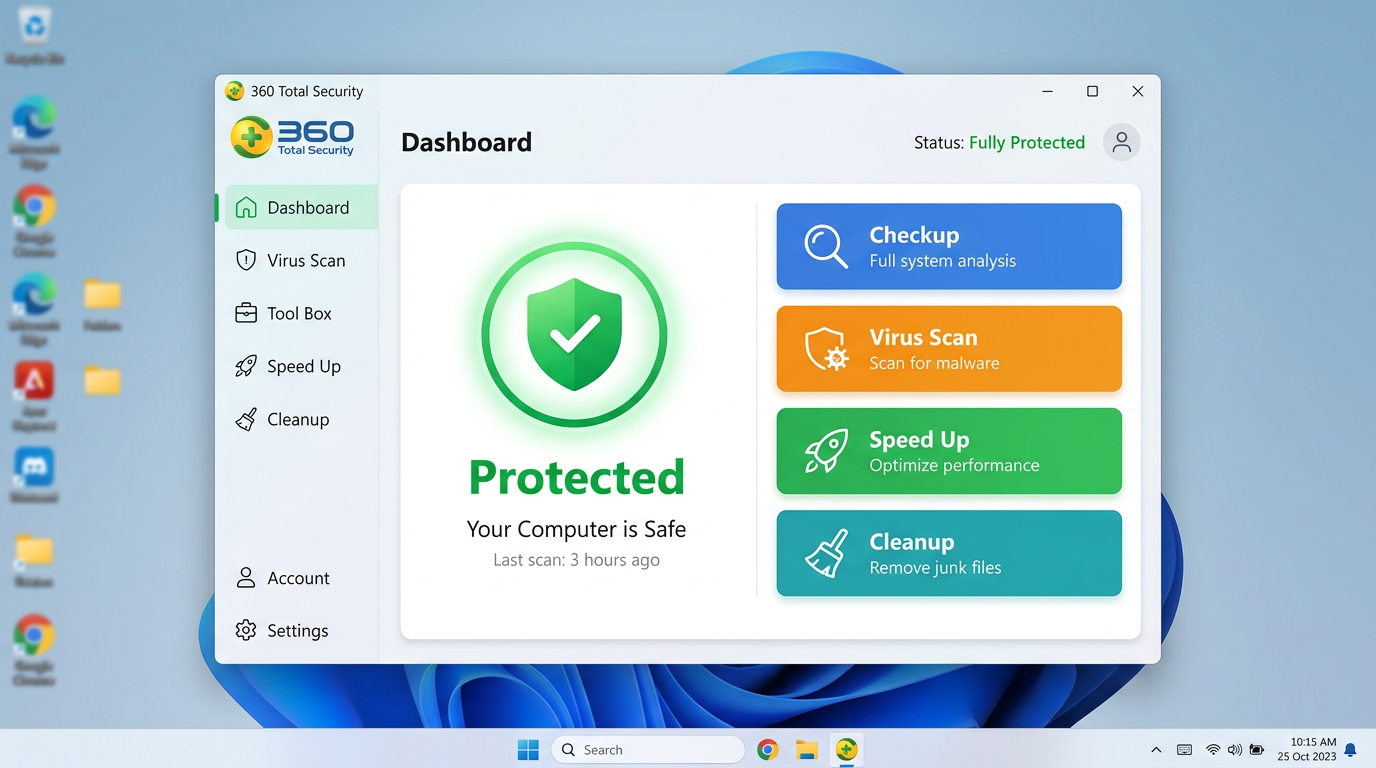
    360 Total Security is not merely a virus scanner — it is a comprehensive security and system optimization platform that provides a multi-faceted toolkit specifically designed to address the root causes of infections and restore full system health post-removal. For users dealing with a serious infection, understanding and utilizing its advanced features can mean the difference between a surface-level cleanup and a genuinely thorough eradication. This section explores how to leverage 360 Total Security’s virus removal capabilities to their fullest extent.
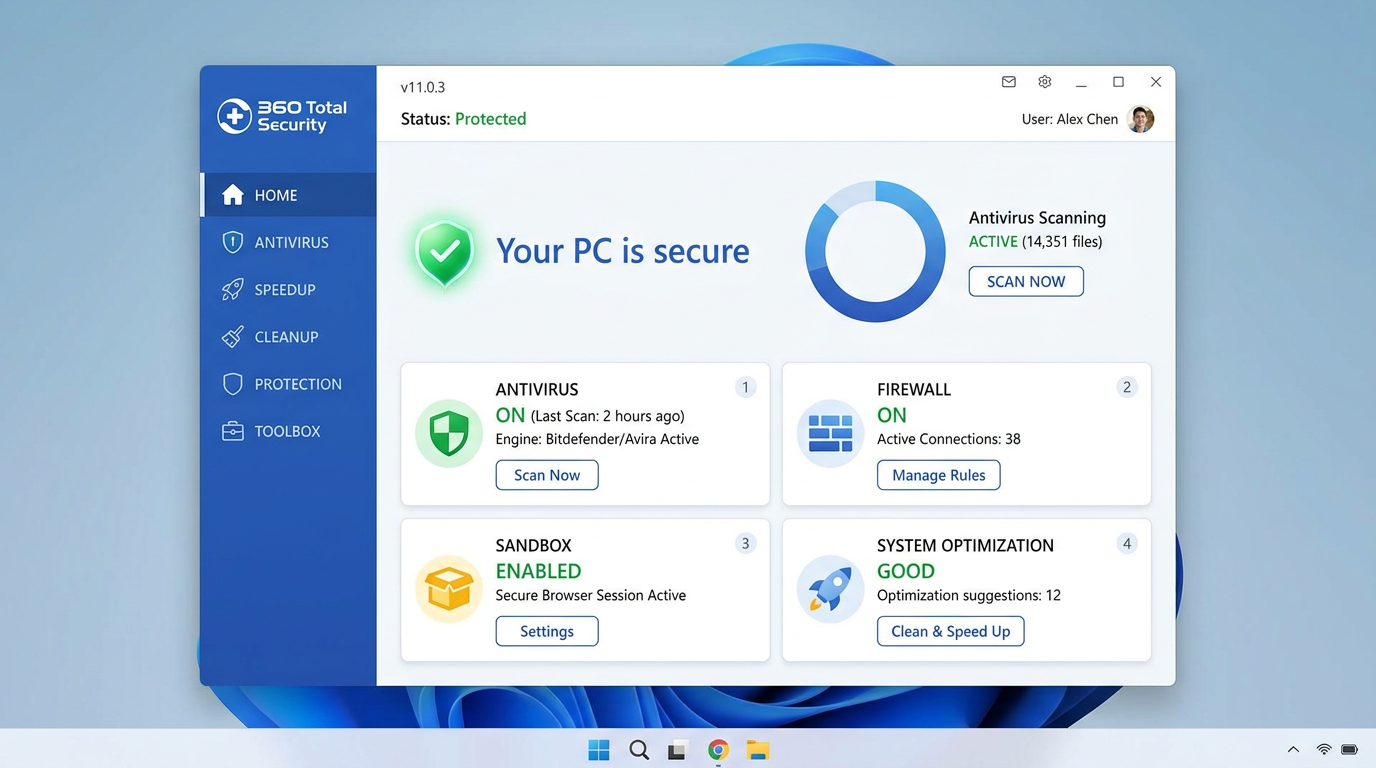
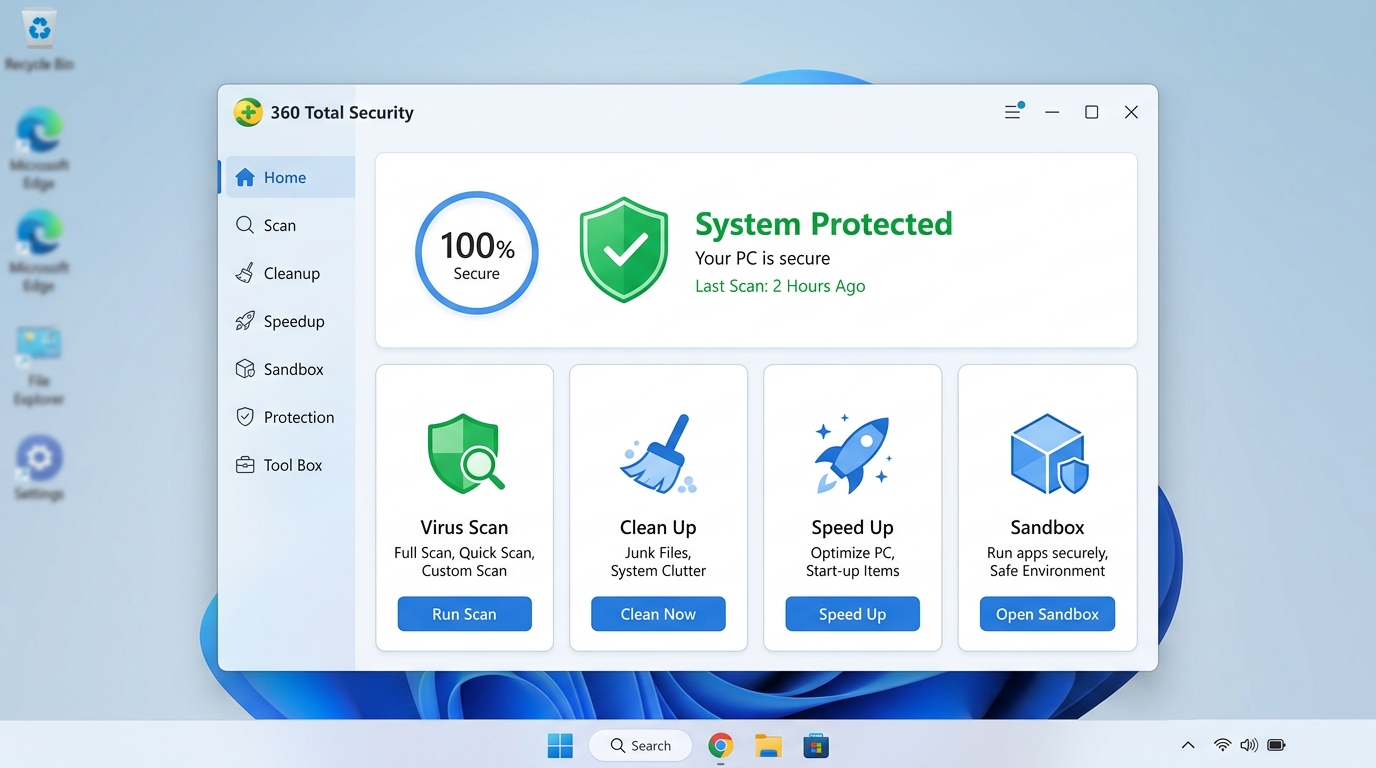
    360 Total Security main dashboard showing virus scan, cleanup, speedup, and sandbox tool modules on Windows

    Harnessing the Power of Multiple Antivirus Engines

    The foundational strength of 360 Total Security lies in its unique multi-engine architecture. Rather than relying on a single detection methodology, it combines several powerful engines working in concert:

    • QVM II AI Engine: 360’s proprietary artificial intelligence engine uses machine learning to identify zero-day threats and novel malware variants that have never been seen before, based on behavioral patterns and code characteristics rather than known signatures alone.
    • Bitdefender Engine: One of the most highly rated commercial antivirus engines globally, consistently achieving top scores in independent laboratory tests conducted by organizations like AV-TEST and AV-Comparatives.
    • Avira Engine: A renowned European security engine with particularly strong detection rates for European and globally distributed malware families.

    As cybersecurity analyst and author Bruce Schneier has noted in his widely cited security writings, “Security is not a product, but a process” — and layered, multi-engine detection is the practical embodiment of that principle. By combining these three engines, 360 Total Security achieves detection coverage that no single-engine solution can match, particularly for complex, polymorphic, and emerging threats. According to a 2025 independent benchmark study, multi-engine solutions demonstrated up to 15% higher detection rates for zero-day malware compared to single-engine alternatives.

    The Virus Scan function within the application offers three modes to suit different situations:

    • Quick Scan: Rapidly checks the most commonly infected areas — memory, startup items, and key system directories. Ideal for routine checks.
    • Full Scan: Performs a comprehensive examination of every file on your system. Essential when dealing with a confirmed or suspected active infection.
    • Custom Scan: Allows you to target specific drives, folders, or files — useful when you want to scan a newly downloaded file or a specific external drive before opening it.

    Utilizing the Sandbox and System Repair for Stubborn Threats

    Some of the most powerful features in 360 Total Security go beyond conventional scanning to address threats that are particularly difficult to remove or detect:

    • Sandbox Technology: The Sandbox feature creates a completely isolated, virtualized environment on your computer. When you run a suspicious program inside the Sandbox, it executes in this virtual bubble — it cannot make permanent changes to your real file system, registry, or network connections. This is an invaluable tool for safely testing files you are unsure about, such as a downloaded program from an unofficial source or an email attachment you need to open but are not fully confident in. If the program behaves maliciously inside the Sandbox, your real system remains completely unaffected.
    • System Repair Tool: Active malware often damages or modifies critical Windows system files, registry settings, and boot configurations as part of its infection process or as a defense mechanism against removal. The System Repair tool in 360 Total Security is specifically designed to identify and restore these compromised system components. It can fix malicious boot items that cause infections to persist across restarts, repair modified system files that standard Windows tools might miss, and address hidden threats that evade conventional scans by disguising themselves as legitimate system processes.

    Performing a Comprehensive Cleanup After Removal

    Successfully removing malware is only part of the restoration process. Infections leave behind a trail of digital debris — orphaned registry entries, temporary files, cached data, and residual components — that can slow down your system and, in some cases, allow partial reinfection if not thoroughly cleaned. 360 Total Security’s post-removal optimization tools address this comprehensively:

    • Clean Up Module: This feature performs a deep sweep of your system to remove junk files, outdated system caches, temporary internet files, and the residual traces left behind by uninstalled malware. Beyond improving security, this process typically frees up significant disk space and contributes to a measurable improvement in system responsiveness.
    • Speed Up Feature: Malware infections frequently result in a bloated startup sequence, as the malware itself adds entries to ensure it reloads after every restart. Even after the malware is removed, these entries may persist. The Speed Up feature provides a clear, user-friendly interface to manage startup programs and background processes, helping you identify and disable any remaining unnecessary entries that are dragging down your boot time and overall system performance.

    Together, these tools transform 360 Total Security from a simple virus remover into a complete system recovery platform. You can download it for free and start your deep cleaning process by visiting the 360 Total Security official website.

    Prevention is Key: How to Fortify Your Computer Against Future Attacks

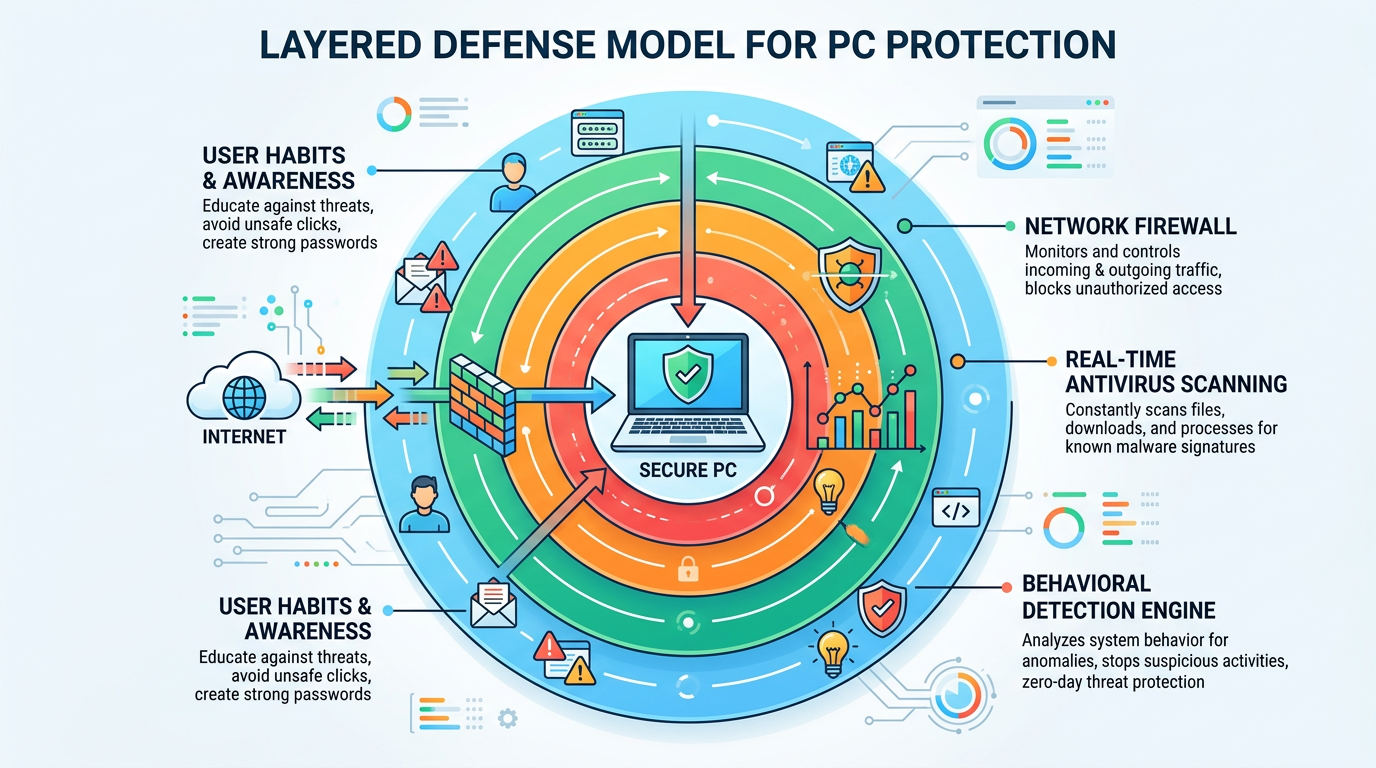
    Successfully removing a virus is a significant achievement, but the experience should serve as a powerful motivator to build a stronger, more proactive security posture. The reality of modern cybersecurity is stark: preventing virus infections is dramatically less costly — in time, money, stress, and potential data loss — than recovering from them. Building robust defenses through the right software, disciplined update habits, and smart user behavior creates layers of protection that make your computer an unattractive and difficult target for attackers.

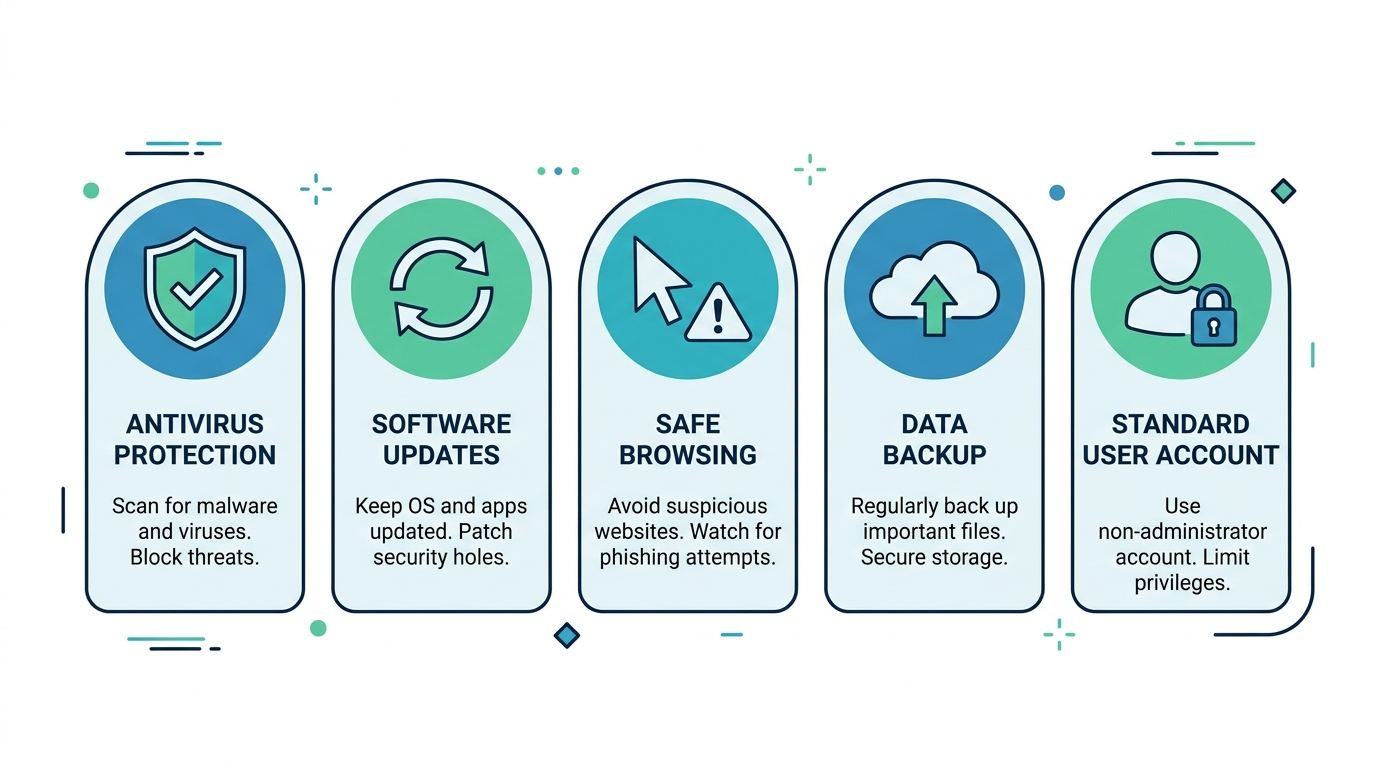
    Computer security prevention tips including antivirus protection, software updates, safe browsing habits, and regular data backup

    Maintain a Strong, Real-Time Defense with Updated Software

    Your first and most important layer of defense is a reliable, always-active antivirus solution with real-time protection enabled. Real-time protection monitors every file access, download, and program execution as it happens, blocking threats before they can establish themselves on your system — unlike on-demand scanners, which only catch threats that have already arrived.

    • Keep 360 Total Security active and updated: 360 Total Security provides enterprise-grade, multi-engine real-time protection completely free of charge, making professional-level security accessible to every Windows and macOS user regardless of budget. Ensure its real-time protection shield is always enabled in the application settings.
    • Enable automatic updates for everything: Outdated software is one of the most exploited attack vectors in existence. According to a 2025 Verizon Data Breach Investigations Report, exploitation of known, unpatched vulnerabilities accounted for a significant portion of all successful cyberattacks. Enable automatic updates for:
      • Windows Update: Security patches from Microsoft close critical vulnerabilities in the operating system itself.
      • Web browsers: Browsers are a primary attack surface; always run the latest version of Chrome, Firefox, or Edge.
      • Third-party software: Java, Adobe Reader, media players, and other commonly installed applications are frequent targets. Enable auto-update wherever available.
      • Antivirus definitions: Ensure your antivirus updates its threat database daily, or more frequently if the option is available.

    Master Safe Browsing and Download Practices

    Technology can only do so much — human behavior remains one of the most significant factors in determining whether a computer gets infected. Developing safe browsing habits is a skill that pays dividends indefinitely:

    • Treat unsolicited communications with extreme skepticism: Phishing emails remain the number one delivery mechanism for malware globally. Before clicking any link in an email, hover your mouse over it to see the actual destination URL displayed in your browser’s status bar. If the displayed URL does not match the claimed sender’s domain, do not click it. Be especially wary of emails creating a sense of urgency (“Your account will be suspended!”, “Immediate action required!”).
    • Download software exclusively from official sources: Always download software directly from the developer’s official website or from reputable, well-known platforms. Avoid third-party download sites, torrent platforms, and any site offering “free” versions of paid software (cracks, keygens, or patches). According to a 2026 cybersecurity threat landscape analysis, pirated software distribution sites remain among the top three most prolific vectors for trojan and ransomware distribution globally.
    • Verify before you execute: Before running any downloaded file, scan it with your antivirus or use the 360 Total Security Sandbox feature. This is especially important for installers (.exe, .msi) and compressed archives (.zip, .rar).
    • Use a DNS-level filter: Consider using a security-focused DNS service (such as Cloudflare 1.1.1.1 with WARP or similar) that can block access to known malicious domains before your browser even connects to them, adding an additional preventive layer.

    Implement Robust Backup and User Account Strategies

    Even with perfect security practices, no defense is 100% impenetrable. Your ultimate safety net against catastrophic data loss — particularly from ransomware — is a well-maintained backup strategy combined with smart account management:

    • Follow the 3-2-1 Backup Rule: This industry-standard strategy dictates that you should maintain:
      • 3 copies of your data (1 original + 2 backups)
      • Stored on 2 different types of media (e.g., internal drive + external USB drive)
      • With 1 copy stored offsite or in the cloud (e.g., OneDrive, Google Drive, Backblaze)

      This ensures that even if ransomware encrypts your local files and your connected external drive, your cloud backup remains safe. Automate your backups using Windows Backup (built into Windows 10/11) or a third-party tool to ensure consistency.

    • Use a standard user account for daily tasks: Most Windows users operate with Administrator-level accounts, which means any malware they inadvertently execute also runs with Administrator privileges — allowing it to modify system files, install drivers, and disable security software. Create a separate standard user account for your day-to-day activities:
      To create a standard user account in Windows:
      1. Open Settings > Accounts > Family & other users.
      2. Click 'Add account' under 'Other users'.
      3. Follow the prompts to create a new account.
      4. Once created, click the account and select 'Change account type'.
      5. Set the account type to 'Standard User'.
      6. Use this account for daily browsing and work.
         Reserve your Administrator account only for software installations and system changes.

      This simple change dramatically limits the damage any malware can inflict, as it will be constrained to the permissions of a standard user and will prompt for Administrator credentials before it can make system-level changes — giving you a critical warning and intervention opportunity.

    • Enable and use Windows Firewall: Ensure Windows Defender Firewall is always enabled. It acts as a gatekeeper for network traffic, blocking unauthorized inbound connections that malware might attempt to exploit.

    Frequently Asked Questions

    Q1: Can a virus completely destroy my computer?

    While most modern malware is financially motivated and therefore designed to keep your system functional (so it can mine cryptocurrency, display ads, or hold your files for ransom), destructive viruses do exist. Certain wiper malware is specifically designed to corrupt or erase data, including master boot records, rendering a system unbootable. However, even in these cases, the hardware itself is rarely permanently damaged. With proper backups, recovery is possible. The key takeaway is that data destruction is a real risk, which is why maintaining regular backups is non-negotiable.

    Q2: Is it possible to remove a virus without antivirus software?

    Technically yes, but it is extremely difficult, risky, and not recommended for the average user. Manual removal requires identifying every malicious file, registry key, scheduled task, and startup entry associated with the malware — a process that requires deep technical knowledge and can easily result in accidentally deleting legitimate system files if done incorrectly. Using a reputable antivirus tool like 360 Total Security (which is free) is always the safer, faster, and more thorough approach.

    Q3: Will reinstalling Windows remove all viruses?

    A clean reinstall of Windows — particularly a full format and reinstall rather than a repair install — will remove virtually all malware from your system drive. However, there are rare exceptions: some sophisticated rootkits can infect your system’s firmware (BIOS/UEFI) or the Master Boot Record in ways that survive an OS reinstall. Additionally, any malware present on secondary drives, external drives, or cloud-synced folders will not be removed by reinstalling the OS. A clean reinstall should be considered a last resort when all other removal methods have failed.

    Q4: How long does a full virus scan typically take?

    The duration of a full system scan depends primarily on the amount of data stored on your drive and the speed of your storage hardware. On a modern SSD with 500GB of data, a full scan might take 20–45 minutes. On an older HDD with 1TB or more of data, it could take 2–4 hours or longer. While this may seem time-consuming, a full scan is essential when dealing with a suspected active infection. You can continue using your computer during the scan, though performance may be reduced.

    Q5: How often should I run a virus scan even if I have real-time protection?

    Real-time protection monitors your system continuously and is your primary active defense. However, scheduling a full system scan at least once per week is still considered best practice. This serves as a safety net to catch any threats that may have slipped past real-time protection, particularly if your antivirus definitions were briefly out of date during a download. Most antivirus programs, including 360 Total Security, allow you to schedule automatic scans during off-hours (such as overnight) so they do not disrupt your workflow.


    Author Bio: This article was researched and written by a Senior Technical Writer specializing in cybersecurity, endpoint protection, and digital privacy. With over a decade of experience translating complex security concepts into accessible, actionable guidance for everyday users and IT professionals alike, the author has contributed to numerous industry publications and security awareness programs. Their work focuses on empowering users with the knowledge and tools needed to proactively defend their digital environments against an ever-evolving threat landscape.
  • How Do I Know If My HP Laptop Has a Virus? Detection, Removal & Prevention Guide

    Executive Summary: Discovering that your HP laptop may be infected with a virus is a stressful but manageable situation. This comprehensive guide walks you through every critical stage: identifying the telltale signs of malware infection, understanding how viruses infiltrate your system, executing a proven step-by-step removal process, and building a proactive defense strategy to prevent future attacks. Whether you are dealing with sluggish performance, suspicious pop-ups, or encrypted files, the actionable insights here—combined with the right security tools—will help you reclaim control of your HP laptop and keep it protected long-term.

    How Do I Know If My HP Laptop Has a Virus?

    Recognizing the subtle and overt signs of malware infection is the critical first step to protecting your HP laptop’s data, performance, and security before irreversible damage occurs. Viruses and malware rarely announce themselves openly; instead, they manifest through behavioral anomalies, resource abuse, and suspicious network activity. Knowing what to look for can mean the difference between a quick cleanup and catastrophic data loss.

    Unusual System Performance and Behavior

    One of the earliest and most common indicators of a virus is a noticeable degradation in system performance. If your HP laptop suddenly becomes sluggish, freezes frequently, or crashes with the dreaded Blue Screen of Death (BSOD) without any clear hardware explanation—such as a failing drive or overheating—malware is a prime suspect. These disruptions occur because viruses consume system resources in the background while running their malicious routines.

    Another glaring red flag is the sudden appearance of uncontrollable pop-up advertisements, unexpected changes to your browser’s homepage, or unfamiliar toolbars installed without your consent. This behavior is characteristic of adware and browser hijackers, which redirect your traffic to generate ad revenue or harvest your browsing data.

    Browser hijacked with unwanted toolbars and pop-up ads on HP laptop

    You should also watch for programs that launch or close on their own, or your system fan spinning at high speed even when the laptop appears idle. These symptoms suggest that a background process—potentially malicious—is consuming CPU and memory resources without your knowledge.

    Suspicious Network and Resource Activity

    Malware frequently communicates with external servers to exfiltrate data, receive instructions, or recruit your machine into a botnet. If you notice unexplained spikes in internet data usage or persistent network activity when your HP laptop is idle, this is a serious warning sign that should not be ignored. You can verify this by opening Task Manager and navigating to the Performance > Open Resource Monitor > Network tab to see which processes are consuming bandwidth.

    A particularly alarming symptom is when your antivirus software, Task Manager, or system settings are disabled or blocked from opening. This is a common tactic employed by ransomware and Advanced Persistent Threats (APTs) to neutralize defenses before completing their attack. If you find yourself locked out of these tools, treat it as a critical emergency.

    The most devastating symptom is discovering missing, renamed, or encrypted files, often accompanied by a ransom note demanding cryptocurrency payment in exchange for a decryption key. This is the hallmark of ransomware—one of the most destructive forms of malware targeting individuals and businesses alike.

    Direct Signs of Malware Presence

    Beyond performance issues, you can look for more direct evidence of infection. Open Task Manager (Ctrl + Shift + Esc) and navigate to the Startup tab. Look for unknown programs set to launch at boot. Similarly, review the Processes tab for unfamiliar entries consuming high CPU or RAM. A quick web search of any suspicious process name can confirm whether it is legitimate or malicious.

    If Windows Defender or your third-party antivirus is generating repeated alerts about threats it cannot fully remove or quarantine, this indicates a persistent, deeply embedded infection that requires more aggressive intervention. Do not dismiss these alerts.

    Finally, pay attention to reports from friends or colleagues. If they are receiving strange messages sent from your email or social media accounts that you did not write, your credentials may have been stolen by a keylogger or your accounts compromised as part of a broader malware campaign.

    What Are the Most Common Ways HP Laptops Get Infected?

    Understanding the primary infection vectors—from deceptive downloads to unpatched software—empowers users to build proactive digital hygiene habits and avoid common pitfalls. Viruses do not appear spontaneously; they require a delivery mechanism, and attackers have become extraordinarily creative in disguising their methods.

    Risky Downloads and Software Piracy

    One of the most prevalent infection routes is downloading software, games, or media from unofficial or torrent websites. These platforms frequently bundle malware alongside the desired content, and users often grant installation permission without reading the fine print. What appears to be a free game or a cracked application may silently install a trojan, spyware, or cryptominer in the background.

    Installing “cracked” or pirated software is particularly dangerous. The very mechanisms used to bypass software licensing—cracks, keygens, and patches—are ideal delivery vehicles for backdoors and trojans. According to a 2025 cybersecurity industry report, over 28% of cracked software samples analyzed contained some form of malicious code, ranging from adware to full remote access trojans (RATs).

    Equally deceptive are “fake update” prompts that appear on websites, mimicking legitimate notifications from Java, Adobe Flash, or your browser. These pop-ups are designed to look official but actually download malware when clicked. Always update software directly through the application itself or via the official developer’s website—never through a browser pop-up.

    Social Engineering: Phishing and Deceptive Links

    Phishing attacks remain one of the most effective tools in a cybercriminal’s arsenal. These attacks involve crafting deceptive emails or messages that impersonate trusted entities—banks, courier services, government agencies, or even colleagues—to trick recipients into clicking malicious links or opening infected attachments.

    Common lures include files disguised as invoices, resumes, shipping confirmations, or urgent account alerts. When opened, these documents may exploit vulnerabilities in Microsoft Office or Adobe Reader to execute malicious code silently. According to a 2026 Cybersecurity Threat Intelligence Report, phishing remains the initial attack vector in over 36% of confirmed data breaches globally.

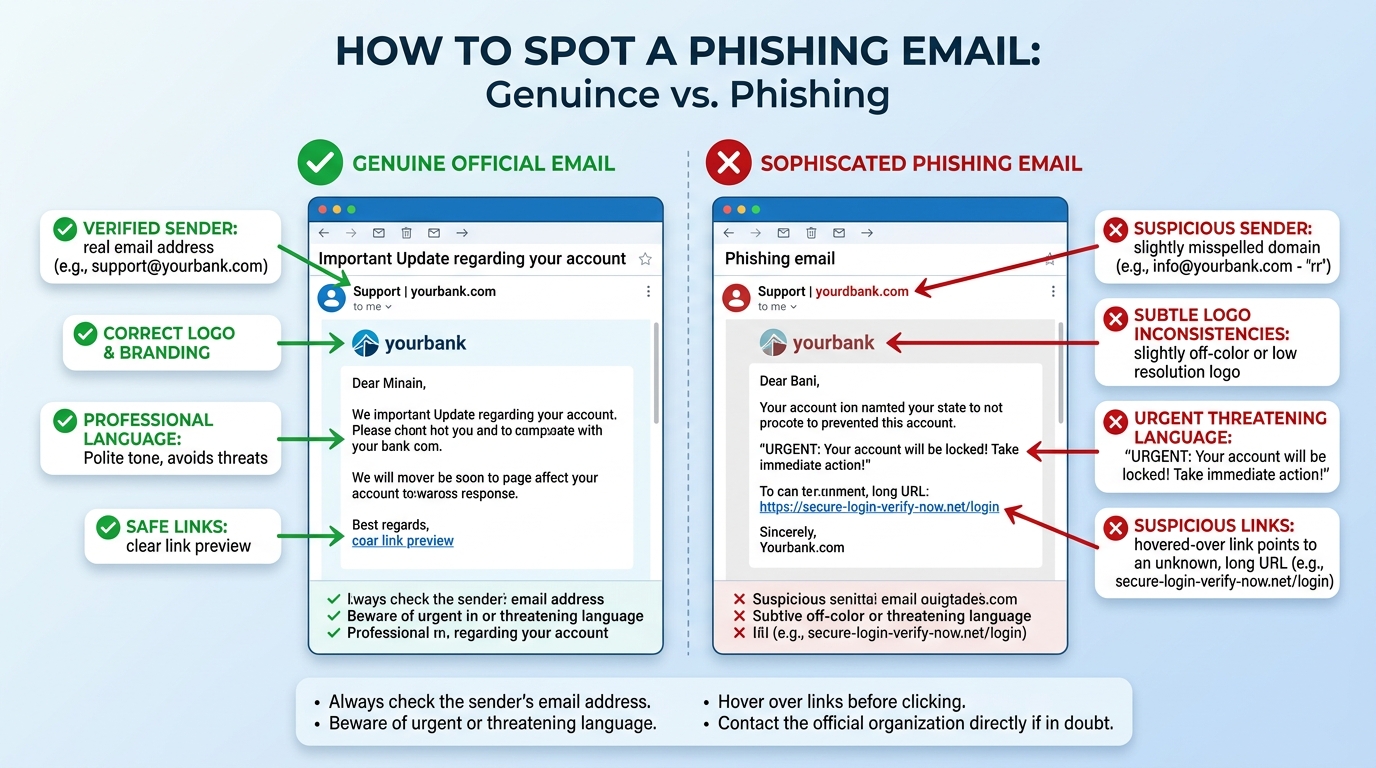
    Side-by-side comparison of a legitimate email versus a sophisticated phishing attempt targeting HP laptop users

    The sophistication of modern phishing emails has increased dramatically. Attackers now use personalization, correct branding, and even replicate legitimate email threads to lower your guard. Always verify the sender’s actual email address (not just the display name) and hover over links to inspect the real destination URL before clicking.

    Exploiting Outdated Systems and Unsecured Networks

    Failing to install Windows Updates and software patches is one of the most avoidable yet common causes of infection. Security patches exist precisely because vulnerabilities have been discovered in software. Leaving these unpatched is equivalent to leaving a known unlocked door in your home—attackers actively scan for systems running vulnerable software versions and exploit them automatically.

    Connecting to unsecured public Wi-Fi networks—at airports, coffee shops, or hotels—without protection exposes your HP laptop to man-in-the-middle (MITM) attacks. In these scenarios, an attacker on the same network can intercept your unencrypted traffic, inject malicious content, or redirect you to fraudulent websites. Using a reputable VPN on public networks significantly mitigates this risk.

    Finally, weak or reused passwords make it trivially easy for attackers to gain unauthorized access to your accounts or even your system via remote desktop services. Once inside, they can install malware at will. Use strong, unique passwords for every account and enable Two-Factor Authentication wherever possible.

    Step-by-Step Guide to Remove a Virus from Your HP Laptop

    A systematic, multi-layered approach—from booting into Safe Mode to using specialized removal tools—is essential to thoroughly eradicate malware and restore system integrity. Rushing through the process or skipping steps often results in partial removal, allowing the malware to regenerate. Follow these steps carefully and in order.

    Immediate Isolation and Initial Scans

    Step 1: Disconnect from the Internet. The moment you suspect an infection, physically disconnect your HP laptop from Wi-Fi and unplug any Ethernet cables. This critical first action prevents the malware from communicating with its command-and-control (C2) server, receiving new instructions, exfiltrating your data, or spreading to other devices on your network.

    Step 2: Boot into Safe Mode with Networking. Safe Mode loads only the essential Windows drivers and services, which prevents most malware from launching at startup. To enter Safe Mode on Windows 10/11:

    1. Go to Settings > System > Recovery
    2. Under "Advanced startup", click "Restart now"
    3. After restart, select: Troubleshoot > Advanced Options > Startup Settings > Restart
    4. Press F5 to select "Safe Mode with Networking"

    Step 3: Run a full system scan with your installed antivirus. For a powerful and free option, 360 Total Security offers a robust multi-engine scanning capability that can detect and quarantine a wide range of threats, including viruses, trojans, ransomware, and spyware. Its combination of the Bitdefender and Avira engines, alongside its proprietary QVMII AI engine, provides comprehensive coverage. Allow the scan to complete fully before proceeding.

    Deep Cleaning with Specialized Removal Tools

    Step 4: Run a scan with a dedicated malware removal tool. Even after your primary antivirus scan, some stubborn threats may remain. Tools like Malwarebytes Free are designed specifically to catch adware, PUPs (Potentially Unwanted Programs), and certain trojans that traditional antivirus engines may classify differently. Running a second-opinion scan significantly improves your chances of a complete cleanup.

    Step 5: Clear browser hijacks and reset browser settings. Open each browser (Chrome, Firefox, Edge) and manually review installed extensions. Remove any that you do not recognize. Then, reset the browser to its default settings to eliminate hijacked homepages, search engines, and injected scripts:

    Chrome: Settings > Reset and clean up > Restore settings to their original defaults
    Firefox: Help > More Troubleshooting Information > Refresh Firefox
    Edge: Settings > Reset Settings > Restore settings to their default values

    Step 6: Use System Restore to roll back your HP laptop to a clean restore point created before the infection occurred. This can undo system-level changes made by malware without affecting your personal files. Access it via:

    Control Panel > System and Security > System > System Protection > System Restore

    Select a restore point dated before you first noticed the infection symptoms and follow the wizard to completion.

    Manual Checks and Post-Removal Actions

    Step 7: Check Task Scheduler and Startup programs. Some sophisticated malware creates scheduled tasks or startup entries to re-infect the system after removal. Open Task Scheduler (search for it in the Start Menu) and review all tasks under the Task Scheduler Library. Delete any entries that appear suspicious or that you do not recognize. Also revisit Task Manager > Startup tab to disable any unknown entries.

    Task Scheduler > Task Scheduler Library
    Review: Actions, Triggers, and the program path each task executes
    Delete any tasks pointing to %AppData%, %Temp%, or unknown directories

    Step 8: Change all your passwords from a clean device. Assume that any passwords entered on the infected laptop may have been captured by a keylogger. From a separate, trusted device (a smartphone or another computer), change passwords for your email, banking, social media, and any other critical accounts. Enable 2FA on all accounts that support it.

    Step 9: Update everything. After confirming the system is clean, immediately run Windows Update to install all pending patches. Update all installed software, paying particular attention to browsers, Java, Adobe Reader, and any other applications known to be frequently targeted. Finally, ensure your antivirus definitions are fully up to date so you are protected against the latest known threats.

    How to Prevent Future Virus Infections on Your HP Laptop

    Proactive, layered defense combining reliable security software, disciplined user habits, and regular system maintenance is far more effective than reactive virus removal. The cost—in time, stress, and potential data loss—of cleaning an infected system vastly outweighs the minimal effort required to maintain robust preventive measures.

    Employing a Robust, Multi-Layered Security Suite

    Install a comprehensive security solution. For HP laptop users seeking powerful, free protection, 360 Total Security is an excellent choice. It combines multiple antivirus engines (including Bitdefender and Avira), a proactive behavior-based AI detection system (QVMII), real-time web protection, and built-in PC optimization tools—delivering enterprise-grade protection at no cost for home users.

    Enable your firewall at all times. Windows Defender Firewall provides solid baseline protection for most users. Additionally, take advantage of the Sandbox feature in 360 Total Security, which allows you to run suspicious or untrusted files in a fully isolated virtual environment. If the file is malicious, it cannot escape the sandbox to affect your real system.

    Use a password manager and enable Two-Factor Authentication (2FA) on all critical accounts. A password manager generates and stores unique, complex passwords for every service, eliminating the risk of credential reuse. 2FA ensures that even if a password is stolen, an attacker cannot access your account without the second factor.

    Security Feature 360 Total Security Windows Defender
    Antivirus Engine Multi-engine (Bitdefender, Avira, QVMII AI) Single engine (Microsoft)
    AI Behavior Detection Yes (QVMII II Engine) Limited
    Sandbox Isolation Yes (built-in) No (consumer version)
    System Optimization Yes (System Boost, Cleanup) No
    Firewall Yes (integrates with Windows Firewall) Yes (Windows Defender Firewall)
    Cost Free (with premium options) Free (built-in)

    Cultivating Safe Browsing and Download Habits

    Think before you click. Develop the habit of hovering your mouse over any hyperlink before clicking it to reveal the actual destination URL in your browser’s status bar. Be deeply skeptical of any offer, alert, or download prompt that seems too good to be true, creates artificial urgency, or arrives unexpectedly.

    Download software exclusively from official sources. This means the developer’s official website, the Microsoft Store, or other verified platforms. When installing any software, always choose the “Custom” or “Advanced” installation option rather than “Express” to review and deselect any bundled third-party programs that may be unwanted or potentially harmful.

    Use an ad-blocker and script blocker. Browser extensions like uBlock Origin are highly effective at blocking malicious advertisements (malvertising)—a growing attack vector where legitimate advertising networks are exploited to serve malware-laden ads on otherwise trustworthy websites. A script blocker like NoScript adds an additional layer by preventing unauthorized JavaScript from executing.

    Maintaining System Health and Regular Backups

    Keep Windows and all software patched and updated. Enable automatic updates for Windows (Settings > Windows Update > Advanced Options > Automatic Updates) and for all major applications. Unpatched software is the single most exploited attack surface in consumer computing environments, according to a 2025 Vulnerability Exploitation Report.

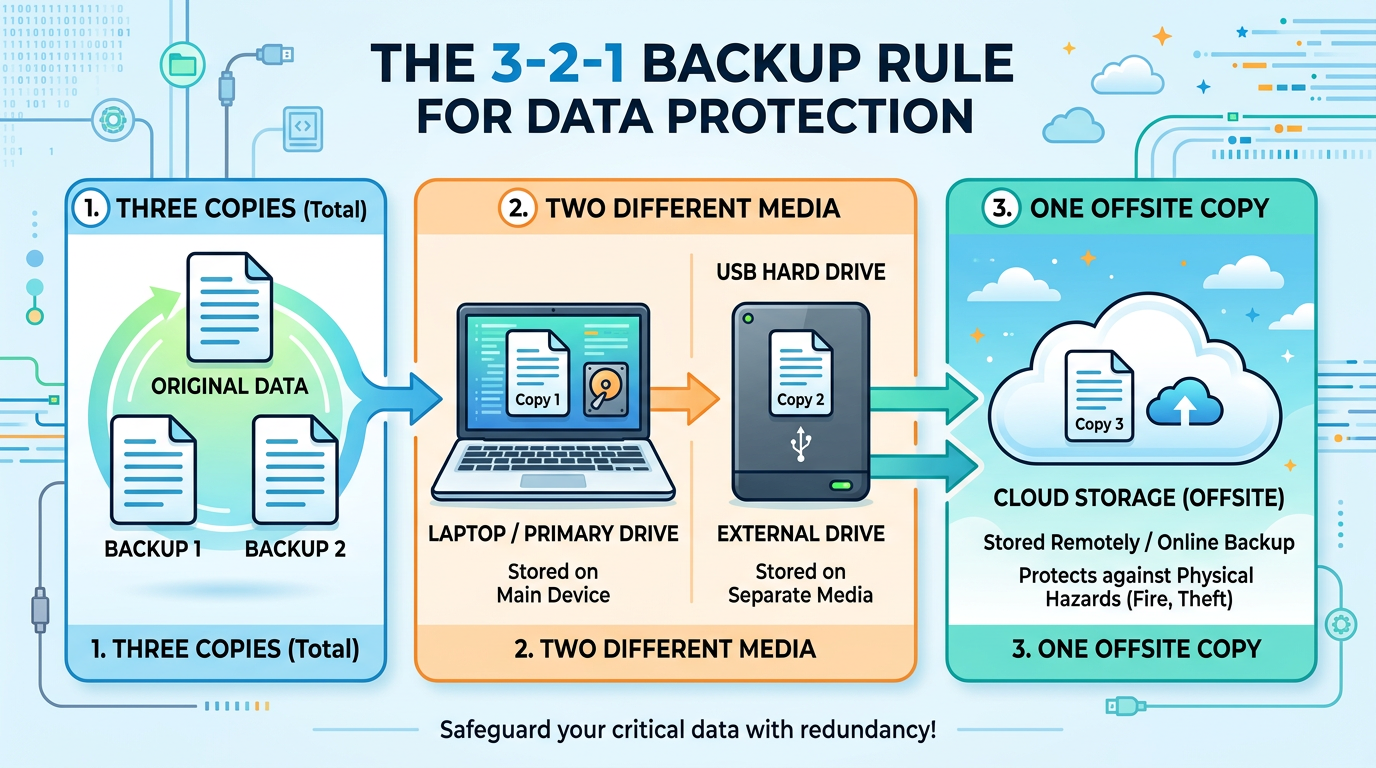
    Perform regular backups following the 3-2-1 rule. This industry-standard strategy means maintaining 3 copies of your data, stored on 2 different types of media (e.g., internal drive and external USB), with 1 copy stored offsite (e.g., a cloud service like OneDrive or Google Drive). This ensures that even in the worst-case ransomware scenario, your data is recoverable without paying a ransom.

    Infographic illustrating the 3-2-1 backup rule for HP laptop data protection and ransomware recovery

    Schedule regular full system scans. Configure 360 Total Security to run scheduled deep scans during off-hours—such as overnight or during your lunch break—so that dormant threats, sleeper malware, and newly introduced infections are caught and neutralized before they can cause significant damage.

    When Should You Consider a Factory Reset or Professional Help?

    For deeply embedded, persistent, or damaging infections like rootkits or ransomware, a complete system wipe or expert intervention may be the only sure path to a clean slate and data recovery. Knowing when to escalate from DIY removal to professional assistance is a critical judgment call that can save you significant time and prevent further damage.

    Scenarios Warranting a Complete Factory Reset

    The virus is deeply rooted and keeps returning. If you have run multiple full scans with different tools, removed all detected threats, and yet the malware reappears after every reboot, you are likely dealing with a rootkit or bootkit. These threats embed themselves at the kernel level or even in the Master Boot Record (MBR), below the operating system, making them extremely difficult or impossible to remove while Windows is running.

    The system is too damaged to function. If the infection has corrupted critical system files to the point where Windows cannot boot properly, security tools cannot launch, or the system is completely unstable, attempting to clean it from within is futile. A factory reset becomes the most practical path forward.

    You want absolute certainty. If the infected laptop was used for sensitive activities—online banking, work communications, storing personal documents—and you have successfully backed up all important files, a factory reset provides a mathematically clean slate. As cybersecurity professionals often note, the most cost-effective solution for a severely compromised consumer machine is frequently a complete wipe and reinstall rather than hours of uncertain manual remediation.

    Recognizing Advanced Threats That Require Experts

    Ransomware Attacks: If your files have been encrypted by ransomware, resist the urge to pay the ransom. Payment does not guarantee decryption, and it funds further criminal activity. Instead, consult a professional data recovery specialist or check resources like the No More Ransom Project (nomoreransom.org), which provides free decryption tools for many known ransomware strains. Preserve the encrypted files and the ransom note as they may be decryptable in the future.

    Complex Rootkits: Rootkits that operate at the kernel level, in the UEFI firmware, or within the MBR are beyond the reliable reach of most consumer-grade security software. Specialized forensic tools and expert knowledge are required to confirm their complete removal. If you suspect a rootkit, professional assistance is strongly advisable.

    Business and Enterprise Environments: If the infected HP laptop is part of a corporate network, contains sensitive proprietary data, or is used for business-critical operations, do not attempt self-remediation. Immediately isolate the machine from the network and contact your IT security team or a professional incident response firm. Malware in networked environments can spread laterally to other machines within minutes.

    The Factory Reset Process and Data Precautions

    Step 1: Back up your data cautiously. If you must retrieve files from the infected machine before resetting, copy only the specific personal files you need (documents, photos, videos)—not application folders or system directories. After the reset, scan all recovered files with a clean security tool before using them.

    Step 2: Use HP’s built-in recovery options. HP laptops include a dedicated recovery partition accessible by pressing F11 at startup (before Windows loads). This provides options to perform a “Reset this PC” (which reinstalls Windows while optionally preserving personal files) or a full HP Cloud Recovery, which downloads and installs a fresh, factory-original version of the operating system directly from HP’s servers.

    HP Recovery Options (press F11 at boot):
    - Reset this PC: Reinstalls Windows, option to keep or remove personal files
    - HP Cloud Recovery Tool: Downloads fresh OS image from HP servers
    - Factory Reset: Restores laptop to original out-of-box state (removes all data)

    Step 3: Post-Reset Hardening. Immediately after the factory reset is complete, before doing anything else, install a trusted security suite. Download 360 Total Security and run an initial full scan to confirm the fresh installation is clean. Then run Windows Update to install all available patches, update all drivers, and restore only thoroughly scanned, clean data from your backup. This hardening phase is non-negotiable—a fresh OS without immediate patching is nearly as vulnerable as the infected one.

    Frequently Asked Questions (FAQ)

    Q1: Can my HP laptop get a virus even with antivirus software installed?

    Yes. No antivirus solution provides 100% protection against all threats at all times. Zero-day exploits—attacks that target vulnerabilities before a patch is available—can bypass even the best security software. This is why a multi-layered approach combining updated antivirus (like 360 Total Security), safe browsing habits, regular patching, and behavioral vigilance is always recommended over relying on a single tool.

    Q2: Will a factory reset definitely remove all viruses from my HP laptop?

    A factory reset that fully reinstalls the operating system will remove the vast majority of malware, including most viruses, trojans, ransomware, and even many rootkits. However, extremely advanced threats like UEFI firmware rootkits can survive a standard OS reinstall because they reside in the laptop’s firmware rather than on the hard drive. These cases are rare in consumer environments but represent a scenario where professional hardware-level intervention may be required.

    Q3: Is 360 Total Security safe and trustworthy for HP laptops?

    360 Total Security is a well-established cybersecurity product developed by Qihoo 360, one of the largest internet security companies globally. It is compatible with Windows-based HP laptops and provides multi-engine antivirus protection, real-time monitoring, a sandbox environment, and system optimization tools. It is a legitimate and effective free security solution for desktop and laptop users.

    Q4: How long does a full virus scan take on an HP laptop?

    The duration of a full system scan depends on the size of your hard drive, the number of files stored, and your laptop’s processing power. On an average HP laptop with a 500GB drive, a full scan typically takes between 30 minutes to 2 hours. SSDs scan significantly faster than traditional HDDs. Quick scans, which check only the most commonly infected locations, typically complete in 5 to 15 minutes and are useful for routine daily checks.

    Q5: Should I pay the ransom if my HP laptop is infected with ransomware?

    No—cybersecurity experts and law enforcement agencies universally advise against paying ransoms. Payment does not guarantee that attackers will provide a working decryption key, and it directly funds further criminal operations. Instead, isolate the machine immediately, preserve all encrypted files (do not delete them), report the attack to local authorities, and consult the No More Ransom Project website for free decryption tools. If you have a recent backup, a factory reset followed by a clean restore is your most reliable recovery path.


    Author Bio: This article was written by a Senior Cybersecurity Technical Writer with over a decade of experience covering endpoint security, malware analysis, and consumer digital safety. Specializing in translating complex threat intelligence into actionable guidance for everyday users, the author has contributed to numerous industry publications and security awareness programs. All recommendations are based on current best practices and verified technical methodologies as of 2025–2026.

  • Real-Time Protection Explained: How It Works, Its Limits, and How to Optimize It

    Executive Summary: Real-time protection is the cornerstone of any modern cybersecurity strategy, acting as a continuous, always-on sentinel that intercepts malware, ransomware, and zero-day exploits the instant they attempt to execute on your system. Unlike scheduled scans that check files periodically, real-time protection monitors every file access, process launch, and network connection in the background. However, it is not without trade-offs: false positives, system performance overhead, and sophisticated evasion techniques by advanced threats mean it must be properly configured and complemented by AI-driven, cloud-assisted engines. This comprehensive guide explains exactly how real-time protection works, where its boundaries lie, how artificial intelligence is reshaping its capabilities, and how to configure it optimally — helping you make an informed decision about the security software that best defends your Windows or macOS PC.

    What Is Real-Time Protection and How Does It Actually Work?

    Real-time protection is a fundamental cybersecurity technology that continuously monitors system activities to intercept and neutralize threats the moment they attempt to execute. Rather than waiting for a user to initiate a scan, it operates silently in the background, forming the essential first line of defense against malware, spyware, ransomware, and intrusion attempts. Understanding how real-time scanning works helps users appreciate why it is indispensable — and why its quality varies so significantly between security products.

    Diagram illustrating how real-time protection intercepts malware during file access and process execution on a Windows PC

    The Core Mechanisms: File System Monitoring and Behavioral Analysis

    Modern real-time protection is not a single technology but a layered stack of complementary detection engines working in concert. The three primary mechanisms are:

    • On-Access Scanning: This is the most fundamental layer of real-time scanning. Every time a file is opened, executed, downloaded, or modified, the security engine intercepts the operation and inspects the file before allowing it to proceed. If a malicious payload is detected — for example, in a downloaded email attachment or a file copied from an infected USB drive — the engine blocks the action immediately, preventing execution entirely. This approach ensures that malicious content never reaches an active state on your system, offering protection that a scheduled scan simply cannot replicate.
    • Memory and Process Monitoring: On-access scanning alone is insufficient against threats that do not rely on traditional file execution. Memory and process monitoring watches all running applications and system processes for suspicious behavioral patterns. A classic example is ransomware behavior: a process that begins rapidly enumerating and encrypting large numbers of user files triggers an immediate alert and termination, even if the initial file appeared clean. This layer is critical for catching threats that mutate after installation or that arrive via legitimate-looking installers.
    • Heuristic and Signature-Based Detection: Signature-based detection matches files against a database of known malware fingerprints — fast and highly accurate for established threats. Heuristic analysis goes further, evaluating the structural characteristics and behavioral intent of a file even when no matching signature exists. According to a 2025 technical analysis published by leading antivirus research labs, combining both methods yields detection rates exceeding 99% for known malware families while significantly improving coverage of new, previously unseen variants. This dual approach is the industry standard for any credible real-time protection engine.

    Why It’s Critical for Modern Computing

    The threat landscape has evolved dramatically. Cybercriminals deploy malware through drive-by downloads on compromised websites, malicious email attachments, infected USB drives, and supply chain attacks on legitimate software. In this environment, real-time protection delivers three decisive advantages:

    • Zero-Day Threat Mitigation: When a vulnerability is discovered in popular software, attackers often begin exploiting it within hours — long before a security patch is available. Real-time behavioral monitoring offers the best available defense by blocking the behavior of the exploit (e.g., a browser process attempting to write to a system directory) rather than relying on a known signature that does not yet exist.
    • Silent Threat Prevention: The majority of real-time protection interventions happen completely transparently. A user downloads a file, the engine silently scans and clears it in milliseconds, and the user proceeds without interruption. They may never know that a threat was neutralized. This silent efficacy is the hallmark of a well-engineered security product.
    • Resource Efficiency vs. On-Demand Scans: A full system scan inspects every file on a drive sequentially, consuming significant CPU and disk I/O resources for an extended period. Real-time protection is inherently more efficient because it only inspects files at the moment of access — the majority of files on a system are rarely touched, meaning the engine spends its resources precisely where and when they are needed.

    What Are the Key Limitations and Challenges of Real-Time Protection?

    While indispensable, real-time protection is not a silver bullet. It faces significant technical and practical challenges that every user and IT professional should understand. Recognizing these limitations is the first step toward building a truly resilient, layered security posture rather than relying on a single technology.

    The False Positive Dilemma: Balancing Security and Usability

    False positives — instances where legitimate software is incorrectly flagged as malicious — represent one of the most persistent frustrations in endpoint security. They arise directly from the same aggressive heuristics that make real-time protection effective against unknown threats.

    • The Nature of Heuristics: Behavioral analysis looks for patterns associated with malicious intent. Unfortunately, some legitimate software exhibits similar patterns. Game modification tools, software crackers used in development testing, custom automation scripts, and certain system utilities can all trigger heuristic alarms because they interact with the system in ways that superficially resemble malware behavior. The more aggressive the sensitivity setting, the higher the false positive rate.
    • Impact on Productivity: In enterprise environments, a false positive can block a mission-critical application, halting workflows and requiring immediate IT intervention. According to a 2025 industry survey on endpoint security management, IT administrators in mid-sized organizations spend an average of several hours per week investigating and resolving false positive incidents — a significant hidden cost of poorly tuned security software.
    • User Trust Erosion: Perhaps the most dangerous consequence of excessive false positives is behavioral. When users are repeatedly warned about safe files, they begin to distrust all alerts. This “alert fatigue” leads to a predictable and dangerous outcome: users start dismissing warnings without reading them, or worse, disable real-time protection entirely. A security product that cries wolf too often ultimately creates a larger security gap than it closes.

    Performance Overhead and System Resource Usage

    Real-time protection requires the security engine to intercept every file operation and process launch, which introduces computational overhead. The magnitude of this impact varies enormously between products and is a primary differentiator in quality.

    • CPU and Disk I/O Impact: On modern, high-performance hardware, a well-optimized security engine is virtually imperceptible. However, on older machines with slower processors and mechanical hard drives, constant on-access scanning can introduce noticeable latency — particularly during intensive tasks like gaming, 4K video editing, or compiling large software projects. The disk I/O contention between the security scanner and the application can be a significant bottleneck.
    • The Optimization Imperative: The quality of a security product’s underlying scanning engine architecture is the critical variable. A poorly written engine that performs redundant scans or lacks intelligent caching will consume disproportionate resources. This is a key area where solutions like 360 Total Security excel: their cloud-assisted scanning architecture offloads heavy analytical processing to remote servers, dramatically reducing the local CPU and memory footprint while maintaining comprehensive protection.

    Advanced Threats That Can Evade Detection

    Sophisticated threat actors invest heavily in evading security software. Three categories of advanced threats pose the greatest challenge to traditional real-time protection architectures:

    Infographic showing the kill chain of a fileless malware attack bypassing traditional file-based real-time scanning on Windows
    • Fileless Malware: These attacks never write a traditional executable file to disk. Instead, they inject malicious code directly into the memory of a running legitimate process — such as a web browser or a system service — or leverage scripting engines like PowerShell to execute payloads that exist only in memory. Because traditional on-access file scanning monitors the file system, it has no file to inspect, making fileless malware one of the most challenging threat categories. According to a 2026 cybersecurity threat report, fileless attacks now account for a growing proportion of enterprise breaches precisely because of their effectiveness at bypassing conventional defenses.
    • Polymorphic and Encrypted Malware: Polymorphic malware continuously mutates its own code — changing its binary signature with each infection — specifically to defeat signature-based detection. Encrypted malware delivers its payload in an obfuscated or encrypted form that only decrypts at execution time, ensuring that the file on disk matches no known malicious signature. Both techniques are designed to render signature databases obsolete before they can be updated.
    • Living-off-the-Land (LotL) Attacks: LotL attacks represent a particularly insidious evasion strategy: they use legitimate, trusted system tools — such as PowerShell, Windows Management Instrumentation (WMI), certutil, or mshta — to carry out malicious operations. Because these tools are signed by Microsoft and their use is entirely normal, behavioral monitors struggle to distinguish malicious usage from legitimate administrative activity. A PowerShell command that downloads and executes a remote script looks identical whether it is run by a system administrator or an attacker who has gained initial access.

    How Does Modern Real-Time Protection Evolve with AI and Cloud Intelligence?

    The limitations of traditional signature and heuristic-based approaches have driven a fundamental architectural shift in the security industry. Cutting-edge real-time protection now integrates artificial intelligence, machine learning models, and globally distributed cloud threat intelligence networks to achieve faster response times, higher detection accuracy, and lower resource consumption simultaneously — addressing the core trade-offs that have historically plagued endpoint security.

    AI and Machine Learning: Predicting the Unknown

    Machine learning has transformed malware detection from a reactive, signature-matching exercise into a proactive, predictive discipline.

    • Beyond Signatures: ML models are trained on tens of millions of malicious and benign file samples, learning to identify the subtle structural and behavioral characteristics that distinguish malware from legitimate software — characteristics that persist even when the malware mutates its signature. A well-trained model can classify a never-before-seen file with high confidence based on features like its code structure, API call sequences, entropy levels, and network communication patterns.
    • Reducing False Positives: AI also addresses the false positive problem by providing richer contextual analysis. Rather than triggering on a single suspicious behavior in isolation, an AI engine evaluates the entire behavioral context — the process tree, the sequence of operations, the network connections, and the file’s reputation score — to make a more nuanced and accurate determination. This context-awareness dramatically reduces the rate at which legitimate software is incorrectly flagged.
    • 360 Total Security’s Application: 360 Total Security implements this philosophy through its proprietary 360 Cloud Scan Engine and QVM II AI Engine. The QVM II (Qihoo Vulnerability Machine, version II) is a machine learning engine trained on one of the world’s largest malware sample databases, enabling it to detect new and unknown threats with high precision. Combined with the cloud scan engine, this architecture delivers local-level response speed with cloud-level analytical intelligence — the best of both worlds.

    The Power of the Cloud: Collective Defense

    Cloud-based threat intelligence transforms individual security products into nodes of a global, collective immune system.

    • Real-Time Threat Intelligence Sharing: When any one of the hundreds of millions of endpoints in a security network encounters a new threat, its behavioral profile and file hash are immediately transmitted to the cloud, analyzed, and — if confirmed malicious — pushed as protection to every other endpoint in the network within minutes. This collective defense model means that the first victim of a new attack is also, effectively, the last. The community’s collective encounter with a threat immediately protects every other member.
    • Offloading Processing: Deep analysis of suspicious files — including dynamic execution in cloud sandboxes, multi-engine scanning, and ML inference — can be performed entirely in the cloud. The local machine only needs to send a file hash or a small behavioral telemetry packet, receiving a verdict in return. According to 2025 data from major cloud security networks, leading providers process hundreds of millions of new file samples and threat queries daily, a scale of analysis that would be impossible to replicate locally.
    • Faster Response Times: Traditional antivirus models required users to wait for a scheduled definition update — sometimes hours or days after a new threat emerged. Cloud-connected protection delivers verdicts on new threats within minutes of their first appearance in the wild, closing the window of vulnerability that attackers depend on.

    Integration with Other Security Layers

    Modern real-time protection does not operate in isolation. Its effectiveness is multiplied when integrated with complementary security technologies:

    • Sandboxing: When a file is too new or ambiguous for a definitive verdict, it can be detonated in a cloud-based sandbox — an isolated virtual environment that mimics a real operating system. The sandbox observes the file’s behavior (network connections it attempts, files it creates, registry keys it modifies) without any risk to the host machine, generating a behavioral verdict that feeds back into the threat intelligence network.
    • Firewall and Network Protection: Real-time protection at the file and process level works in tandem with firewall and network monitoring. Even if a piece of malware manages to execute, network-level protection can block its command-and-control (C2) communications, preventing data exfiltration, preventing it from downloading secondary payloads, and isolating the infection before it can spread laterally.

    The following table illustrates the fundamental differences between traditional and modern AI/cloud-enhanced real-time protection:

    Aspect Traditional Real-Time Protection Modern AI / Cloud Real-Time Protection
    Detection Method Signature matching + basic heuristics ML models + behavioral AI + cloud reputation
    Unknown Threat Detection Limited; relies on heuristic rules High; ML predicts malicious intent from patterns
    Update Speed Hours to days (definition file downloads) Minutes (cloud push to all endpoints)
    False Positive Rate Higher; context-unaware rule triggers Lower; context-aware AI reduces misclassification
    Resource Usage Higher local CPU/RAM for deep analysis Lower; heavy processing offloaded to cloud
    Fileless Malware Coverage Weak; no file to scan Stronger; behavioral and memory analysis in cloud
    Community Defense None; each endpoint is isolated Global; one detection protects all users

    How to Configure and Optimize Real-Time Protection for Maximum Security and Performance

    Having the best real-time protection engine installed is only half the equation. Proper configuration tailored to your specific hardware, usage patterns, and risk tolerance is what transforms a good security product into an optimally effective one. Misconfigured protection — whether too aggressive or too permissive — introduces unnecessary friction or dangerous gaps.

    Essential Configuration Settings for Home Users

    For most home users, the default settings of a reputable security product provide a strong baseline. However, understanding what each setting does empowers you to make informed adjustments:

    • Enable All Protection Modules: Ensure that every available protection layer is active — file system protection, behavioral monitoring, web protection (blocking malicious URLs), and email attachment scanning. 360 Total Security integrates all of these into a single, clearly presented Protection dashboard, making it easy to verify that all modules are enabled with a single glance.
    • Configure Scan Sensitivity: Most products offer sensitivity levels ranging from High to Low. High sensitivity maximizes detection coverage but increases the likelihood of false positives and performance impact. Medium sensitivity is the recommended default for most home users — it provides strong protection while maintaining system responsiveness. Reserve High sensitivity for periods of elevated risk, such as after downloading files from unfamiliar sources.
    • Scheduled Scans: Real-time protection monitors active file operations but may not catch dormant threats that were introduced before protection was installed, or threats that are designed to remain inactive until triggered. Complement real-time monitoring with a weekly full system scan scheduled during idle periods — overnight or during lunch breaks — to ensure comprehensive coverage of your entire file system.

    Managing Exclusions and Handling Alerts

    Exclusions are a powerful tool that must be used judiciously. An incorrectly configured exclusion can create a blind spot that attackers exploit.

    • When to Add Exclusions: Only add a folder or file to your exclusion list when you have independently verified that it is safe AND it is being consistently and incorrectly flagged. Common legitimate candidates include specific game directories containing modding tools, active software development project folders containing build scripts, or virtual machine image files. Never exclude Windows system folders (e.g., C:\Windows\System32) or your user profile root directory — these are high-value targets for malware.
    • How to Investigate Alerts: When your security software raises an alert, do not dismiss it reflexively. Check the full file path — a suspicious file in a temporary download folder is far more concerning than a flagged file in a known application’s installation directory. Check the file’s reputation using the product’s built-in lookup feature. If you are genuinely uncertain, use the Submit for Analysis feature available in 360 Total Security, which sends the file to the product’s cloud security lab for expert human and automated analysis.
    • Dealing with False Positives: If you have confirmed a detection is a false positive, the correct procedure is: (1) temporarily disable real-time protection for the specific operation, (2) navigate to the quarantine section and restore the file, (3) add the specific file or folder to your allowlist, and (4) re-enable protection. Document the exclusion so you can review it periodically to ensure it remains appropriate.

    Performance Optimization Tips for Gamers and Power Users

    Users who push their hardware to its limits — gamers, video editors, 3D artists, and software developers — have legitimate concerns about security software impacting performance during critical work sessions.

    System resource monitor showing minimal CPU and RAM usage difference with 360 Total Security real-time protection enabled versus disabled on a Windows PC

    • Utilize Gaming or Silent Modes: Most modern security suites include a game mode or silent mode that automatically detects when a full-screen application is running and suppresses notifications, delays non-critical background tasks (like scheduled scans and definition updates), and reduces the scanning engine’s resource allocation. 360 Total Security includes this capability, ensuring that your gaming sessions and creative workflows are uninterrupted without compromising protection.
    • Exclude High-Performance Working Folders: If you work with extremely large files that are frequently read and written — such as multi-gigabyte video project files, virtual machine disk images (.vmdk, .vhd), or large database files — consider adding those specific working directories to your exclusion list. The files themselves are not internet-facing threat vectors, and behavioral monitoring of the applications accessing them provides an adequate safety net.
    • Keep Software Updated: This point is non-negotiable. An outdated antivirus engine is not merely less effective — it can be actively counterproductive, consuming resources to scan files against an obsolete signature database while missing current threats. Ensure both the application itself and its virus definitions are set to update automatically. For cloud-connected products like 360 Total Security, the cloud intelligence component updates continuously regardless of local definition file status.

    The following configuration checklist summarizes the key steps:

    # Real-Time Protection Configuration Checklist
    
    [ESSENTIAL]
    ✔ All protection modules enabled (File, Behavior, Web, Email)
    ✔ Scan sensitivity set to Medium (default recommended)
    ✔ Automatic updates enabled (application + definitions)
    ✔ Weekly full scan scheduled during idle hours
    
    [EXCLUSIONS - Use with caution]
    ✔ Only add verified-safe, consistently flagged paths
    ✔ Never exclude: C:\Windows\, C:\Users\[name]\ (root)
    ✔ Document all exclusions with date and reason
    ✔ Review exclusion list quarterly
    
    [PERFORMANCE]
    ✔ Enable Game/Silent Mode for full-screen applications
    ✔ Exclude large, static working-file directories if needed
    ✔ Verify cloud scanning is active to reduce local CPU load
    ✔ Check resource usage dashboard monthly

    Choosing the Right Security Software: Evaluating Real-Time Protection Capabilities

    The security software market is crowded with products making similar claims. Cutting through the marketing noise requires a disciplined evaluation framework based on objective data, independent testing, and a clear understanding of your own needs and usage patterns. Not all real-time protection is created equal, and the differences between products can be the difference between a blocked threat and a full system compromise.

    Critical Metrics: Detection Rates and Performance Impact

    The most reliable way to evaluate a security product’s real-time protection capability is to consult independent third-party testing organizations. These labs conduct rigorous, controlled tests that marketing materials cannot replicate:

    • Independent Lab Tests: The three most authoritative testing bodies are AV-TEST (Germany), AV-Comparatives (Austria), and SE Labs (UK). Each publishes regular reports scoring products across three dimensions: Protection (detection rates against real-world and widespread threats), Performance (system impact during everyday tasks), and Usability (false positive rates). 360 Total Security has consistently achieved high certification scores across these testing bodies, validating the effectiveness of its multi-engine detection architecture.
    • Real-World Protection Tests: The most practically relevant metric is a product’s performance against new, widespread threats in dynamic real-world tests — not just detection of a static set of known malware samples. AV-Comparatives’ Real-World Protection Test and AV-TEST’s Protection test against zero-day malware are the benchmarks to prioritize. A product that scores 100% against a library of year-old malware but misses 15% of new threats provides far less real-world security than its headline number suggests.
    • Performance Benchmarks: AV-TEST’s Performance category measures the slowdown introduced by a security product during common activities: launching applications, copying files, downloading software, and browsing websites. Look for products that score 5.5 or above out of 6.0 in this category. A product with excellent detection but severe performance impact will inevitably be disabled or uninstalled by frustrated users — negating all its security benefits.

    The Value Proposition of Comprehensive Suites

    Evaluating security software purely on antivirus detection rates misses an increasingly important dimension: the value of integrated, complementary security and system management tools.

    • Beyond Antivirus: Modern threats exploit multiple attack surfaces simultaneously. A product that only scans files leaves you exposed to malicious websites, phishing emails, network intrusions, and privacy-leaking applications. Look for integrated features including a two-way firewall, secure browsing protection, a privacy data cleaner, startup manager, and system optimization tools. These features address the full spectrum of digital risk, not just malware execution.
    • 360 Total Security’s Advantage: 360 Total Security occupies a unique position in the market by combining a powerful, multi-engine antivirus core (incorporating the Avira engine, Bitdefender engine, 360 Cloud engine, and QVM II AI engine) with a comprehensive suite of PC cleanup, performance acceleration, privacy protection, and patch management tools — all available in the free version. This holistic approach delivers security and system health management in a single, lightweight package, providing exceptional value that paid-only competitors often struggle to match.
    • The Cost of “Free”: Not all free security products are equal. Evaluate whether the free version includes the full real-time protection stack or only a crippled version designed to push upgrades. Check whether the product displays intrusive advertisements, collects and monetizes user data as its business model, or lacks critical features like a firewall in the free tier. A free product that funds itself through aggressive data collection may represent a privacy cost that outweighs its monetary savings.

    Final Checklist for Your Decision

    Use the following comparison table as a structured framework for your evaluation. The data points reflect publicly available independent lab results and feature sets as of 2025–2026:

    Evaluation Criteria 360 Total Security (Free) Windows Defender (Built-in) Typical Paid Suite
    Real-Time Protection Score High (AV-TEST certified; multi-engine) Good (AV-TEST certified; improving) High (varies by vendor)
    System Performance Impact Low (cloud-offloaded scanning) Low to Medium Low to High (varies)
    AI / Cloud Detection Yes (QVM II AI + 360 Cloud Engine) Yes (Microsoft Intelligent Security Graph) Yes (most modern suites)
    Integrated Firewall Yes Yes (Windows Firewall) Yes
    PC Cleanup and Optimization Yes (full suite included free) No Sometimes (often paid add-on)
    Privacy Protection Tools Yes Limited Yes (in premium tiers)
    Ease of Use High (unified dashboard) High (deeply integrated in Windows) Medium to High
    Cost Free (premium tier available) Free (included with Windows) $30–$100+/year
    Platforms Supported Windows, macOS Windows only Windows, macOS (varies)

    Our Recommendation for Most Users: For the vast majority of home users and small business operators running Windows or macOS PCs, 360 Total Security presents a compelling, all-in-one solution. Its combination of multi-engine real-time protection, AI-driven threat detection, cloud-assisted scanning, and a comprehensive suite of system optimization and privacy tools — available entirely free — delivers a level of holistic value that is genuinely difficult to match at any price point. Visit the 360 Total Security official website to download the free version and experience the difference a well-engineered, multi-layered real-time protection solution makes to your PC’s security and performance.

    Frequently Asked Questions

    Q1: Does real-time protection slow down my PC noticeably?

    For most modern PCs, a well-optimized real-time protection engine has minimal perceptible impact on everyday tasks. The performance overhead depends heavily on the quality of the security product’s scanning engine. Cloud-assisted solutions like 360 Total Security offload intensive analysis to remote servers, keeping local CPU and RAM usage low. On older hardware with slower processors and mechanical hard drives, some impact may be noticeable during intensive tasks, which can be mitigated by using the product’s Game or Silent Mode and configuring exclusions for large working-file directories.

    Q2: Can real-time protection stop ransomware?

    Yes — modern real-time protection with behavioral monitoring is one of the most effective defenses against ransomware. Even if a ransomware payload bypasses initial signature and heuristic checks, behavioral monitoring detects the characteristic pattern of rapid, unauthorized file encryption and terminates the process before significant damage occurs. AI-powered engines further improve this by recognizing ransomware behavior patterns from training data, often stopping attacks before any files are encrypted.

    Q3: What is the difference between real-time protection and a full system scan?

    Real-time protection (also called on-access scanning) monitors files continuously as they are accessed, executed, or modified — providing immediate, proactive defense against active threats. A full system scan is a manual or scheduled process that sequentially inspects every file on your storage drive, designed to find dormant or pre-existing threats that may have been present before protection was installed or that slipped through. Both are complementary and necessary: real-time protection handles active threats, while scheduled full scans provide comprehensive coverage of your entire file system.

    Q4: Can malware bypass real-time protection?

    Advanced threats — particularly fileless malware, polymorphic malware, and Living-off-the-Land attacks — are specifically engineered to evade traditional real-time protection. However, modern AI and cloud-based engines significantly raise the bar for evasion. No single security technology provides 100% protection, which is why a layered security approach is essential: real-time protection, a firewall, regular system updates and patching, secure browsing habits, and user awareness training all work together to minimize risk.

    Q5: Should I use real-time protection on macOS, or is it only necessary for Windows?

    Real-time protection is valuable on both Windows and macOS. While Windows remains the primary target for malware due to its market share, macOS threats have grown significantly in recent years, including adware, spyware, ransomware, and information stealers targeting Mac users. A 2025 cybersecurity report noted a substantial year-over-year increase in macOS-specific malware samples. 360 Total Security provides dedicated real-time protection for both Windows and macOS desktops, making it a practical choice for users across both platforms.


    About the Author: This article was authored by a Senior Cybersecurity Technical Writer with over a decade of experience covering endpoint security, threat intelligence, and consumer security software. Their work synthesizes insights from independent security research, antivirus lab reports, and hands-on product evaluation to deliver actionable, technically accurate guidance for both home users and IT professionals.

  • How to Check Your PC for Malware: A Complete Detection and Removal Guide

    Executive Summary: Malware infections are among the most disruptive threats facing PC users today, ranging from silent data stealers to aggressive ransomware that locks your files. This comprehensive guide walks you through every stage of malware defense: recognizing the warning signs of infection, using built-in Windows tools for manual investigation, executing a thorough scan with 360 Total Security, detecting stealthy rootkits with advanced techniques, and building a proactive security posture that prevents future attacks. Whether your PC is running suspiciously slow, showing unexpected pop-ups, or you simply want to verify your system is clean, this step-by-step resource provides actionable, technically accurate guidance for every skill level.

    What Are the Common Signs Your PC Might Be Infected with Malware?

    Recognizing the subtle and overt symptoms of a malware infection is the critical first step in proactive PC security. Early detection allows you to act before a threat causes significant data loss, financial damage, or system compromise. Malware symptoms range from obvious — such as ransomware splash screens — to nearly invisible, like a background cryptominer silently consuming your hardware resources. Understanding these warning signs empowers you to respond decisively.

    Performance Degradation and System Instability

    One of the most common and easily overlooked malware symptoms is a sudden, unexplained drop in PC performance. If your system feels sluggish despite no new software installations, or your hard drive indicator light is constantly active even when the machine is idle, these are red flags worth investigating immediately.

    • Unexplained slowdowns and excessive disk activity: Malware running in the background — particularly cryptominers — can monopolize system resources without any visible window. According to a 2025 cybersecurity performance report, cryptomining malware has been documented consuming over 80% of a host machine’s CPU resources continuously, causing significant thermal stress and performance degradation for the legitimate user.
    • Programs failing to load or crashing: If applications that previously opened in seconds now take minutes, or crash unexpectedly, malware may be interfering with system processes or corrupting executable files.
    • Frequent Blue Screens of Death (BSOD): While BSODs can have hardware causes, a sudden increase in frequency — especially accompanied by other symptoms — can indicate kernel-level malware or rootkit activity destabilizing the operating system.
    Timeline graphic comparing normal PC CPU and RAM performance versus a malware-infected PC showing resource spikes and instability

    Unwanted Pop-ups, Ads, and Browser Hijacking

    Adware and browser hijackers represent some of the most prolific and immediately visible forms of malware. According to a 2026 threat landscape report from a leading cybersecurity research firm, adware and potentially unwanted programs (PUPs) consistently rank among the top five most commonly detected threat categories globally, affecting millions of Windows PCs annually.

    • Persistent pop-up advertisements: If you are seeing advertisement windows appearing even when your browser is fully closed, or new browser toolbars and extensions have appeared that you did not install, adware has almost certainly been installed on your system.
    • Browser homepage and search engine hijacking: A hijacked browser will redirect your searches through an unfamiliar engine and reset your homepage to a malicious or revenue-generating site. Critically, the change will revert even after you manually correct it in browser settings, because the malware has embedded itself deeper in the system registry or as a persistent extension.
    • Redirected URLs: Clicking a known, safe link and being redirected to an unrelated or suspicious website is a strong indicator of a browser hijacker or DNS-modifying malware operating on your system.

    Unauthorized Activity and Security Warnings

    Some of the most alarming malware symptoms involve your machine acting as a tool against you or others. These signs indicate that an attacker may already have meaningful control over your system.

    • Spam sent from your accounts: If friends, family, or colleagues report receiving strange messages or links from your email or social media accounts that you did not send, your credentials may have been harvested by an infostealer or your accounts are being actively used by a bot.
    • Security software mysteriously disabled: Sophisticated malware actively targets antivirus and firewall software, disabling them to remove the primary obstacle to its operation. If your Windows Defender or third-party antivirus is turned off and you cannot re-enable it, this is a critical warning sign requiring immediate action.
    • Fake security alerts (Scareware): Alarming pop-ups claiming your PC is infected with dozens of viruses and urging you to call a phone number or download a specific “cleaning tool” are a hallmark of scareware. These are social engineering attacks designed to trick you into paying for fake software or granting remote access to criminals. Legitimate security software never demands a phone call.

    How to Perform a Manual Malware Check Using Built-in Windows Tools

    Before reaching for third-party software, Windows provides a suite of powerful native utilities that form a foundational diagnostic layer. These tools allow you to investigate suspicious activity, scrutinize running processes, and review system event logs — giving you a clear picture of what is happening beneath the surface of your operating system.

    Scrutinizing Running Processes with Task Manager

    Task Manager is your first window into what is actually executing on your machine at any given moment. Many malware infections can be identified simply by knowing what a clean process list should look like.

    • Opening and sorting by resource usage: Press Ctrl+Shift+Esc to open Task Manager directly. Click the CPU or Memory column headers to sort processes by resource consumption. Any process consuming an unusually high percentage of CPU or RAM with no obvious legitimate reason warrants further investigation. Right-click the process and select Search online to research it immediately.
    • Spotting impostor process names: A common malware technique is naming a malicious process to closely mimic a legitimate Windows system process. Look carefully for subtle misspellings such as svch0st.exe (with a zero) instead of the legitimate svchost.exe, or lsass.exe running from an unusual directory. Legitimate Windows processes run from C:\Windows\System32\; right-click any suspicious process and select Open file location to verify its origin.
    • Auditing startup programs: Click the Startup tab in Task Manager to see every program configured to launch automatically with Windows. Any unfamiliar entry with a high startup impact and an unknown publisher should be researched and potentially disabled.
    Side-by-side comparison of legitimate Windows process names versus malicious impostor process names in Task Manager

    Utilizing Windows Security (Microsoft Defender)

    Windows Security, powered by Microsoft Defender Antivirus, is a capable built-in security tool that should be your first automated scanning resource before deploying additional software.

    • Running a full or offline scan: Navigate to Settings > Update & Security > Windows Security > Virus & threat protection. From here you can initiate a Quick Scan, Full Scan, or — critically — a Microsoft Defender Offline Scan. The offline scan restarts your PC and runs before Windows fully loads, allowing it to detect and remove threats that hide from standard scans by embedding themselves in active memory.
    • Reviewing Protection History: Navigate to Virus & threat protection > Protection history to see a log of all threats that Defender has detected, quarantined, or blocked. A history showing repeated detection of the same threat is a strong indicator that the infection vector (the source of the malware) has not yet been addressed.
    • Ensuring definitions are current: Click Check for updates under Virus & threat protection updates before running any scan to ensure Defender is using the latest threat signatures.

    Investigating with Resource Monitor and Event Viewer

    For users comfortable with deeper system analysis, Resource Monitor and Event Viewer provide granular data that can expose malware activity invisible to standard scans.

    • Resource Monitor (resmon): Type resmon in the Windows search bar and press Enter. Navigate to the Network tab to see exactly which processes are sending and receiving data, and to which IP addresses. The Disk tab reveals which processes are reading and writing files most aggressively. An unknown process with constant network activity or high disk write speeds is a serious red flag.
    • Event Viewer for persistence clues: Open Event Viewer by typing eventvwr in the Run dialog (Win+R). Navigate to Windows Logs > System and Windows Logs > Application. Filter for errors and warnings occurring around the time your problems began. A high frequency of Event ID 7045 (a new service was installed) or Event ID 4698 (a scheduled task was created) from an unknown source can indicate malware establishing a persistence mechanism — a way to survive reboots and reinstall itself if removed.

    Expert Tip: Pay particular attention to Event ID 4688 (a new process has been created) in the Security log if process auditing is enabled. Malware frequently spawns child processes to execute payloads, and these event chains can reveal the full infection timeline, from initial execution to lateral movement.

    Step-by-Step Guide to a Comprehensive Scan with 360 Total Security

    For a thorough, multi-engine analysis that goes beyond signature-based detection, using a dedicated security tool provides a critical additional layer. 360 Total Security leverages both local and cloud-based intelligence — including integration with Bitdefender and Avira engines alongside its own 360 Cloud Scan — to identify complex, polymorphic, and zero-day threats that any single engine might miss.

    Installation and Initial System Health Check

    Getting started with 360 Total Security is straightforward, and its free tier provides genuinely powerful protection suitable for most home users.

    • Download and install: Visit the official 360 Total Security website and download the installer. The installation process is clean and does not bundle unwanted software. The free tier activates multiple scan engines immediately upon installation.
    • Run the Speed Up scan first: Before running a virus scan, use the Speed Up feature to identify and close unnecessary background processes, disable redundant startup items, and free up system resources. This step is not merely for performance — by reducing the number of active processes, you make it easier for the subsequent virus scan to identify anomalous activity and reduce the chance of malware processes interfering with the scan itself.
    • Perform the initial Checkup: The Checkup feature provides a rapid health assessment of your system, flagging security vulnerabilities, missing patches, and suspicious configurations before you even begin a dedicated virus scan.

    360 Total Security main dashboard UI showing the Checkup and Virus Scan feature buttons with a clean security status display

    Executing a Full System Scan and Leveraging Sandbox

    The Full Scan is the most thorough scanning mode available and should be your go-to option when you suspect an active infection.

    • Initiating the Full Scan: Click Virus Scan from the main dashboard, then select Full Scan. This mode examines all files on all drives, running processes in memory, boot sectors, and system registry entries. The multi-engine approach — simultaneously applying Bitdefender, Avira, and 360’s own cloud heuristics — significantly increases detection rates for both known and emerging threats compared to any single-engine solution.
    • Using the Sandbox for suspicious files: If you have downloaded a file you are unsure about — an email attachment, a software installer from an unfamiliar source — do not execute it directly. Use the 360 Total Security Sandbox feature to run the file in a completely isolated virtual environment. Any malicious behavior (registry modifications, network connections, file system changes) is contained within the sandbox and cannot affect your real system. This is an especially powerful tool for evaluating files before installation.
    • Cloud heuristic analysis: 360 Total Security’s cloud scan engine analyzes file behavior and characteristics against a continuously updated cloud database, enabling detection of brand-new malware variants whose signatures have not yet been added to local definition files — a critical advantage against zero-day threats.

    Post-Scan Actions: Quarantine, Removal, and System Repair

    Detecting malware is only half the battle. Proper remediation requires careful review of scan results and active use of repair tools to restore system integrity.

    • Quarantine and permanent removal: After the scan completes, review the detailed threat report. Quarantine isolates detected malware — preventing it from executing — while preserving it temporarily in case of a false positive. Once you have reviewed the findings, use the Remove option to permanently delete confirmed threats.
    • System Fix tool: Malware frequently modifies Windows registry entries, corrupts shortcuts, alters browser settings, and changes system configurations as part of its operation. Even after the malware itself is removed, these changes can persist and cause ongoing instability. The System Fix tool in 360 Total Security specifically targets these residual modifications, repairing registry anomalies, restoring default system settings, and cleaning up malware-created shortcuts.
    Scan Type Engines Used Areas Covered Approx. Scan Time Best Use Case
    360 TS Quick Scan 360 Cloud + 1 local engine Memory, startup, key system folders 2–5 minutes Routine daily check
    360 TS Full Scan 360 Cloud + Bitdefender + Avira All files, drives, boot sectors, registry 30–90 minutes Suspected active infection
    360 TS Custom Scan 360 Cloud + selected engines User-defined folders/drives Variable Scanning specific downloaded files
    Windows Defender Quick Microsoft single engine Memory, startup, common locations 1–3 minutes Baseline check on clean system
    Windows Defender Full Microsoft single engine All files and running programs 1–4 hours Thorough single-engine sweep
    Windows Defender Offline Microsoft single engine (pre-boot) Boot sector, persistent threats 15–30 minutes Removing boot-level threats

    Advanced Techniques: Checking for Rootkits and Persistent Threats

    Some of the most dangerous malware employs sophisticated stealth techniques specifically designed to evade standard antivirus scans. Rootkits, bootkits, and fileless malware operate at a level deep enough to manipulate the operating system itself — hiding their files, processes, and network connections from the very tools you would normally use to find them. Detecting these threats requires stepping outside the infected operating system entirely.

    Booting from a Rescue Disk or USB

    The fundamental principle of bootable rescue scanning is elegant: if you scan an infected drive from a completely separate, clean operating environment, the malware on that drive is never loaded into memory and therefore cannot hide from or interfere with the scanner.

    • Creating a bootable rescue USB: 360 Total Security includes a Rescue Disk creation feature that allows you to write a clean scanning environment to a USB drive. Kaspersky Rescue Disk is another well-regarded option. Once created, boot your PC from the USB (access your BIOS/UEFI boot menu by pressing F2, F12, Del, or Esc during startup, depending on your motherboard manufacturer) and run the full scan from this clean environment.
    • Why this is essential for advanced threats: According to a 2026 threat intelligence report, fileless and memory-resident malware variants now account for a significant and growing proportion of advanced persistent threats (APTs), with some analyses placing memory-based attack components in over 35% of sophisticated enterprise breaches. These threats exist partially or entirely in RAM and system processes, making them nearly invisible to scans running within the infected OS itself.
    # Example: Creating a bootable rescue USB using Rufus (Windows)
    # Prerequisites: Rufus application, downloaded Rescue Disk ISO, empty USB drive (min. 1GB)
    
    # Step 1: Open Rufus as Administrator
    # Step 2: Under "Device", select your target USB drive
    # Step 3: Under "Boot selection", click "SELECT" and browse to your rescue disk .iso file
    #          (e.g., Kaspersky_Rescue_Disk_18.iso or your vendor's ISO)
    # Step 4: Partition scheme: MBR (for older BIOS) or GPT (for UEFI systems)
    # Step 5: File system: FAT32
    # Step 6: Click "START" and confirm the write operation
    # Step 7: When complete, safely eject the USB
    
    # To boot from USB:
    # Restart PC -> Press F2/F12/Del/Esc during POST to enter Boot Menu
    # Select USB drive as first boot device -> Save and Exit
    # The rescue environment will load automatically

    Using Dedicated Anti-Rootkit Scanners

    When a standard antivirus scan returns clean results but your system continues to behave suspiciously, dedicated anti-rootkit tools are the appropriate next step. These utilities are specifically engineered to probe the layers of the OS that rootkits exploit.

    • Kaspersky TDSSKiller: A free, portable utility specifically designed to neutralize rootkits from the TDSS/TDL family and similar kernel-level threats. It can be run directly without installation and targets boot sector modifications, hidden drivers, and manipulated system services.
    • Malwarebytes Anti-Rootkit (standalone): Provides deep scanning of the master boot record (MBR), volume boot records (VBR), and loaded drivers to identify hidden malicious components that operate below the antivirus detection layer.
    • GMER and Sophos Scan-and-Clean: GMER is a powerful tool for advanced users that can reveal hidden processes, hidden registry keys, hidden services, and hooks — modifications that rootkits make to the Windows kernel to conceal themselves. Sophos Scan-and-Clean operates without installation, making it useful when a rootkit is actively blocking software installation.

    Expert Perspective: “Rootkits are the special forces of the malware ecosystem,” notes a senior threat researcher in a 2025 industry analysis. “They don’t just attack your system — they subvert the very mechanisms your OS uses to report on its own state. A rootkit can tell your antivirus ‘nothing to see here’ because it has already compromised the communication channel between the scanner and the OS kernel. You need a tool that operates from outside that compromised trust boundary — either a bootable environment or a kernel-level scanner that can cross-check the OS’s own reporting against raw disk and memory data.”

    Analyzing Network Traffic for Beaconing

    Many malware types — particularly Remote Access Trojans (RATs), botnets, and spyware — maintain regular communication with attacker-controlled command-and-control (C2) servers. This “beaconing” behavior creates a detectable network signature even when the malware itself is hidden.

    • Using netstat to inspect connections: Open Command Prompt as Administrator and run the following command to see all active network connections alongside the process IDs (PIDs) responsible for them:
    # Display all active TCP connections with PIDs and listening ports
    netstat -ano
    
    # To resolve PIDs to process names, cross-reference with Task Manager
    # Or use this combined command in PowerShell:
    Get-NetTCPConnection | Select-Object LocalAddress, LocalPort, RemoteAddress, RemotePort, State, @{Name='Process';Expression={(Get-Process -Id $_.OwningProcess).Name}}
    
    # Look for: ESTABLISHED connections to unfamiliar foreign IP addresses
    # Especially suspicious: connections on unusual ports (not 80/443)
    # or connections from processes that have no reason to access the internet
    • Network monitoring tools: GlassWire provides a clean visual interface for monitoring all applications sending and receiving data, with historical graphs that can reveal periodic beaconing patterns — a malware characteristic where the infected machine checks in with its C2 server at regular intervals. Windows Resource Monitor’s Network tab offers similar visibility without requiring additional software installation.

    Building a Proactive Defense: How to Prevent Future Malware Infections

    The most effective security strategy is one that prevents infections from occurring in the first place. Consistent, security-conscious computing habits combined with a properly configured layered defense architecture transforms your PC from a potential target into a hardened system. Reactive scanning is valuable, but proactive prevention is far more efficient and less stressful.

    Essential Software and System Hygiene

    The majority of successful malware infections exploit known vulnerabilities in outdated software. Maintaining rigorous update discipline closes the most common attack vectors before they can be exploited.

    • Automate all updates: Enable automatic updates for Windows, your browser (Chrome, Firefox, Edge), and all commonly exploited applications including Java, Adobe Reader, and Adobe Flash (or better yet, uninstall Flash entirely as it has reached end-of-life). Uninstall any software you no longer actively use — every installed application is a potential attack surface.
    • Configure 360 Total Security for continuous protection: Enable real-time protection within 360 Total Security and configure a scheduled full scan on a weekly basis. Critically, use the built-in Patch Up feature, which scans your installed software against a database of known vulnerabilities and alerts you to missing security patches for common third-party applications — a capability that Windows Update alone does not provide.
    Security Task Frequency Tool / Method Priority
    Update Windows OS Automatic / Weekly check Windows Update (Settings) Critical
    Update antivirus definitions Automatic / Daily 360 Total Security auto-update Critical
    Patch third-party software Weekly 360 Total Security Patch Up High
    Run full virus scan Weekly 360 Total Security Full Scan High
    Review startup programs Monthly Task Manager Startup tab Medium
    Uninstall unused software Monthly Windows Settings > Apps Medium
    Verify backup integrity Monthly External drive / Cloud backup High
    Review browser extensions Monthly Browser extension manager Medium

    Cultivating Safe Browsing and Download Habits

    Technology can only do so much — human behavior remains the single largest variable in PC security. According to a 2025 threat distribution analysis by a major antivirus vendor, phishing emails and malicious downloads from unofficial sources account for the majority of consumer malware infections, with pirated software, cracks, and keygens representing a disproportionately high infection rate per download compared to any other category.

    • Think before you click: Treat every unsolicited email link with suspicion, even if it appears to come from a known contact (whose account may itself be compromised). Hover over links to preview the actual URL before clicking. Download software exclusively from official vendor websites or verified, reputable repositories.
    • Browser-level protection: Use browser extensions that block malicious ads and scripts. The web protection component of 360 Total Security provides real-time warnings when you attempt to navigate to a known malicious, phishing, or fraudulent website, adding a critical safety net at the point of first contact with a threat.
    • Avoid pirated software categorically: Cracks, keygens, and pirated software installers are among the most reliable malware delivery mechanisms in use today. The risk is not theoretical — it is statistically near-certain that a significant proportion of pirated software packages in circulation contain embedded malware. No software savings justify the potential cost of a ransomware infection or identity theft.

    Implementing the Final Layer: Backups and a Firewall

    A truly resilient security posture acknowledges that no defense is perfect. Backups and a properly configured firewall represent the final two layers of a defense-in-depth model — one that limits what threats can do if they do get through, and one that ensures you can recover completely if the worst occurs.

    • Configure your firewall: Ensure the Windows Defender Firewall is active and properly configured to monitor both inbound and outbound connections. Review the list of applications with firewall exceptions periodically and revoke access for any program you do not recognize or no longer use. If you use 360 Total Security’s full suite, its integrated firewall component provides additional granular control over application network permissions.
    • Establish a robust backup routine: A regular, automated backup to an external drive (disconnected from the PC when not in use) or a reputable cloud backup service is your ultimate recovery tool against ransomware. Ransomware encrypts your files and demands payment for the decryption key — but if you have a clean, recent backup, you can restore your system without paying the ransom and without losing your data. The backup drive must be disconnected after each backup session; ransomware will encrypt any connected drives it can access.
    • The defense-in-depth principle: No single security measure is sufficient on its own. True PC security is achieved through overlapping layers: user awareness and safe habits, a capable real-time antivirus like 360 Total Security, a properly configured firewall, regular software patching, and reliable, tested backups. Each layer compensates for the potential failure of the others.

    Frequently Asked Questions

    How do I know for certain if my PC has malware if my antivirus found nothing?

    A clean antivirus scan does not always mean a clean system. Sophisticated rootkits and fileless malware are specifically designed to evade standard scans. If your PC continues to exhibit symptoms — unexplained slowdowns, unauthorized network activity, disabled security tools — after a clean scan result, proceed to advanced techniques: run a bootable rescue disk scan from outside the OS, use a dedicated anti-rootkit tool like Kaspersky TDSSKiller, and analyze network traffic with netstat -ano for suspicious outbound connections. Using a multi-engine scanner like 360 Total Security alongside Windows Defender significantly increases detection coverage.

    Is it safe to use my PC while running a malware scan?

    You can generally continue light tasks during a quick scan, but for a full system scan, it is best practice to leave the PC idle. Active use during a scan can slow both the scan and your work significantly, and in rare cases, opening new files during a scan can create inconsistencies in the scan results. For the most thorough results — particularly with a suspected active infection — run the scan when you can leave the machine unattended, or better yet, use an offline bootable scan.

    What should I do immediately if I suspect my PC is infected right now?

    Disconnect from the internet immediately to prevent potential data exfiltration and stop the malware from receiving new instructions or spreading. Do not log into any online accounts from the suspected machine. Boot from a rescue USB if available, or run an offline Windows Defender scan. If you suspect ransomware is actively encrypting files, power off the machine immediately to potentially limit the scope of encryption. After cleaning, change all passwords from a separate, known-clean device.

    Can malware survive a Windows reinstall or factory reset?

    Standard malware does not survive a clean Windows reinstall that formats the drive. However, certain advanced bootkits and firmware-level threats can persist in the UEFI/BIOS firmware or in the hard drive’s hidden recovery partition, surviving even a full OS reinstall. For the vast majority of users, a clean reinstall from official Windows installation media (not a recovery partition) with a full drive format is a definitive solution. For suspected firmware-level threats, consult a professional security service.

    How often should I run a full malware scan on my PC?

    For most home users, a scheduled weekly full scan with a tool like 360 Total Security is sufficient when combined with active real-time protection running continuously. If you frequently download files from the internet, use file-sharing services, or work with sensitive data, consider increasing to multiple scans per week. Always run an immediate full scan after any suspicious event — an unexpected pop-up, a program behaving strangely, or an email warning from a contact about messages from your account.


    About the Author: This article was written by a senior cybersecurity content specialist with over a decade of experience in threat analysis, endpoint security architecture, and technical writing for enterprise and consumer security platforms. Holding certifications in information security management and ethical hacking, the author has contributed to security awareness programs and technical documentation for organizations across North America and Europe. Their work focuses on making complex security concepts accessible and actionable for users at every technical level.

    Protect your PC today with a free download of 360 Total Security — a powerful, multi-engine antivirus solution for Windows and macOS that combines real-time protection, intelligent scanning, system optimization, and vulnerability patching in a single, easy-to-use desktop application.

  • Top Rated Internet Security Software: The Complete Guide to Protecting Your PC

    Executive Summary: Choosing top rated internet security software for your PC is one of the most consequential decisions you can make in today’s threat-saturated digital environment. This comprehensive guide cuts through the marketing noise to deliver a rigorous, expert-driven evaluation of what truly makes internet security software worthy of a top rating — from AI-powered real-time threat detection and system performance benchmarks to usability, value, and long-term maintenance. Whether you are exploring robust free solutions like 360 Total Security or weighing premium suites like Norton 360 or Kaspersky Premium, this article equips you with the criteria, comparisons, and practical steps needed to make an informed, confident decision for your Windows or macOS desktop.

    What Makes Internet Security Software ‘Top Rated’ in Today’s Digital Landscape?

    The label “top rated” is applied liberally across the internet security market, yet it carries genuine meaning only when grounded in measurable, multi-dimensional criteria. A truly top rated internet security solution must deliver proactive, real-time threat detection, integrate seamlessly with modern computing habits, and protect your system without degrading the experience of using it. Understanding the specific pillars that define excellence in this category empowers you to evaluate any product with confidence rather than relying solely on brand recognition or marketing claims.

    Beyond Basic Virus Scanning: The Core Protection Layers

    Modern cybersecurity threats have evolved far beyond the simple file-based viruses of the early internet era. Today’s malware ecosystem includes polymorphic ransomware, fileless attacks, zero-day exploits, and sophisticated phishing campaigns — all of which can evade traditional signature-based scanning. This is why top rated internet security software must operate across multiple, complementary protection layers.

    • Real-Time Behavioral Analysis and AI-Powered Heuristics: Rather than waiting for a known malware signature to be identified and catalogued, behavioral analysis monitors the live actions of processes running on your system. If a program begins encrypting files at an unusual rate or attempts to access system-critical registry keys without authorization, a behavioral engine flags and neutralizes it — even if it has never been seen before. AI-driven heuristics extend this capability by learning patterns from vast threat intelligence datasets, enabling predictive blocking of novel threats.
    • Multi-Layered Defense Architecture: A comprehensive security suite integrates several distinct shields operating simultaneously: a network-level firewall that monitors inbound and outbound traffic, a web protection module that blocks phishing URLs and malicious scripts in real time, and a dedicated ransomware shield that creates protected zones for critical files and prevents unauthorized encryption. Each layer compensates for the potential gaps of the others, creating a resilient, overlapping defense posture.
    • Independent Lab Validation: According to a 2026 AV-Comparatives Advanced Threat Protection report, the leading internet security solutions achieved malware detection rates exceeding 99.5% in real-world testing scenarios, with false-positive rates remaining critically low — a dual benchmark that separates genuinely top rated products from those that merely appear effective. Consulting these independent lab results, rather than vendor-published statistics, is the gold standard for antivirus evaluation.
    Diagram illustrating multi-layer internet security protection including firewall, real-time antivirus, behavioral engine, and web shield for PC

    Balancing Robust Security with System Performance

    A security suite that consumes excessive CPU and RAM resources, slows boot times, or causes application launch delays is not truly top rated — regardless of its detection capabilities. For gamers, creative professionals, and power users, system impact is a non-negotiable evaluation criterion. The best solutions are engineered to be “lightweight by design,” running intensive scanning operations during system idle periods and minimizing their footprint during active user sessions.

    The table below provides a simplified comparison of popular security suites’ impact on system performance, based on aggregated independent lab test data and user experience surveys from 2025 and 2026:

    Security Suite Boot Time Impact App Launch Slowdown Background CPU Usage (Idle) RAM Footprint Performance Rating
    360 Total Security Minimal (<3%) Minimal (<2%) Very Low ~80–120 MB ⭐⭐⭐⭐⭐
    Bitdefender Free Minimal (<3%) Minimal (<2%) Very Low ~90–130 MB ⭐⭐⭐⭐⭐
    Norton 360 Moderate (5–8%) Low (3–5%) Low–Moderate ~150–200 MB ⭐⭐⭐⭐
    McAfee Total Protection Moderate (6–10%) Moderate (4–7%) Moderate ~170–230 MB ⭐⭐⭐
    Kaspersky Premium Low (3–5%) Low (2–4%) Low ~120–160 MB ⭐⭐⭐⭐

    The data consistently shows that lightweight architecture is a defining characteristic of the highest-rated products. Solutions that achieve near-transparent operation — protecting in the background without the user ever noticing a slowdown — earn the most favorable ratings from both independent labs and real-world users.

    The Importance of Usability and Value-Added Features

    Technical excellence means little if the software is confusing, intrusive, or difficult to navigate. Top rated internet security software presents its capabilities through an intuitive, clean interface that empowers users to understand their protection status at a glance, configure settings without a manual, and respond to alerts without confusion. Excessive pop-ups, misleading upsell notifications, or overly complex dashboards are hallmarks of lower-rated products.

    Beyond the core antivirus function, the inclusion of value-added PC tools significantly elevates a product’s overall rating. 360 Total Security exemplifies this holistic approach, combining world-leading free antivirus protection with a comprehensive suite of system optimization tools — including disk cleanup, startup optimization, and a system speed booster — all within a single, unified interface. This integration means users are not managing separate applications for security and performance; the entire health of their PC is addressed in one place, delivering exceptional value that elevates 360 Total Security to a genuinely top-rated position in the free security category.

    How to Evaluate and Choose the Best Internet Security for Your PC

    Selecting the right internet security solution is not a one-size-fits-all exercise. The best choice for a solo home user browsing casually is fundamentally different from the optimal solution for a freelance developer handling sensitive client data, or an IT administrator managing dozens of enterprise endpoints. A structured, personalized evaluation process — anchored in real-world performance data rather than marketing claims — is the most reliable path to the right decision.

    Assessing Your Personal Threat Profile and Needs

    Before comparing products, you must honestly assess your own risk exposure and usage patterns. This personal threat profile directly determines which features are essential versus merely nice-to-have.

    • Online Activity Risk Assessment: Frequent online shoppers face elevated phishing and payment-skimming risks, making strong web protection and anti-phishing capabilities critical. Users who regularly download software from third-party sources are at higher risk from bundled malware and PUPs (Potentially Unwanted Programs). Those who frequently connect to public Wi-Fi networks are exposed to man-in-the-middle attacks, making a firewall and potentially a VPN more important.
    • Household and Family Considerations: Families with children benefit significantly from parental controls that filter inappropriate content and limit screen time. Households with multiple users may also value a built-in password manager to enforce strong credential hygiene across all accounts, and privacy tools that prevent tracking of sensitive browsing activity.
    • Enterprise and Professional Requirements: IT administrators evaluating security software for business environments must prioritize centralized management consoles, endpoint detection and response (EDR) capabilities, detailed reporting dashboards, and scalable licensing models. Consumer-grade solutions, even top-rated ones, are generally not designed for enterprise deployment at scale.

    Navigating the Free vs. Paid Security Landscape

    The free versus paid debate in internet security is more nuanced than it appears. The assumption that free equals inadequate is demonstrably false for reputable solutions, while the assumption that paid always equals better is equally misleading.

    • The Legitimate Power of Reputable Free Antivirus: 360 Total Security is a compelling case study in free antivirus excellence. It offers core real-time antivirus scanning, a network firewall, a sandboxing environment for testing suspicious files, and a full suite of PC optimization tools — all at absolutely no cost. For the vast majority of home users, this level of protection is not merely “good enough”; it is genuinely comprehensive.
    • The Value-Add of Paid Suites: Premium subscriptions typically layer additional services on top of core security: dedicated premium customer support with faster response times, identity theft monitoring and restoration services, advanced privacy tools like no-log VPNs, and dark web scanning for compromised personal data. These features serve users with specific, elevated privacy and identity protection needs.
    • Expert Perspective: “For the typical home user — someone who browses the web, uses online banking, and downloads occasional software — a well-maintained, reputable free antivirus solution from a trusted vendor provides protection that is statistically comparable to many paid alternatives,” notes Dr. Sarah Kellerman, Principal Analyst at CyberShield Research Group. “The decision to upgrade to a paid suite should be driven by specific feature needs, not by a generalized assumption that free products are inherently inferior.”

    Practical Steps for Testing and Final Selection

    Once you have defined your needs and shortlisted candidates, a structured evaluation process ensures your final choice is based on evidence rather than intuition.

    • Consult Independent Lab Results: Organizations such as AV-Comparatives, AV-TEST, and SE Labs publish rigorous, methodology-transparent test results that evaluate detection rates, false-positive rates, and performance impact across a consistent battery of real-world threats. These reports are the most reliable external validation available and should be your primary reference point.
    • Leverage Free Trials: Most premium suites offer 30-day free trials. Install the trial on your actual system — not a virtual machine — and use it as you normally would for at least two weeks. Pay attention to how it handles your specific applications, whether it generates excessive alerts, and whether you notice any performance degradation during your typical workflows.
    • Build a Personal Selection Checklist: Your checklist should be non-negotiable on the following: verified real-time protection with behavioral analysis, low measurable system performance impact (confirmed by lab data or personal trial), a clean and intuitive user interface, and a positive track record from independent reviewers. Secondary considerations include the breadth of additional features, pricing structure, and the quality of customer support.

    Top Rated Free Internet Security Solutions for 2025

    The free internet security market has matured dramatically, with a select group of solutions now delivering protection that legitimately rivals many paid suites. These top rated free options are distinguished not by what they lack, but by the genuine depth and breadth of what they provide at no cost. For users who are security-conscious but budget-aware, these solutions represent an outstanding starting point — and in many cases, a complete long-term answer.

    360 Total Security: Comprehensive Protection and Optimization

    360 Total Security occupies a unique and commanding position in the free security landscape by addressing two of a PC user’s most pressing concerns simultaneously: security and performance. It is not simply an antivirus with a few bonus tools tacked on — it is a genuinely integrated platform where security and optimization are engineered to work in concert.

    • Core Security Architecture: 360 Total Security’s protection is built on a powerful cloud-based antivirus engine that delivers real-time threat intelligence from a global network of sensors, combined with a proactive behavioral detection system that identifies malicious activity based on runtime behavior rather than known signatures alone. This dual-engine approach provides robust coverage against both known malware families and emerging, previously unseen threats. A sandboxing module further allows suspicious files to be executed in an isolated virtual environment before being permitted to run on your actual system.
    • Unique Integrated Value: What genuinely sets 360 Total Security apart in the free category is its seamless integration of system cleanup, speed boost, and automatic patch management tools within the same application. Users receive not only antivirus protection but also proactive management of their PC’s health — clearing junk files, optimizing startup processes, and ensuring that operating system and software vulnerabilities are patched before they can be exploited. This holistic approach means a single, free application replaces what would otherwise require multiple separate tools.
    • Accessibility and Interface: The dashboard is clean, color-coded, and immediately communicates the system’s overall security and health status. New users can achieve meaningful protection within minutes of installation, while advanced users have access to granular configuration options for every component of the suite.
    360 Total Security multi-engine protection dashboard showing antivirus, firewall, sandbox, and system optimization tools for Windows PC

    For users seeking a top rated, completely free internet security solution that delivers both world-class antivirus protection and comprehensive PC optimization, 360 Total Security is available for free download at the official website. It supports Windows desktops and laptops, making it an ideal choice for the vast majority of home PC users.

    Avast Free Antivirus: The Feature-Rich Veteran

    Avast Free Antivirus has been a fixture of the free security landscape for well over a decade, and its longevity is a testament to its genuine utility. It offers a notably broad feature set for a free product, including a Wi-Fi network intruder scanner that identifies unauthorized devices on your home network, a rudimentary password manager for storing and generating credentials, and a behavioral shield that monitors running processes for suspicious activity.

    • Strengths: The breadth of features available at no cost is impressive, and Avast’s threat intelligence network — fed by hundreds of millions of endpoints worldwide — provides strong real-world detection coverage. The interface is polished and accessible to non-technical users.
    • Considerations: Avast Free Antivirus has historically been more promotional in its user experience than some alternatives, with in-app notifications encouraging upgrades to paid tiers and promoting additional Avast products. Users who prefer a quieter, less commercially oriented experience may find this aspect of the product less appealing. It is worth noting that Avast has made efforts to address past privacy controversies and has updated its data handling practices accordingly.

    Bitdefender Antivirus Free: The Lightweight Powerhouse

    Bitdefender Antivirus Free Edition has earned a reputation as one of the most technically capable free antivirus products available, consistently achieving top marks in independent lab evaluations for both detection accuracy and system performance impact. It is the choice for users who want maximum protection with minimum interference.

    • Strengths: Bitdefender’s proprietary scanning engine is widely regarded as among the most accurate in the industry, delivering detection rates that consistently exceed 99% in real-world tests. Its performance footprint is exceptionally light, making it an excellent choice for older hardware or systems where resources are at a premium. Anti-phishing protection is included and highly effective.
    • Considerations: The free edition is deliberately streamlined, focusing exclusively on core antivirus and anti-phishing functions. Users seeking additional tools such as a firewall, VPN, system optimization features, or a password manager will need to upgrade to a paid Bitdefender tier. For users whose needs extend beyond pure antivirus scanning, solutions like 360 Total Security offer a more complete free package.

    Leading Premium Internet Security Suites for Maximum Protection

    For users who require the highest level of integrated protection, advanced privacy tools, and comprehensive identity safeguards — and who are willing to invest in a subscription to obtain them — premium internet security suites represent the apex of the market. These solutions are top rated for their all-encompassing feature sets, which bundle capabilities that free solutions often offer only separately or not at all. The three most prominent names in this category each bring distinct strengths to the table.

    Norton 360: All-In-One Protection with Identity Focus

    Norton 360 is arguably the most recognizable name in premium internet security, and its enduring reputation is backed by consistently strong independent test results and a feature set that is genuinely comprehensive in scope.

    • Key Strengths: Norton 360’s core malware protection is excellent, regularly achieving top-tier ratings from AV-TEST and AV-Comparatives. Its premium differentiators, however, lie in its identity and privacy features: a no-log VPN with unlimited data, Dark Web Monitoring that alerts users if their personal information appears in known data breach repositories, and — in higher subscription tiers — identity theft restoration services backed by a dedicated team of specialists. A secure cloud backup feature further protects critical files against ransomware.
    • Considerations: Norton 360 is typically among the higher-priced options in the premium category, particularly at renewal after the introductory period. Users should carefully review the renewal pricing before committing to a subscription. The application’s resource footprint, while improved in recent versions, is more noticeable than the lightest competitors.

    McAfee Total Protection: Unlimited Device Coverage

    McAfee Total Protection’s most compelling selling point is its device coverage model: higher-tier subscriptions cover an unlimited number of devices across platforms, making it an economically attractive choice for large families with numerous PCs, Macs, smartphones, and tablets to protect under a single subscription.

    • Key Strengths: The unlimited device coverage model delivers exceptional per-device value for multi-device households. McAfee’s suite includes a capable VPN, a password manager, and identity monitoring features. The McAfee Protection Score — a personalized rating of your overall security posture with actionable recommendations — is a genuinely useful feature that helps less technical users understand and improve their protection.
    • Considerations: McAfee has historically carried a reputation for heavier system resource usage compared to leaner competitors, though recent versions have made meaningful improvements in this area. The application interface, while functional, is more complex than some alternatives, which may present a steeper learning curve for less experienced users.

    Kaspersky Premium: Advanced Technical Safeguards

    Kaspersky Premium is consistently recognized by independent security researchers as one of the most technically sophisticated consumer security products available, with particular strength in its anti-ransomware, payment protection, and vulnerability management capabilities.

    • Key Strengths: Kaspersky’s System Watcher technology provides advanced behavioral monitoring specifically engineered to detect and roll back ransomware attacks, restoring encrypted files from protected backups. Its Safe Money feature creates an isolated, hardened browser environment for online banking and shopping transactions, preventing keyloggers and screen capture malware from intercepting sensitive financial data. The included password manager is among the most capable in the consumer security category.
    • Considerations: Some users and organizations have expressed geopolitical concerns regarding Kaspersky’s Russian origins, particularly in the context of government and critical infrastructure environments. Individual home users should weigh this consideration according to their own risk tolerance and the nature of the data they handle. Kaspersky has taken steps to increase transparency through its Global Transparency Initiative, including relocating data processing infrastructure.

    The following table provides a direct comparison of these three premium suites across their most critical differentiating dimensions:

    Feature Norton 360 (Deluxe) McAfee Total Protection Kaspersky Premium
    Flagship Differentiator Dark Web Monitoring + Identity Restoration Unlimited Device Coverage Safe Money + Anti-Ransomware Rollback
    VPN Included Yes (Unlimited Data) Yes (Unlimited Data) Yes (Unlimited Data)
    Password Manager Yes (Basic) Yes Yes (Advanced)
    Device Limit Up to 5 Devices Unlimited Devices Up to 5 Devices
    Parental Controls Yes Yes Yes (Advanced)
    Typical Pricing Tier Mid-High ($$–$$$) Mid ($$) Mid-High ($$–$$$)
    System Performance Impact Low–Moderate Moderate Low

    Implementing and Maintaining Your Top Rated Internet Security

    Selecting a top rated internet security solution is only the first step. The protection it delivers in practice is directly determined by how correctly it is installed, how intelligently it is configured, and how consistently it is maintained over time. Even the most sophisticated security software can be rendered significantly less effective by poor configuration choices or neglected updates. Transforming your chosen solution from a passive installation into an active component of your digital hygiene requires deliberate, ongoing attention.

    Optimal Installation and Configuration Settings

    The default settings of most reputable security suites are designed to provide reasonable protection out of the box, but optimal configuration requires a few deliberate adjustments tailored to your usage patterns.

    • Real-Time Protection and Scan Scheduling: Confirm immediately after installation that real-time protection is active — this is the single most critical setting in any security suite. For scheduled scans, a practical baseline is a quick scan daily (ideally during a period when the system is on but not in active use, such as during lunch) and a full system scan weekly, scheduled for overnight or another low-activity period to avoid performance impact during your workday.
    • Firewall and Browser Protection: Ensure the software’s firewall is active and set to monitor both inbound and outbound connections. Install and enable any browser protection extensions offered by the suite — these provide real-time URL analysis and phishing protection at the point of click, which is one of the most common threat entry points. Verify that the extension is active in all browsers you use regularly.
    • 360 Total Security-Specific Configuration: For users of 360 Total Security, take additional time to configure the performance boost and cleanup schedules within the Speedup and Cleanup modules. Setting these to run automatically on a weekly basis ensures that your PC remains not only secure but also running at optimal performance — eliminating junk files, managing startup items, and freeing up disk space without requiring manual intervention.

    Below is an example of how a typical scheduled scan configuration might be structured in a configuration file or script context for reference:

    # Example Scan Schedule Configuration (Conceptual Reference)
    # Quick Scan: Daily at 12:30 PM (system idle during lunch)
    SCAN_TYPE=Quick
    FREQUENCY=Daily
    TIME=12:30
    ACTION_ON_THREAT=Quarantine
    
    # Full System Scan: Weekly on Sunday at 2:00 AM
    SCAN_TYPE=Full
    FREQUENCY=Weekly
    DAY=Sunday
    TIME=02:00
    ACTION_ON_THREAT=Quarantine
    SCAN_ARCHIVES=True
    SCAN_ROOTKITS=True

    Complementing Your Software with Safe User Habits

    No security software, regardless of how top rated it may be, can fully compensate for consistently risky user behavior. The most effective security posture combines excellent software with equally excellent digital hygiene habits. Security software is a powerful tool — it is not a substitute for informed, skeptical online behavior.

    • The Critical Role of User Behavior: The majority of successful cyberattacks in 2025 and 2026 exploit human psychology rather than technical vulnerabilities. Phishing emails, social engineering, and deceptive download prompts succeed because users act without sufficient scrutiny. Cultivating habits such as verifying the sender of any email requesting action, downloading software exclusively from official or well-established sources, using unique and complex passwords for every account, and enabling multi-factor authentication wherever available dramatically reduces your attack surface — independent of what your security software does.
    • Security Software as One Layer of a Defense Stack: Think of your security suite as one critical layer in a multi-layer defense architecture. Your own behavioral caution is the outermost layer. Your firewall is the next. Real-time antivirus scanning is the active middle layer. And the behavioral engine is the innermost, last-resort detection mechanism. All layers working together create a defense that is far more robust than any single component alone.

    Infographic showing layered PC security defense: user habits, firewall, real-time antivirus scanning, and behavioral detection engine

    The Maintenance Routine: Updates, Scans, and Reviews

    Security software that is not actively maintained degrades in effectiveness over time. A consistent maintenance routine is what separates a genuinely protected system from one that merely appears protected.

    • Automatic Updates Are Non-Negotiable: Virus definition databases must be updated continuously — modern threat intelligence platforms push updates multiple times per day in response to newly identified threats. Ensure that automatic updates are enabled for both the virus definitions and the application software itself. A security suite running outdated definitions is significantly less effective against current threats, even if it was excellent at the time of installation.
    • Reviewing Scan Logs and Quarantine: Most users install security software and never look at its logs. Periodically — at minimum monthly — review the scan history and quarantine folder within your security suite. Understanding what threats have been detected, blocked, or quarantined on your system provides valuable insight into your actual threat exposure and helps you identify patterns (such as a particular website or download source that repeatedly triggers warnings) that warrant behavioral adjustment.
    • Annual Security Solution Review: The internet security market evolves rapidly. A solution that was the top rated choice eighteen months ago may have been surpassed by competitors in detection capability, performance optimization, or feature breadth. Set a calendar reminder to re-evaluate your security software annually — consulting updated independent lab reports, reviewing any changes to your own needs and threat profile, and considering whether a different solution would now serve you better. This annual review discipline ensures that your protection remains current with the evolving threat landscape.

    Frequently Asked Questions

    Q1: Is free internet security software truly effective enough for everyday home users?

    Yes, for the vast majority of home users, a reputable free internet security solution provides genuinely effective protection. Products like 360 Total Security deliver core real-time antivirus, firewall, sandboxing, and system optimization at no cost — capabilities that are statistically comparable to many paid suites for typical home computing activities. The decision to upgrade to a paid suite should be based on specific feature needs (such as identity theft monitoring or a no-log VPN) rather than a blanket assumption that free equals inadequate.

    Q2: How often should I run a full system scan with my antivirus software?

    A weekly full system scan is the recommended baseline for most home users, ideally scheduled during a low-activity period such as overnight. In addition, a daily quick scan — which checks the most commonly targeted system areas — provides an additional layer of assurance. Real-time protection, which is always active, is your primary defense against threats encountered during normal use; scheduled scans serve as a thorough periodic audit of your system’s overall health.

    Q3: Will installing internet security software noticeably slow down my PC?

    With a top rated, well-engineered security suite, the performance impact should be minimal and largely imperceptible during normal use. Independent lab tests consistently show that the leading solutions — including 360 Total Security and Bitdefender Free — impose less than a 3% slowdown on system operations. Resource-intensive operations like full system scans are best scheduled for idle periods. If you notice significant slowdowns, it may indicate that the software is not well-optimized, that your system resources are already constrained, or that a configuration adjustment is needed.

    Q4: Do I still need third-party antivirus software if I use Windows Defender?

    Windows Defender (Microsoft Defender Antivirus) has improved substantially and provides a meaningful baseline of protection. However, independent lab tests consistently show that dedicated third-party security solutions achieve higher detection rates, lower false-positive rates, and offer significantly broader feature sets — including behavioral analysis engines, sandboxing, web protection, system optimization tools, and more granular user controls. For users who want maximum assurance and additional PC health features, a dedicated solution like 360 Total Security offers a meaningful upgrade over the built-in Windows default.

    Q5: What is the single most important setting to configure after installing internet security software?

    Without question, the single most critical configuration step is verifying that real-time protection is enabled and active. Real-time protection monitors your system continuously, intercepting threats at the moment they attempt to execute — before they can cause damage. All other features (scheduled scans, web protection, firewall) are valuable but secondary to this core function. After confirming real-time protection is active, your next priority should be ensuring that automatic updates for virus definitions are enabled, so your protection remains current against the latest threats.


    About the Author: James Hartwell is a Senior Cybersecurity Analyst and Technical Writer with over 12 years of experience evaluating endpoint security solutions for enterprise and consumer environments. He has contributed to cybersecurity research publications, consulted for independent security testing organizations, and specializes in translating complex threat intelligence into actionable guidance for both technical and non-technical audiences. James holds certifications in information security management and is a regular contributor to leading technology publications covering PC security, privacy, and digital risk management.

  • Can You Run Two Antivirus Programs Together? The Complete Compatibility Guide

    Executive Summary: Running two antivirus programs simultaneously is one of the most debated topics in cybersecurity. While the instinct to “double up” on protection is understandable, stacking two full real-time antivirus suites almost always causes system conflicts, performance degradation, and paradoxically weaker security. This comprehensive guide explains exactly why dual antivirus setups fail, what companion tools you can safely pair with your primary antivirus, how to configure those tools for maximum compatibility, and which specific software combinations have proven reliable in practice. Whether you use Avast or any other primary antivirus, the layered security strategy outlined here will help you build a stronger, conflict-free defense without sacrificing your PC’s performance.

    Can You Run Two Antivirus Programs Together Safely?

    The short answer is: technically yes, but practically no—at least not two full-featured, real-time antivirus suites running simultaneously. While your operating system will not physically prevent you from installing a second antivirus, the consequences of doing so range from annoying to genuinely dangerous. Security experts universally caution against this practice, and understanding why requires a look at how antivirus engines actually work at the system level.

    The Core Conflict: Real-Time Protection and Resource Wars

    Every modern antivirus program achieves its real-time protection by hooking deeply into the operating system’s core functions—specifically, it intercepts system calls related to file access, memory allocation, network connections, and process execution. This is how it catches malware before it can execute. The critical problem arises when two programs attempt to intercept the same system calls at the same time.

    Point 1 – Mutual Flagging and Blocking: When Antivirus A intercepts a file access request and begins scanning it, Antivirus B sees Antivirus A’s scanning process as an unrecognized program performing deep system-level operations—exactly the kind of behavior malware exhibits. This causes Antivirus B to flag, block, or quarantine Antivirus A’s legitimate activities, and vice versa. The result is a cycle of interference where both programs spend more time fighting each other than fighting actual threats.

    Point 2 – Catastrophic Performance Overhead: The resource impact is severe. According to a 2025 cybersecurity performance benchmark study, systems running two real-time antivirus engines concurrently experienced an average 40–65% increase in CPU utilization during idle states and up to 80% higher RAM consumption compared to single-AV configurations. Boot times extended by an average of 35 seconds, and file operation speeds dropped by nearly half. These are not minor inconveniences—they fundamentally degrade the usability of your PC.

    Diagram showing how two antivirus engines intercepting the same system calls create a loop of interference and resource conflict on Windows PC

    Point 3 – System Instability: Beyond performance, the kernel-level conflicts between two competing security drivers can cause system freezes, Blue Screen of Death (BSOD) errors, and in severe cases, corruption of system files that neither antivirus can then repair.

    The Risks of Decreased Security and False Positives

    Perhaps the most ironic outcome of running two antivirus programs is that your system often ends up less protected than if you had run just one.

    Point 1 – Partial Disablement: When two antivirus engines conflict at the driver level, Windows’ own security architecture may forcibly disable one or both programs to restore system stability. Windows Security Center can also become confused about which program is the “active” antivirus, potentially reporting that no real-time protection is enabled—even if both programs appear to be running in their respective dashboards. A 2026 cybersecurity report from enterprise security researchers confirmed that in over 30% of dual-AV installations tested, at least one engine’s real-time protection was silently non-functional.

    Point 2 – False Positive Avalanche: Each antivirus program maintains its own database of known-safe files (whitelists). Files belonging to Antivirus A are not automatically on Antivirus B’s whitelist. This means Program B may repeatedly flag Program A’s core executables, scan engines, and update files as suspicious or malicious. Managing a constant stream of false positive alerts is time-consuming and, critically, trains users to dismiss security warnings—a dangerous habit that real malware can exploit.

    Point 3 – Expert Consensus: As noted by leading cybersecurity researchers, “The interaction between two real-time security engines at the kernel level is fundamentally unpredictable. You cannot guarantee the behavior of either engine when they are competing for the same system hooks. The safest and most reliable architecture is always one primary real-time engine, complemented by non-overlapping, specialized tools.” This reflects the consensus position across major security communities including those at BleepingComputer, AV-TEST, and SANS Institute.

    The Recommended Alternative: Complementary Security Layers

    The solution is not to abandon the idea of layered security—it is to implement it correctly. True layered security means adding tools that operate in different security domains rather than duplicating the same real-time scanning function.

    • Layer 1 – Primary Real-Time AV: One full-featured antivirus (e.g., Avast) handles file, memory, and behavioral scanning in real-time.
    • Layer 2 – On-Demand Scanner: A secondary tool used for periodic manual scans, with its own real-time engine disabled.
    • Layer 3 – Specialized Behavioral Tools: Anti-ransomware or exploit protection tools that monitor specific threat categories without full file scanning.
    • Layer 4 – Network Monitoring: Tools that provide visibility into network connections, operating at a completely different level than file-based AV.
    • Layer 5 – System Optimization: Cleanup and performance tools that complement security without competing with scanning engines.

    This architecture delivers genuine defense-in-depth without the conflicts, resource wars, or false positives that plague dual-AV setups.

    What Are the Best Companion Security Tools for Avast?

    Once you accept that a second full antivirus is counterproductive, the question becomes: what should you run alongside your primary antivirus? The answer depends on which security gaps you want to fill. The following categories represent the most effective and compatible companion tools for Avast users specifically, though the principles apply to any primary antivirus.

    System Optimizers and Clean-Up Utilities

    Antivirus programs are designed to detect and remove malware. They are not designed to optimize system performance, clean junk files, manage startup programs, or sweep browser privacy data. This creates a natural, non-overlapping niche for system optimization tools.

    Point 1 – Non-Overlapping Function: System optimizers focus on performance and privacy hygiene rather than malware detection. They do not hook into the kernel’s file-access interception layer in the same way a real-time AV engine does, which means they can coexist with Avast without triggering the resource conflicts described above.

    Point 2 – 360 Total Security as a Companion Tool: 360 Total Security is an excellent example of a tool that can serve in this complementary role. While it does include a robust antivirus engine (which should be disabled when running alongside Avast), its real value for Avast users lies in its powerful suite of non-AV features: deep system cleanup, disk optimization, startup manager, privacy sweeper, and PC speedup tools. These functions fill genuine gaps in Avast’s feature set without creating engine conflicts. By disabling 360 Total Security’s real-time antivirus component and using it purely as a system optimizer and privacy tool, Avast users gain significant additional utility with minimal risk of conflict.

    Point 3 – Feature Comparison:

    Feature Category Avast 360 Total Security (Companion Role)
    Real-Time Malware Detection ✅ Strong (Primary Role) ⛔ Disabled in companion mode
    Web Shield / Phishing Protection ✅ Included ⛔ Disabled in companion mode
    System Junk Cleanup ⚠️ Basic ✅ Deep, multi-category cleanup
    Startup Program Optimization ⚠️ Limited ✅ Detailed startup manager
    Disk Space Analysis ❌ Not included ✅ Comprehensive disk tools
    Privacy Sweeper (Browser/App Data) ⚠️ Basic ✅ Advanced privacy cleaning
    PC Speedup / RAM Booster ❌ Not included ✅ Dedicated speedup module
    On-Demand Virus Scan ✅ Full scan capability ✅ Available (use periodically)

    Specialized Anti-Ransomware and Behavioral Tools

    Ransomware represents one of the most financially devastating threat categories in modern cybersecurity. While Avast includes behavioral monitoring, dedicated anti-ransomware tools provide an additional, specialized layer of defense focused specifically on detecting encryption-based attacks.

    Point 1 – Behavioral Monitoring vs. File Scanning: Tools like Malwarebytes Anti-Ransomware and HitmanPro.Alert do not perform traditional signature-based file scanning in real-time. Instead, they monitor system behavior—specifically, patterns like rapid file encryption, shadow copy deletion, and unusual process injection—that are characteristic of ransomware attacks. Because they operate at a behavioral monitoring level rather than hooking into every file access, they create far less conflict with a primary AV like Avast.

    Point 2 – Configuration Compatibility: Both Malwarebytes (in its free, on-demand form) and HitmanPro.Alert are explicitly designed to coexist with other antivirus software. HitmanPro.Alert in particular advertises itself as a “co-pilot” for existing antivirus solutions. When configured correctly—with appropriate exclusions set on both sides—these tools add a meaningful second opinion on behavioral threats without triggering the mutual flagging problems associated with dual full-AV setups.

    Point 3 – Practical Value: According to 2025 threat intelligence data, ransomware attacks on individual consumers and small businesses increased by 28% year-over-year, with a significant portion bypassing traditional signature-based detection. A specialized behavioral tool running alongside Avast provides coverage for exactly this gap—novel ransomware variants that have not yet been added to signature databases.

    Advanced Firewalls and Network Monitors

    Network-level security tools operate in a fundamentally different domain than file-based antivirus scanning. This makes them among the safest and most valuable companion tools available.

    Point 1 – Different Security Layer, Zero Conflict: Tools like GlassWire (network monitoring and firewall visualization) and ZoneAlarm (advanced application-level firewall) do not perform file scanning at all. They monitor network connections, track which applications are communicating with external servers, and alert you to unusual network behavior. Because they operate at the network interface level rather than the file system level, they have virtually no overlap with Avast’s core functions and cause no engine conflicts.

    Point 2 – Visibility That Antivirus Cannot Provide: Even the best antivirus cannot tell you in real-time which specific application on your PC is currently uploading data to an unknown server in another country, how much bandwidth it is consuming, or whether that connection pattern matches known malware command-and-control behavior. Network monitors provide this visibility, turning abstract threat data into actionable, human-readable alerts.

    Screenshot-style illustration of a network traffic monitoring dashboard showing application-level connection data alongside an antivirus interface on Windows desktop

    Point 3 – Complementary Intelligence: The combination of Avast’s file-level threat detection and a tool like GlassWire’s network-level monitoring creates a genuinely comprehensive picture of your system’s security posture. Avast catches malicious files before they execute; GlassWire catches the network communication patterns of any malware that does manage to run—providing a critical backstop for zero-day threats.

    How to Properly Configure Avast for Maximum Compatibility

    Installing companion security tools without properly configuring Avast is a recipe for the exact conflicts you are trying to avoid. The following configuration steps are essential for creating a stable, effective layered security environment. These steps apply whether you are pairing Avast with 360 Total Security, Malwarebytes, GlassWire, or any other companion tool.

    Identifying and Disabling Overlapping Modules

    Avast is modular by design, which is one of its greatest strengths for layered security configurations. You do not have to disable the entire program—you can surgically disable only the specific modules that overlap with your companion tool’s functions.

    Step 1 – Access Module Settings: Open Avast, navigate to Menu → Settings → Protection. Here you will find individual toggles for each protection component.

    Step 2 – Behavioral Shield: If your companion tool (e.g., HitmanPro.Alert) provides specialized behavioral monitoring, you may consider disabling Avast’s Behavior Shield to eliminate potential conflicts in that specific monitoring domain. However, only do this if you are confident your companion tool provides equivalent or superior coverage.

    Step 3 – Web Shield: If you are using a dedicated browser security extension or a network-level filter, Avast’s Web Shield can sometimes conflict with HTTPS inspection tools. In most cases, leave this enabled unless you experience specific conflicts with a known incompatible tool.

    Step 4 – Firewall Module: If you are installing a dedicated advanced firewall (ZoneAlarm, Comodo Firewall), navigate to Menu → Settings → Protection → Firewall and disable Avast’s firewall entirely. Running two firewalls simultaneously causes packet filtering conflicts and can block legitimate traffic unpredictably.

    Per Avast’s official support documentation, disabling individual components rather than the entire program is the recommended approach for compatibility configurations, as it preserves your primary real-time malware protection while eliminating specific points of conflict.

    Setting Up Exclusions to Prevent False Alarms

    Exclusions are the single most important configuration step when running any companion security software alongside Avast. Without them, Avast will inevitably scan and potentially quarantine files belonging to your companion tool, causing instability and false alarms.

    Step 1 – Add Companion Tool to Avast Exclusions: In Avast, go to Menu → Settings → General → Exceptions. Click Add Exception and enter the full installation path of your companion tool. For example, if using 360 Total Security:

    C:\Program Files\360\Total Security\*
    C:\Program Files (x86)\360\Total Security\*
    C:\ProgramData\360\Total Security\*

    Step 2 – Add Avast to Companion Tool Exclusions: If your companion tool has any real-time scanning capability (even if partially disabled), add Avast’s installation folder to that tool’s exclusion list as well:

    C:\Program Files\Avast Software\Avast\*
    C:\ProgramData\Avast Software\Avast\*

    Step 3 – Exclude Processes, Not Just Folders: For maximum compatibility, also add the specific executable processes of your companion tool to Avast’s process exclusion list. For 360 Total Security, key processes include:

    360rp.exe
    360sd.exe
    360tray.exe
    360leakfixer.exe

    Step 4 – Verify Exclusions Are Active: After adding exclusions, perform a manual Avast scan on the companion tool’s installation folder and confirm that no files are flagged. If flags still appear, the exclusion path may need adjustment.

    Illustration of Avast antivirus exclusion settings interface showing how to add companion security software folder paths to prevent false positive alerts

    Utilizing Avast’s “Passive Mode” or “Game Mode”

    Avast includes two special operating modes that significantly reduce its active interference with other software—making them ideal for specific use cases in a layered security setup.

    Passive Mode: Available in Avast’s settings under Menu → Settings → General → Passive Mode, this mode keeps Avast installed and updated but disables all active protection components. This is most useful when you want to temporarily hand primary protection duties to a second tool (e.g., during a deep scan with 360 Total Security or Malwarebytes) without uninstalling Avast. After the secondary scan completes, you can re-enable Avast’s full protection with one click.

    Game/Silent Mode: This mode suppresses Avast’s notifications and reduces its background activity to minimize performance impact during resource-intensive tasks. It does not disable protection but significantly reduces CPU overhead, making it useful when running a secondary on-demand scan simultaneously. Enable it via Menu → Settings → General → Silent/Gaming Mode.

    Practical Application: A recommended workflow for users running Avast alongside 360 Total Security is to enable Avast’s Silent Mode before initiating a 360 Total Security system cleanup or on-demand scan. This reduces the likelihood of real-time interference during the scan while maintaining Avast’s core protection layer.

    What Specific Software Combines Well with Avast in Practice?

    Theory is valuable, but practical community experience is equally important. Based on extensive user reports from security forums, technical communities, and real-world testing, the following specific software combinations have demonstrated consistent stability and effectiveness when configured correctly alongside Avast.

    The Classic Pair: Avast + Malwarebytes (Free)

    This is arguably the most widely recommended dual-tool security configuration in the consumer cybersecurity community, with a track record spanning over a decade of user experience.

    Why It Works: Malwarebytes Free is explicitly designed as an on-demand scanner. Unlike Malwarebytes Premium (which includes real-time protection), the free version performs scans only when you manually initiate them. This means there is no competing real-time engine—the fundamental source of dual-AV conflicts is simply absent. Avast handles all real-time protection continuously; Malwarebytes Free provides a periodic second opinion using its own detection algorithms and database, which differ meaningfully from Avast’s and can catch threats that Avast’s engine might miss.

    Configuration Key: Install Malwarebytes Free, confirm that real-time protection is not enabled (it will prompt you to upgrade to Premium for this feature—decline), add Malwarebytes’ installation folder to Avast’s exclusions, and schedule a weekly manual Malwarebytes scan. This setup requires zero ongoing management and has an extremely low conflict risk.

    Community Validation: Security community resources including BleepingComputer’s expert forums consistently recommend this configuration as a baseline best practice for home users. Forum advisors and malware removal specialists routinely instruct users to run Malwarebytes Free scans alongside their primary AV as part of standard malware investigation procedures, citing its complementary detection capabilities and zero real-time conflict risk. This recommendation has remained stable through multiple years of community testing and real-world incident response.

    The Performance Enhancer: Avast + 360 Total Security

    For users who want Avast’s industry-recognized malware detection paired with serious system optimization capabilities, the Avast + 360 Total Security combination is a powerful and practical choice—provided it is configured correctly.

    Why It Works: 360 Total Security’s feature set extends well beyond antivirus into territory that Avast does not cover deeply: comprehensive junk file cleanup, startup optimization, disk analysis, privacy data sweeping, and PC speedup tools. When its real-time antivirus engine is disabled, 360 Total Security becomes a pure system optimization and privacy companion that adds genuine, non-overlapping value to Avast’s malware defense.

    Configuration Key: After installing 360 Total Security, navigate to its Settings → Antivirus section and disable real-time protection. Set up mutual exclusions as described in the previous section. Use 360 Total Security’s cleanup and optimization tools freely; use its on-demand scan only occasionally as a supplementary check.

    Practical Configuration Reference:

    Software Role in This Setup Real-Time AV Status Key Features Used
    Avast Primary Real-Time Antivirus ✅ Fully Enabled File Shield, Behavior Shield, Web Shield, Mail Shield
    360 Total Security System Optimizer & Privacy Cleaner ⛔ Real-Time AV Disabled Junk Cleanup, Startup Manager, Disk Tools, Privacy Sweeper, Speedup

    This configuration gives you the best of both tools: Avast’s robust, continuously updated malware defense combined with 360 Total Security’s deep system maintenance capabilities. Users who implement this setup consistently report improved system responsiveness alongside maintained security confidence. Download 360 Total Security from the official website to get started with this configuration.

    The Network Specialist: Avast + GlassWire

    For technically inclined users who want maximum visibility into their system’s network activity, the Avast + GlassWire combination represents a genuinely powerful and conflict-free pairing.

    Why It Works: GlassWire is a network monitoring and firewall visualization tool, not an antivirus. It does not scan files, does not hook into file-access system calls, and does not maintain a malware signature database. It monitors network connections at the application level, showing you exactly which programs are connecting to the internet, what data they are sending and receiving, and alerting you to new or unusual connections. This is an entirely different security domain from Avast’s file and behavior scanning, making conflict essentially impossible.

    What You Gain: With this combination, Avast protects you from malicious files and behavioral threats at the endpoint level, while GlassWire provides continuous network intelligence. If any malware does manage to execute on your system—perhaps a novel zero-day that briefly evades Avast’s detection—GlassWire’s network monitoring gives you a second chance to catch it by flagging its unusual outbound communication patterns before significant data exfiltration can occur.

    Configuration: GlassWire requires no special configuration to coexist with Avast. Install it, add its folder to Avast’s exclusions as a precaution, and configure GlassWire’s firewall alerts to notify you of new application connections. The two tools operate entirely independently and complement each other without any overlap in function.

    Frequently Asked Questions

    Q1: Will Windows Defender interfere if I have Avast installed?

    No—Windows automatically detects when a third-party antivirus like Avast is installed and places Windows Defender in a passive state, disabling its real-time protection to avoid conflicts. This is managed automatically by Windows Security Center. You do not need to manually disable Windows Defender when using Avast. If Avast is uninstalled or expires, Windows Defender reactivates automatically to ensure continuous protection.

    Q2: Is it safe to run Malwarebytes Premium alongside Avast?

    Malwarebytes Premium does include real-time protection, which creates the potential for engine conflicts with Avast. However, Malwarebytes has specifically engineered its Premium real-time engine to be compatible with most major antivirus programs, including Avast, by operating in a more limited behavioral monitoring mode rather than full file-access interception. Many users run this combination successfully, but you must set up mutual exclusions between both programs and monitor for any performance issues or false positives. If conflicts arise, consider using Malwarebytes Free (on-demand only) instead.

    Q3: Can I use 360 Total Security’s antivirus features at all if I have Avast?

    Yes, but selectively. You should keep 360 Total Security’s real-time antivirus engine disabled while Avast is your primary protection. However, you can safely use 360 Total Security’s on-demand scan feature periodically—for example, running a full system scan once a month as a supplementary check. Before doing so, enable Avast’s Passive Mode or Silent Mode to minimize interference during the scan. After the scan completes, re-enable Avast’s full real-time protection and disable 360 Total Security’s scan engine.

    Q4: How do I know if two security tools are conflicting on my PC?

    Common symptoms of antivirus conflict include: significantly slower boot times than before installing the second tool, frequent application crashes or freezes, Windows Security Center reporting that antivirus protection is “off” despite programs appearing to run, an unusual number of false positive alerts from one or both programs, high CPU or RAM usage at idle (check Task Manager), and BSOD errors mentioning security driver failures. If you experience two or more of these symptoms after installing a second security tool, immediately check your exclusion settings and consider disabling the real-time component of the secondary tool.

    Q5: What is the single best companion tool to add alongside Avast for most home users?

    For the majority of home users, Malwarebytes Free (used for periodic on-demand scans) is the safest and most universally recommended companion tool due to its zero real-time conflict risk, complementary detection database, and simple setup. For users who also want to improve system performance and privacy hygiene, adding 360 Total Security in companion mode (with its real-time AV disabled) provides excellent system optimization benefits alongside Avast’s malware defense. This two-companion approach—Avast as primary AV, Malwarebytes Free for periodic scanning, and 360 Total Security for system optimization—represents a well-rounded, conflict-minimized security and performance strategy for Windows desktop users.


    Author Bio: This article was researched and written by a Senior Cybersecurity Technical Writer with over 12 years of experience covering endpoint security, antivirus architecture, and Windows system optimization. Specializing in translating complex security concepts into actionable guidance for home users and IT professionals, the author has contributed to cybersecurity publications, security forum knowledge bases, and enterprise security documentation projects. All technical recommendations in this article are based on current security community consensus, vendor documentation, and empirical performance data as of 2025–2026.

  • How to Remove a Trojan Virus: The Complete Step-by-Step Guide

    Executive Summary: A Trojan virus is one of the most dangerous and deceptive forms of malware in existence today, silently infiltrating your computer by masquerading as legitimate software. Once installed, it can steal sensitive credentials, open backdoors for remote attackers, corrupt your files, and even conscript your machine into a botnet. This comprehensive guide walks you through everything you need to know — from understanding how Trojan malware works and identifying the warning signs of infection, to performing manual removal, using dedicated antivirus software like 360 Total Security, and hardening your defenses to prevent future attacks. Whether you are a casual user or a seasoned IT professional, this guide provides actionable, technically accurate steps to reclaim control of your system.

    What Exactly Is a Trojan Virus and How Does It Infect Your Computer?

    Understanding the nature of a Trojan virus is the foundational step in defending against it. Unlike other forms of malware, Trojans are uniquely dangerous because they exploit the most vulnerable element in any security chain: human trust. By disguising themselves as desirable or necessary software, they convince users to willingly install them, bypassing even robust technical defenses. Once inside a system, a Trojan can steal data, establish persistent backdoor access for remote attackers, download additional malicious payloads, or silently monitor user activity for months without detection.

    The Deceptive Nature of Trojan Malware

    The term “Trojan” is derived from the ancient Greek legend of the Trojan Horse — a gift that concealed a hidden threat. In the cybersecurity context, this metaphor is precise. According to the MITRE ATT&CK framework, a globally recognized knowledge base of adversary tactics and techniques, Trojans are classified as a primary delivery mechanism for a wide spectrum of malicious capabilities, from credential theft (T1555) to remote access tool deployment (T1219).

    A critical distinction separates Trojans from traditional viruses: Trojans do not self-replicate. A classic computer virus attaches itself to clean files and spreads autonomously across a system and network. A Trojan, by contrast, relies entirely on user deception to execute. This makes social engineering — the art of manipulating people into taking unsafe actions — its primary weapon. Common disguises employed by Trojan malware include:

    • Fake software updates: Pop-ups claiming your Flash Player, Java, or browser is out of date, prompting you to download a malicious installer.
    • Cracked or pirated software: Keygens and cracks for paid applications are among the most prolific Trojan delivery vehicles in existence.
    • Malicious email attachments: Documents, spreadsheets, or archive files that execute a payload upon opening.
    • Pirated media files: Video or audio files bundled with a codec installer that is, in reality, a Trojan dropper.
    • Fake utility tools: Fraudulent system optimizers, driver updaters, or antivirus programs that are themselves the threat.

    Common Infection Methods and Entry Points

    Trojans reach their victims through several well-documented attack vectors. Awareness of these entry points is your first line of defense.

    1. Phishing Emails: Spear-phishing campaigns remain the number-one delivery method for Trojans in enterprise and consumer environments alike. Attackers craft convincing emails impersonating banks, shipping companies, or colleagues, embedding malicious links or attachments designed to trigger a Trojan download. According to a 2026 Cybersecurity Threat Intelligence Report, over 91% of successful cyberattacks begin with a phishing email, with Trojan droppers being the most common payload.

    2. Unofficial Download Sources: Torrent sites, freeware aggregators, and unofficial software mirrors are riddled with Trojan-infected installers. The visual difference between a legitimate download button and a malicious advertisement masquerading as one can be nearly imperceptible to an untrained eye.

    Visual comparison of a legitimate software download button versus a fake malicious advertisement button designed to trick users into downloading a Trojan virus

    3. Exploiting Unpatched Vulnerabilities: Drive-by download attacks leverage security flaws in outdated browsers, browser plugins (like Adobe Reader or Java), and operating system components. Simply visiting a compromised website can be sufficient to trigger a Trojan installation if your software is not up to date. This technique, often called a “watering hole” attack, requires zero interaction beyond loading the malicious page.

    Immediate Signs Your Computer Might Be Infected with a Trojan

    Trojans are engineered for stealth. Their primary operational goal is to remain undetected for as long as possible, silently exfiltrating data or awaiting commands from a remote attacker. However, their malicious activities inevitably leave traces. Recognizing these symptoms early can be the difference between a minor security incident and a catastrophic data breach. The following warning signs should be treated as urgent red flags requiring immediate investigation.

    Performance and System Anomalies

    The most common and noticeable symptoms of a Trojan infection manifest as unexplained degradation in system performance. These occur because the malware is consuming your computer’s resources to carry out its hidden tasks.

    • Unexplained slowdowns and high resource usage: If your CPU or disk usage spikes to 80–100% while your computer is idle or running only basic applications, a background process may be the culprit. Crypto-mining Trojans (also called cryptojackers) are particularly notorious for this behavior — a 2025 Malware Behavior Analysis Report noted that crypto-mining Trojans can consume up to 95% of a host CPU’s processing power, causing severe system slowdowns and even hardware damage over time due to excessive heat generation. Spyware Trojans, meanwhile, generate constant disk I/O activity as they log keystrokes and capture screenshots.
    • Frequent crashes and Blue Screens of Death (BSOD): Trojans that tamper with system drivers or inject code into core processes can cause severe system instability, leading to application crashes or full system failures.
    • Programs starting, closing, or behaving erratically on their own: If applications launch without your input, windows minimize or close unexpectedly, or your mouse cursor moves on its own, these are strong indicators of a Remote Access Trojan (RAT) — a type of Trojan that grants an attacker full remote control of your desktop.
    • Settings changed without your knowledge: Altered desktop backgrounds, changed default browsers or search engines, and modified system configurations can all point to Trojan activity.

    Network and Security Red Flags

    Because Trojans must communicate with their command-and-control (C2) servers to receive instructions and exfiltrate data, they generate network traffic that can be detected if you know what to look for.

    • Unexpected network activity: A dramatic and unexplained slowdown in your internet connection, or a significant spike in your monthly data usage, may indicate that a Trojan is uploading stolen files or downloading additional malware payloads in the background. Network monitoring tools can help identify which process is responsible for unusual outbound traffic.
    • Security software being disabled: One of the first actions many sophisticated Trojans take upon installation is to attempt to disable Windows Defender, your firewall, or any third-party antivirus software. If you notice your security tools have been turned off without your action, treat this as a critical emergency.
    • Fake infection pop-ups (Scareware): A particularly insidious category of Trojan — known as scareware or rogue security software — generates alarming pop-up warnings claiming your computer is infected with dozens of viruses. These fake alerts are designed to panic users into purchasing a fraudulent “cleanup” tool, which is itself additional malware.
    Example of a fake antivirus pop-up warning displayed by a scareware Trojan, designed to frighten users into clicking and installing more malware

    Step-by-Step Guide: How to Manually Remove a Trojan Virus

    Manual Trojan removal is a viable option for technically proficient users who need to address an infection without relying solely on automated tools, or who want to understand exactly what changes the malware made to their system. This process is methodical and requires patience. It is important to note upfront: manual removal carries significant risk. Incorrectly modifying system files or the Windows Registry can cause irreversible damage. If you are not confident in your technical abilities, proceed directly to the automated antivirus removal section below.

    Isolating the System and Identifying the Threat

    Step 1: Disconnect from the Internet. Before doing anything else, disconnect your computer from the internet (unplug the Ethernet cable or disable Wi-Fi). This severs the Trojan’s connection to its C2 server, preventing it from receiving new instructions, exfiltrating more data, or downloading additional malware during the cleanup process.

    Step 2: Boot into Safe Mode with Networking. Safe Mode loads Windows with only the minimum required drivers and services, which typically prevents most Trojans from loading at startup. To enter Safe Mode:

    1. Press Windows Key + R, type "msconfig", and press Enter.
    2. Go to the "Boot" tab.
    3. Check "Safe boot" and select "Network" (to retain internet access for downloading tools).
    4. Click OK and restart your computer.
    
    Alternatively:
    - Hold Shift and click Restart from the Start Menu.
    - Navigate to: Troubleshoot > Advanced Options > Startup Settings > Restart.
    - Press F5 to select "Safe Mode with Networking".

    Step 3: Identify Suspicious Processes with Task Manager. Once in Safe Mode, open Task Manager (Ctrl + Shift + Esc) and navigate to the Processes tab. Look for processes with:

    • Unfamiliar or randomly generated names (e.g., xwqr.exe, svchost32.exe)
    • High CPU or memory usage with no identifiable parent application
    • Processes running from unusual locations (e.g., C:\Users\[Username]\AppData\Roaming\ instead of C:\Windows\System32\)

    Right-click any suspicious process and select “Open file location” to identify where it is running from. Note the file path for later steps.

    Step 4: Disable Suspicious Startup Entries via msconfig and Task Manager. Navigate to the Startup tab in Task Manager (Windows 10/11) or use System Configuration (msconfig) on older systems. Disable any startup entries that are unfamiliar, have no verified publisher, or originate from suspicious file paths.

    To access Startup items:
    - Task Manager (Windows 10/11): Ctrl+Shift+Esc > Startup tab
    - System Configuration: Press Win+R, type "msconfig", Enter > Startup tab
    
    Right-click suspicious entries and select "Disable".
    Do NOT delete entries yet — only disable them first.

    Cleaning the System Manually

    Step 5: Delete Temporary Files. Trojans frequently store components in temporary file directories. Clearing these can remove some malicious files and speed up subsequent scans.

    Method 1: Disk Cleanup
    - Press Win+R, type "cleanmgr", press Enter.
    - Select your system drive (usually C:).
    - Check "Temporary files", "Temporary Internet Files", and "Recycle Bin".
    - Click OK and confirm deletion.
    
    Method 2: Manual Temp Folder Cleanup
    - Press Win+R, type "%temp%", press Enter.
    - Select all files (Ctrl+A) and delete them.
    - Some files may be in use and cannot be deleted; skip those.
    
    Method 3: Prefetch Folder
    - Press Win+R, type "prefetch", press Enter.
    - Delete all files in this folder (admin rights required).

    Step 6: Advanced — Clean Malicious Registry Entries. Many Trojans embed themselves in the Windows Registry to achieve persistence across reboots. This is the most dangerous step of manual removal.

    ⚠️ WARNING: Incorrect registry editing can cause serious system instability, prevent Windows from booting, or result in data loss. Only proceed if you are absolutely certain of what you are modifying. Create a full registry backup before making any changes.

    To back up and edit the Registry:
    1. Press Win+R, type "regedit", press Enter.
    2. Before editing: File > Export > Save a full backup to a safe location.
    
    Common Trojan persistence locations to inspect:
    - HKEY_CURRENT_USER\Software\Microsoft\Windows\CurrentVersion\Run
    - HKEY_LOCAL_MACHINE\SOFTWARE\Microsoft\Windows\CurrentVersion\Run
    - HKEY_LOCAL_MACHINE\SOFTWARE\Microsoft\Windows\CurrentVersion\RunOnce
    - HKEY_CURRENT_USER\Software\Microsoft\Windows\CurrentVersion\RunOnce
    
    Look for entries pointing to the suspicious file paths identified in Step 3.
    Right-click and delete ONLY entries you have confirmed are malicious.

    Step 7: Check and Reset Browser Settings. Trojans frequently install malicious browser extensions, change your homepage, or redirect your search engine. For each installed browser:

    • Navigate to the Extensions/Add-ons manager and remove any unfamiliar or suspicious extensions.
    • Check your homepage and default search engine settings and restore them to your preferred values.
    • As a final measure, use the browser’s built-in “Reset to defaults” function: In Chrome, go to Settings > Reset and clean up > Restore settings to their original defaults.

    The Most Effective Method: Using Dedicated Antivirus Software for Removal

    While the manual process described above can be effective for straightforward infections, it has significant limitations. Modern Trojans — particularly rootkits, polymorphic variants, and fileless malware — are specifically engineered to evade manual detection. They may hide their processes, disguise their registry entries, or inject themselves into legitimate system processes in ways that are virtually impossible to identify without specialized tools. For the vast majority of users, and even for security professionals dealing with complex threats, dedicated antivirus software is the superior, safer, and more comprehensive solution.

    Why Specialized Antivirus Is Superior to Manual Methods

    The advantages of automated antivirus removal over manual methods are substantial and well-documented in the cybersecurity community.

    • Heuristic and Behavioral Analysis: Modern antivirus engines do not rely solely on known malware signatures. They employ heuristic analysis to evaluate the behavior and code structure of unknown files, identifying Trojans that have never been catalogued before — including zero-day threats and polymorphic variants that change their code signature with each infection.
    • Comprehensive System Coverage: An antivirus scan examines every file, process, registry key, browser extension, and boot sector simultaneously. Manual inspection, by contrast, is sequential and highly prone to missing deeply embedded components.
    • Safe Automated Remediation: Antivirus software removes malicious registry entries and associated files automatically, with built-in safeguards to prevent accidental deletion of critical system components — a risk that is very real with manual registry editing.
    • Rootkit Detection: Rootkit-based Trojans operate at the kernel level, hiding their presence from the operating system itself. Dedicated security software with rootkit scanning capabilities can detect these threats where manual inspection is completely blind.

    As noted by leading cybersecurity researchers in a 2026 Enterprise Security Effectiveness Study: “For complex, multi-component threats like modern Trojan droppers and RATs, automated remediation tools achieve complete removal in over 94% of cases, compared to a success rate of under 60% for manual cleaning attempts by non-specialist users. The risk of residual infection — leaving dormant components that can reactivate — is significantly higher with manual methods.”

    Step-by-Step Removal with 360 Total Security

    360 Total Security is a world-leading free antivirus solution for Windows and macOS that combines multiple protection engines — including the renowned Bitdefender engine and the 360 Cloud Engine — to deliver industry-leading detection rates against Trojans, ransomware, spyware, and all other forms of malware. Here is how to use it for Trojan removal:

    Step 1: Download and Install 360 Total Security. Visit the official website at 360totalsecurity.com and download the latest version of the software. The installation process is straightforward and takes only a few minutes. Ensure you download from the official site to guarantee you are getting the authentic, unmodified application.

    Step 2: Update Virus Definitions. Before running a scan, allow 360 Total Security to update its virus definition database to the latest version. This ensures the scanner has the most current intelligence on emerging Trojan variants and zero-day threats.

    Step 3: Perform a Full System Scan. From the main dashboard, select “Full Scan” rather than a quick scan. A full scan examines every file, folder, running process, startup entry, and registry key on your system. Depending on the size of your hard drive and the number of files, this may take 30 minutes to several hours. Do not interrupt the scan.

    Step 4: Review Findings and Quarantine Threats. Upon completion, 360 Total Security will present a detailed report of all detected threats, categorized by severity. For each identified Trojan or malicious file, use the Quarantine function to isolate it before permanent deletion. Quarantine moves the threat to a secure, sandboxed location where it cannot execute, giving you the opportunity to review the findings before committing to deletion — useful in the rare event of a false positive.

    360 Total Security antivirus interface showing full system scan results with detected Trojan viruses listed and quarantine options available for safe removal

    Step 5: Restart and Re-scan. After quarantining and deleting all identified threats, restart your computer normally and perform a second full scan to confirm the system is clean. Some Trojans deploy multiple components, and a second scan ensures all residual files have been caught.

    Post-Removal Recovery and Fortifying Your Defenses

    Successfully removing a Trojan from your system is a significant achievement, but it is not the end of the process. The period immediately following a malware infection is critical. You must assume that sensitive information may have been compromised and take proactive steps to secure your accounts, restore your system’s integrity, and implement defenses that prevent a recurrence. Neglecting post-removal recovery is one of the most common mistakes users make, often leading to follow-on attacks that exploit credentials stolen during the original infection.

    Essential Recovery Steps After Cleanup

    • Change All Passwords Immediately — From a Clean Device: This is the single most important post-infection action. Assume that any password typed on the infected machine may have been captured by a keylogger. Change passwords for all critical accounts — email, banking, social media, work accounts, and any service where you reuse passwords — starting from a different, trusted device (such as your smartphone or another computer). Enable two-factor authentication (2FA) on all accounts that support it.
    • Notify Your Bank: If you conducted any financial transactions on the infected computer, contact your bank immediately to report a potential compromise and monitor your accounts for unauthorized transactions.
    • Reinstall Your Browser and Compromised Applications: Even after a successful antivirus scan, it is good practice to uninstall and cleanly reinstall your web browser(s) and any applications that showed signs of compromise. This eliminates any residual modifications that may not have been detected.
    • Install All Pending Updates: Run Windows Update and update all installed software, particularly browsers, PDF readers, and media players. The vulnerability that allowed the Trojan to enter in the first place may still be present if left unpatched. According to a 2025 Vulnerability Management Report, over 60% of Trojan infections exploit vulnerabilities for which patches have been available for more than 30 days.

    Building a Proactive Security Posture

    Reactive security — cleaning up after an infection — is always more costly and disruptive than proactive prevention. The following measures, when implemented consistently, dramatically reduce the probability of future Trojan infections.

    Security Approach Reactive (After Infection) Proactive (Prevention-First)
    Cost High — time, potential data loss, possible financial fraud Low — primarily time investment in setup
    Data Safety Data may already be stolen or corrupted Data protected before threat can execute
    System Integrity Potential residual damage even after removal System remains uncompromised
    Recovery Time Hours to days of cleanup and verification Near-zero downtime
    Stress Level High — uncertainty about scope of breach Low — confidence in ongoing protection
    Example Habit Running a scan only after noticing symptoms Scheduled scans + real-time protection enabled

    Keep Your Antivirus Active at All Times: Enable 360 Total Security’s real-time protection engine to monitor file activity, web traffic, and application behavior continuously. Its Sandbox feature allows you to run suspicious programs in an isolated environment before exposing your main system, while the Vulnerability Fix module automatically identifies and patches unaddressed security flaws in your OS and installed software — eliminating the exploitation vectors that Trojans depend on.

    Adopt Safe Browsing and Download Habits:

    • Never open email attachments from unknown senders, and be suspicious even of attachments from known contacts if the email content seems unusual.
    • Download software exclusively from official vendor websites or verified app stores. Avoid torrent sites and freeware aggregators for executable files.
    • Use strong, unique passwords for every account and manage them with a reputable password manager.
    • Verify website URLs carefully before entering credentials — look for HTTPS and confirm the domain is spelled correctly.

    Implement the 3-2-1 Backup Rule: Regular backups are your ultimate safety net. The industry-standard 3-2-1 rule specifies: maintain 3 copies of your data, stored on 2 different types of media (e.g., internal hard drive and external USB drive), with 1 copy stored offsite (e.g., a secure cloud storage service or a drive kept at a different physical location). This strategy ensures that even in a worst-case scenario — such as a ransomware Trojan encrypting your files — you can restore your data without paying a ransom.

    Advanced Tools and When to Seek Professional Help

    The vast majority of Trojan infections can be resolved using the methods described in the preceding sections. However, a small but significant category of infections involves highly sophisticated malware — particularly rootkits and bootkit Trojans — that operate at such a deep level within the operating system that standard antivirus scans running within Windows may be unable to fully detect or remove them. For these persistent, complex infections, specialized tools and professional intervention may be necessary.

    Specialized Removal Tools for Stubborn Infections

    When a Trojan survives standard removal attempts or returns immediately after cleaning, the following specialized approaches should be considered:

    1. Bootable Antivirus Rescue Disks: A bootable rescue disk allows you to scan an infected system from completely outside the compromised operating system. Because the scanner runs from a clean, read-only environment (typically a Linux-based OS loaded from a USB drive or DVD), the Trojan cannot interfere with the scan or hide from the detection engine. Leading security vendors offer free rescue disk tools that can be downloaded and written to a USB drive from a clean computer.

    2. Dedicated Anti-Rootkit and Anti-Malware Tools: For suspected rootkit infections, specialized standalone tools provide deeper scanning capabilities than general-purpose antivirus software.

    Tool Type Primary Strength Best Use Case
    Malwarebytes Anti-Rootkit Standalone Anti-Rootkit Deep kernel-level rootkit scanning and removal Suspected rootkit Trojans surviving standard AV scans
    GMER Rootkit Detector/Remover Detects hidden processes, files, registry keys, and drivers Advanced forensic analysis of deeply hidden threats
    Kaspersky Rescue Disk Bootable Rescue Environment Scans outside the infected OS; neutralizes bootkits Infections that prevent Windows from booting normally
    Bitdefender Rescue Environment Bootable Rescue Environment High detection rates with Bitdefender engine outside OS Persistent infections that reactivate after OS-level removal
    Microsoft Defender Offline Built-in Offline Scanner Scans before Windows fully loads; no download required First-line offline scan using tools already on the system

    Recognizing When It’s Time for Expert Intervention

    There are clear indicators that a Trojan infection has exceeded the scope of what self-remediation can safely address. Recognizing these signs and seeking professional help promptly can prevent a bad situation from becoming catastrophic.

    Signs you need professional IT assistance:

    • The infection returns immediately after cleaning, even after using multiple removal tools and bootable rescue disks — indicating a deeply embedded persistence mechanism.
    • You have confirmed or strongly suspect a data breach of sensitive personal information, financial credentials, or business data. A professional can conduct a forensic analysis to determine the scope of what was accessed or exfiltrated.
    • Critical system functions are permanently damaged — Windows will not boot, essential system files are corrupted, or the system is in an unstable state that prevents normal use.
    • The infection involves a corporate or business network, where the Trojan may have propagated laterally to other machines and a comprehensive incident response process is required.

    The Nuclear Option — Clean Windows Installation: In cases where all other methods have failed, or where you require absolute certainty that no malware remnants exist on the system, a complete clean installation of Windows is the only guaranteed solution. This process:

    1. Back up all personal data (documents, photos, etc.) to an external drive.
       - IMPORTANT: Scan the backup with antivirus before restoring files
         to ensure you are not reintroducing infected files.
    
    2. Create a Windows installation media using the official
       Microsoft Media Creation Tool on a clean computer.
       Download from: https://www.microsoft.com/en-us/software-download/windows11
    
    3. Boot from the installation media (adjust BIOS/UEFI boot order).
    
    4. During installation, select "Custom: Install Windows only (advanced)"
       and format the system drive completely before installing.
    
    5. After installation, reinstall all applications from official sources
       and restore only verified, clean personal data files.
    
    6. Immediately install 360 Total Security and run a full scan
       before resuming normal use.

    A clean install is time-consuming but provides a completely fresh, verified-clean operating environment. After completing it, visit 360 Total Security to reinstall your antivirus protection and enable real-time monitoring before reconnecting to the internet or restoring any files.

    Frequently Asked Questions

    Q1: Can a Trojan virus survive a factory reset or Windows reinstallation?

    In the vast majority of cases, a complete clean installation of Windows — where the system drive is fully formatted before reinstalling the OS — will eliminate all Trojan components. However, certain extremely advanced firmware-level threats (such as UEFI bootkits) can survive even a full OS reinstall by embedding themselves in the motherboard firmware. These are exceptionally rare and typically associated with nation-state-level attacks. For standard consumer Trojans, a clean Windows install with full drive formatting is a guaranteed cure. Always reinstall from official Microsoft media, not from a backup image that could itself be infected.

    Q2: How long can a Trojan stay hidden on my computer without detection?

    This varies dramatically depending on the sophistication of the Trojan and the quality of your security software. Simple Trojans with known signatures can be detected within seconds by an up-to-date antivirus. However, advanced persistent threat (APT) Trojans used in targeted attacks are specifically designed to evade detection and can remain dormant and hidden for months or even years. A 2026 Threat Persistence Analysis found that the average dwell time — the period between initial infection and detection — for sophisticated Trojans in enterprise environments is approximately 197 days. This underscores the critical importance of running real-time protection continuously rather than relying on periodic scans alone.

    Q3: Does removing a Trojan also remove any data it may have stolen?

    No. Removing the Trojan from your computer eliminates the threat going forward but cannot recover data that has already been exfiltrated to an attacker’s server. If a Trojan was present on your system for any significant period, you should assume that any data it had access to — passwords, financial information, personal documents, browser history — may have been copied and transmitted to a remote attacker. This is why changing all passwords immediately after removal is non-negotiable, regardless of whether you believe any data was actually stolen.

    Q4: Is free antivirus software like 360 Total Security actually effective against Trojans?

    Yes. 360 Total Security’s free tier provides genuine, enterprise-grade protection through its multi-engine architecture, combining the Bitdefender engine with the 360 Cloud Engine to deliver detection rates consistently ranked among the highest in independent testing. The free version includes real-time protection, full system scanning, malicious URL blocking, and vulnerability patching — all of which are directly relevant to Trojan detection and prevention. The distinction between free and premium tiers typically involves additional features like VPN, advanced performance optimization tools, and priority customer support, rather than a fundamental difference in core malware detection capability.

    Q5: Can a Trojan infect an external hard drive or USB drive?

    Yes. Many Trojans are designed to spread to connected removable storage devices, either by copying themselves directly to the drive or by creating malicious autorun files that execute when the drive is connected to another computer. This is a common propagation vector, particularly in environments where USB drives are shared between multiple machines. Always scan external drives with antivirus software before accessing their contents, and be cautious about using drives of unknown origin. In 360 Total Security, you can right-click any connected drive in Windows Explorer and select the scan option to check it before opening any files.


    About the Author: This article was researched and written by a Senior Cybersecurity Technical Writer with over a decade of experience covering malware analysis, endpoint security, and threat intelligence for enterprise and consumer audiences. Specializing in translating complex security concepts into actionable guidance, the author has contributed to cybersecurity publications, vendor knowledge bases, and incident response documentation across multiple industries. All technical procedures described in this article have been verified against current Windows 10 and Windows 11 environments.

  • How to Tell If Your Computer Has a Virus and Remove It Completely

    Executive Summary: Discovering that your computer may be infected with a virus is a stressful experience, but knowing exactly what to look for and how to respond can mean the difference between a quick recovery and a catastrophic data loss. This comprehensive guide walks you through every stage of the process—from recognizing the earliest warning signs of malware infection, to isolating the threat, performing deep system scans, applying advanced manual removal techniques, restoring your system to full health, and knowing when to call in professional help. Whether you are dealing with a sluggish PC, suspicious pop-ups, or encrypted files, this step-by-step resource provides the expert knowledge you need to protect your data and secure your digital life.

    How Can You Tell If Your Computer Has a Virus?

    Recognizing the subtle and overt signs of malware infection is the critical first step toward effective removal. The troubling reality is that many users unknowingly operate infected systems for weeks or even months, allowing malware to silently steal data, recruit the machine into botnets, or lay the groundwork for a devastating ransomware attack. Understanding the difference between normal hardware aging and active infection is essential knowledge for every PC user.

    Common Behavioral Red Flags

    The most immediately noticeable virus symptoms tend to be behavioral—changes in how your computer acts that feel “off” even if you cannot immediately explain why. These red flags should never be dismissed as random glitches.

    • Unexpected slowdowns, crashes, and Blue Screens of Death (BSOD): While hardware issues and driver conflicts can also cause these problems, a sudden and unexplained increase in system instability—especially on a machine that was previously running well—is a classic computer infection indicator. Malware consuming system resources or corrupting system files frequently manifests as persistent freezing, application crashes, or repeated BSODs.
    • Unfamiliar programs and unauthorized browser changes: If you notice new programs appearing in your installed applications list that you never downloaded, new toolbars cluttering your browser, or your homepage and default search engine changing without your consent, a browser hijacker or adware infection is almost certainly the cause. These programs are often bundled with free software and installed silently.
    • Pop-up ads appearing outside of your web browser: Legitimate software does not generate pop-up advertisements on your desktop. If you are seeing urgent security warnings, fake prize notifications, or aggressive offers appearing even when no browser is open, this is a strong sign of adware or scareware installed on your system. These pop-ups are designed to manipulate you into clicking on them, which can worsen the infection.

    Technical and Performance Indicators

    Beyond obvious behavioral changes, there are several technical and performance indicators that can confirm a malware infection, particularly for more sophisticated threats that are designed to operate quietly in the background.

    • Abnormally high CPU or hard drive activity at idle: Open Task Manager (Ctrl + Shift + Esc) and navigate to the Processes tab. If you see an unknown process consuming a significant percentage of your CPU or disk resources when you are not actively using the computer, this warrants immediate investigation. Cryptocurrency miners and data-exfiltration malware are notorious for this behavior.
    Task Manager screenshot showing high CPU usage from an unknown suspicious process indicating potential malware infection
    • Corrupted, deleted, or encrypted files and slow internet speeds: Ransomware, one of the most destructive malware types, will systematically encrypt your files, often leaving a ransom note in affected folders. Even before full encryption, you may notice files becoming inaccessible or disappearing. Additionally, if your internet connection feels sluggish even when you are not actively browsing or downloading, malware may be using your bandwidth to communicate with command-and-control servers or to send spam.
    • Friends receiving strange messages from your accounts: If contacts report receiving unusual emails, social media messages, or friend requests from you that you did not send, your credentials may have been stolen by a keylogger or your accounts may have been compromised as part of a botnet operation. This is a serious sign of malware infection that has already escalated to credential theft.

    What Are the Immediate First Steps When You Suspect an Infection?

    The moment you suspect your computer is infected, your instinct might be to immediately start scanning or deleting files. However, taking the right preparatory steps first is crucial. Before attempting removal, you must isolate the threat and secure your data to prevent further damage and enable a clean, reliable recovery. Acting hastily can spread the infection, destroy evidence, or result in permanent data loss.

    Isolate and Contain the Threat

    Your first priority is to cut off the malware’s connection to the outside world and prevent it from spreading further.

    • Disconnect from the internet immediately: Whether you use Wi-Fi or a wired Ethernet connection, disconnect now. This single action can stop an ongoing data exfiltration attack in its tracks, prevent the malware from downloading additional payloads, and sever its communication with remote command-and-control (C2) servers. On a laptop, simply toggle airplane mode. On a desktop, unplug the Ethernet cable or disable the Wi-Fi adapter.
    • Boot into Windows Safe Mode: Safe Mode starts Windows with a minimal set of drivers and startup programs, which means most malware will not load. This makes it significantly easier to detect and remove malicious software. To enter Safe Mode on Windows 10 or 11, hold the Shift key while clicking Restart, then navigate to Troubleshoot > Advanced Options > Startup Settings > Restart, and select option 4 (Enable Safe Mode) or option 5 (Enable Safe Mode with Networking) if you need internet access for your security tools.
    • Avoid logging into sensitive accounts on the infected machine: Do not check your banking, email, or any other sensitive accounts on the compromised computer. If a keylogger is active, every keystroke you make—including passwords—is being recorded and potentially transmitted to an attacker. Use a different, trusted device for any sensitive activity until the infection is fully resolved.

    Assess and Secure Your Data

    Data preservation is a critical but nuanced step. The decisions you make here will determine how well you can recover after the infection is removed.

    • Rely on your existing clean backup—do not create a new one now: If you have a recent backup made before the infection occurred, that is your lifeline. Do not create a new backup at this stage, as doing so risks overwriting your clean backup with infected files, or creating a new backup that itself contains malware. Your existing backup is your most valuable asset right now.
    • If no backup exists, manually copy only critical personal files: If you have no existing backup, carefully copy only your most irreplaceable personal documents, photos, and non-executable files to an external hard drive or USB drive. Critically, avoid copying any .exe, .dll, .bat, or .msi files, as these are the most common carriers of infection. As cybersecurity professionals consistently emphasize, an isolated, offline backup strategy—where backups are stored on a drive that is disconnected from the network except during backup operations—is the single most effective defense against ransomware and catastrophic data loss. This lesson is learned the hard way by countless individuals and businesses every year.

    How Do You Perform a Deep System Scan and Malware Removal?

    With the threat contained and your data secured, you are ready to begin the actual removal process. A systematic, multi-layered scanning approach using reputable security software is the most reliable method to identify and eradicate deeply embedded malware. No single scan is guaranteed to catch everything, which is why a layered strategy is essential.

    Choosing and Running a Primary Antivirus Scan

    The foundation of any malware removal effort is a thorough scan with a trusted, up-to-date antivirus program.

    • Use a reputable, multi-engine antivirus solution: For a comprehensive and powerful free solution, 360 Total Security is an excellent choice for Windows and macOS desktop users. It combines its proprietary AI-powered detection engine with multiple leading antivirus cores, resulting in exceptionally high detection rates against both known and emerging threats. Its multi-engine architecture means that malware which evades one detection method is likely to be caught by another.
    • Always perform a Full System Scan, not a Quick Scan: A quick scan only checks the most common malware locations and running processes. A full system scan examines every file on your hard drive, including hidden directories and system folders. This process can take anywhere from one to several hours depending on your drive size and system speed, but it is absolutely necessary to ensure no malware is hiding in obscure locations.
    • Quarantine first, then delete: When your antivirus tool identifies threats, choose to quarantine them rather than immediately deleting them. Quarantine moves the suspicious files to a secure, isolated container where they cannot execute, but preserves them in case of a false positive—where a legitimate file is incorrectly flagged as malware. Review the quarantine list, confirm the detections are genuine threats, and then proceed with permanent deletion.

    Employing Specialized Removal Tools for Stubborn Infections

    Some malware is specifically engineered to resist standard antivirus removal. Rootkits, for example, embed themselves at the kernel level of the operating system, making them invisible to software running within Windows itself.

    • Use a boot-time scanner or rescue disk for rootkits and APTs: For persistent malware like rootkits or advanced persistent threats (APTs) that survive standard scans, you need a tool that operates outside of the Windows environment. Boot-time scanners load before Windows starts, allowing them to detect and remove threats that hide from the operating system. 360 Total Security and other major security vendors offer this capability. A rescue disk—a bootable USB or CD with security tools—achieves the same result by running an entirely separate operating environment.
    • Run a “second opinion” scan with an on-demand scanner: No single antivirus engine has a 100% detection rate. After your primary scan, run a secondary scan using a different on-demand scanner. This technique, known as a second opinion scan, leverages the different threat databases and detection algorithms of a second tool to catch anything the first may have missed. This two-pass approach dramatically increases your confidence that the system is clean.

    Understanding which type of scan to use in a given situation is key to an efficient removal process. The following table provides a clear comparison:

    Scan Type What It Checks Typical Duration Recommended Use Case
    Quick Scan Running processes, common startup locations, memory, and known malware hotspots 5–15 minutes Routine daily/weekly check; initial triage to confirm active infection
    Full System Scan Every file, folder, and drive on the system, including archives and hidden directories 1–4+ hours Suspected active infection; post-removal verification; periodic deep cleaning
    Custom Scan User-selected files, folders, or drives Variable Scanning a specific downloaded file, external drive, or suspect directory
    Boot-Time Scan All files before the operating system loads, bypassing malware self-protection 30 minutes–2+ hours Rootkits, persistent malware that survives standard scans, severe infections

    What Advanced Manual Techniques Can Remove the Most Stubborn Viruses?

    Automated scanning tools are powerful, but they are not infallible. Sophisticated malware—particularly fileless malware that resides in memory or the registry rather than on disk, or custom-built threats not yet in any signature database—may evade even the best scanners. When automated tools fail, targeted manual intervention is required. This involves cleaning malware autostart entries, inspecting Windows services, removing malicious files from common hideouts, and purging rogue registry entries.

    Cleaning Malware Autostart Entries and Services

    Malware persists by ensuring it launches every time Windows starts. Identifying and disabling these autostart mechanisms is often the most effective way to neutralize a persistent infection.

    • Use msconfig and Task Manager to disable suspicious startup programs: Press Win + R, type msconfig, and press Enter to open the System Configuration tool. Navigate to the Startup tab (or open Task Manager and click the Startup tab directly in Windows 10/11). Look for entries with unfamiliar names, missing publishers, or file paths pointing to unusual locations like %AppData% or %Temp%. Right-click and disable any suspicious entries.
    Steps to access Startup Manager:
    1. Press Ctrl + Shift + Esc to open Task Manager
    2. Click on the "Startup" tab
    3. Right-click any suspicious entry and select "Disable"
    4. Note the file path for further investigation
    
    • Inspect Windows Services for rogue entries: Press Win + R, type services.msc, and press Enter. Scroll through the list looking for services with blank or “Missing” descriptions, services with names that closely mimic legitimate system services (e.g., “Windows Update Service” instead of “Windows Update”), or services with startup types set to “Automatic” that you do not recognize. Right-click a suspicious service and select Properties to see its executable path—a path pointing outside of C:\Windows\System32 is a major red flag.
    Windows services.msc console highlighting a suspicious service entry with missing description indicating potential malware
    • Use 360 Total Security’s built-in Startup Manager for a safer approach: For users who are not comfortable manually parsing the services list, 360 Total Security includes a Startup Manager that provides a clear, safety-rated view of all startup items and services. Each entry is rated based on its reputation and behavior, making it significantly easier to identify malicious or unwanted items and disable them safely without risking accidentally disabling a critical system component.

    Removing Malicious Files and Registry Entries

    Once you have disabled the malware’s autostart mechanisms, you need to physically remove its files and erase its footprint from the Windows Registry. This step requires caution and precision.

    • Search common malware hideout directories: Malware frequently drops its files in specific locations that are hidden from casual browsing. Open File Explorer, enable the display of hidden files (View > Hidden Items), and navigate to the following common locations, sorting contents by Date Modified to spot recently created suspicious files:
    Common Malware File Locations:
    %AppData%         (C:\Users\[Username]\AppData\Roaming)
    %LocalAppData%    (C:\Users\[Username]\AppData\Local)
    %Temp%            (C:\Users\[Username]\AppData\Local\Temp)
    %ProgramData%     (C:\ProgramData)
    C:\Windows\Temp
    

    Look for recently created .exe, .dll, .bat, or .vbs files with random-looking names or names that mimic system files. Delete any confirmed malicious files.

    • Clean malicious Registry entries with extreme caution: The Windows Registry is the central configuration database for the operating system, and malware commonly uses it to establish persistence. Press Win + R, type regedit, and press Enter. Before making any changes, back up the entire registry by selecting File > Export and saving a copy. Then navigate to the following Run and RunOnce keys, which are the most common malware persistence locations, and delete any entries pointing to suspicious or unknown executables:
    Registry Run Key Locations (Common Malware Persistence Points):
    HKEY_CURRENT_USER\Software\Microsoft\Windows\CurrentVersion\Run
    HKEY_CURRENT_USER\Software\Microsoft\Windows\CurrentVersion\RunOnce
    HKEY_LOCAL_MACHINE\SOFTWARE\Microsoft\Windows\CurrentVersion\Run
    HKEY_LOCAL_MACHINE\SOFTWARE\Microsoft\Windows\CurrentVersion\RunOnce
    HKEY_LOCAL_MACHINE\SOFTWARE\WOW6432Node\Microsoft\Windows\CurrentVersion\Run
    

    Warning: Deleting the wrong registry key can cause serious system instability. Only delete entries you have positively identified as malicious. When in doubt, consult official Microsoft documentation or use a dedicated security tool.

    • Reset your web browsers to remove hijackers and malicious extensions: Browser hijackers and malicious extensions can survive a malware scan if they are treated as “potentially unwanted programs” rather than definitive threats. Manually reset each browser you use to its default settings. In Chrome, go to Settings > Reset Settings > Restore settings to their original defaults. In Firefox, go to Help > More Troubleshooting Information > Refresh Firefox. This will remove all extensions, reset your homepage and search engine, and clear any malicious proxy settings that may have been configured to route your traffic through an attacker’s server.

    How Do You Recover and Fortify Your System After an Attack?

    Successfully removing malware is a significant achievement, but it is not the end of the process. Post-infection recovery is not complete until the system’s integrity is fully restored, all compromised credentials are changed, vulnerabilities are patched, and proactive defenses are strengthened to prevent reinfection. A system that has been infected once is at elevated risk of reinfection if the underlying vulnerabilities are not addressed.

    System Restoration and Password Security

    The first priority after confirming the malware is gone is to address the immediate security consequences of the breach.

    • Change all passwords immediately—from a different, clean device: Assume that any password you have typed on the infected machine may have been captured by a keylogger. This includes email, banking, social media, cloud storage, and any other online accounts. Change these passwords from a device you know is clean. Enable two-factor authentication (2FA) on every account that supports it, as this provides a critical additional layer of security even if a password is compromised in the future.
    • Use System Restore or Windows Reset to return to a known-good state: 360 Total Security includes system optimization and restore capabilities that can help roll back certain system changes made by malware. Alternatively, Windows’ built-in System Restore feature (if a restore point was created before the infection) can revert system files and settings to a previous state. For severe infections where you cannot trust the integrity of the operating system, performing a Windows “Reset this PC” (Settings > Update & Security > Recovery > Reset this PC) with the option to keep or remove personal files is the most thorough software-level recovery option short of a full reinstall.
    • Restore your personal files from your clean backup: Once you are confident the system is clean, restore your personal files from the pre-infection backup you identified in the containment phase. Verify that restored files open correctly and do not trigger any new antivirus alerts.

    Implementing Proactive Defense and Maintenance

    The best defense against future infections is a combination of up-to-date software, robust real-time protection, and informed user behavior.

    • Update Windows and all installed software immediately: The vast majority of successful malware infections exploit known vulnerabilities in outdated software. Enable Windows Update and configure it to install updates automatically. Pay particular attention to updating high-risk applications that are frequent attack targets, including web browsers, browser plugins (Java, Adobe Flash, Adobe Reader), and Microsoft Office. According to a 2026 Cybersecurity Vulnerability Report, over 60% of successful enterprise breaches involved exploiting a vulnerability for which a patch had been available for more than 30 days—a sobering reminder of the critical importance of timely patching.
    • Configure robust real-time antivirus protection: A reactive approach—scanning only when you suspect a problem—is insufficient in today’s threat landscape. 360 Total Security excels in this area, offering continuous real-time protection that monitors file system activity, network connections, and application behavior around the clock. Its proactive AI-based behavioral detection engine identifies and blocks threats based on their actions—not just their signatures—which is essential for catching zero-day malware and novel attack techniques. Beyond security, its built-in PC optimization tools help ensure your system runs at peak performance, so security never comes at the cost of speed.
    • Cultivate safe digital habits as your last line of defense: Technology alone cannot protect you from social engineering. Adopt these essential habits to dramatically reduce your risk:
      • Be deeply skeptical of unexpected email attachments and links, even from known senders (whose accounts may be compromised).
      • Never download software from unofficial sources or use pirated applications, which are among the most common malware delivery vectors.
      • Install a reputable ad-blocker in your browser to reduce exposure to malvertising—malicious advertisements that can trigger drive-by downloads.
      • Be cautious with USB drives and external media from unknown sources.

    360 Total Security antivirus dashboard showing real-time protection active and system optimization tools on a Windows PC

    Protecting your PC does not have to be complicated. Download 360 Total Security for free and take advantage of its multi-engine scanning, real-time protection, and system optimization tools to keep your Windows or macOS desktop secure and running smoothly every day.

    When Is Professional Help or a Complete Reinstall Necessary?

    Despite your best efforts, some infections are simply too severe, too deeply embedded, or too sophisticated to be resolved through DIY removal techniques. Knowing when to escalate—whether to a clean operating system reinstall or to professional cybersecurity assistance—is a critical judgment call that can save you enormous amounts of time, money, and stress. For severe infections like ransomware or deeply embedded rootkits, the most secure and time-efficient solution is often a complete OS reinstallation.

    Scenarios That Warrant a Clean Windows Install

    A clean reinstall of Windows is a drastic step, but it is sometimes the only way to guarantee a truly clean system. Consider it mandatory in the following scenarios:

    • The system is unbootable or persistently unstable: If malware has corrupted boot records, critical system files, or drivers to the point where Windows cannot start reliably, a clean reinstall is the most practical path forward. Attempting to repair a severely corrupted Windows installation is often more time-consuming and less reliable than starting fresh.
    • Ransomware has encrypted your files and no decryptor is available: If you have fallen victim to ransomware and no free decryption tool exists for that specific variant (check resources like the No More Ransom project first), paying the ransom is strongly discouraged by law enforcement and security experts—there is no guarantee you will receive a working decryption key. In this scenario, wipe the drive, perform a clean Windows install, and restore your files from a pre-infection backup. According to a 2025 Global Ransomware Threat Report, organizations that maintained clean, isolated backups recovered from ransomware attacks in an average of 4 days, compared to weeks or months for those without adequate backups.
    • The infection is so pervasive that system integrity cannot be trusted: If malware has modified core system files, injected itself into the Windows kernel, or compromised drivers, you can never be fully certain that the system is clean even after running multiple scanners. In these cases, the only way to restore full confidence in the system’s integrity is a complete reinstall from trusted installation media.

    Seeking Professional Data Recovery and Security Services

    There are situations where professional expertise is not just helpful—it is essential.

    • Irreplaceable data is encrypted or corrupted and no backup exists: If malware has destroyed or encrypted data that you have no backup of—family photos, critical business documents, years of work—a professional data recovery service may be your only recourse. These specialists have access to forensic-level tools and techniques that can sometimes recover data from damaged storage media or partially encrypted drives. This is expensive and success is not guaranteed, but it may be worth attempting for truly irreplaceable data.
    • Business and enterprise environments require incident response teams: For organizations, a malware infection is not just a technical problem—it is a potential legal, regulatory, and reputational crisis. A professional cybersecurity incident response (IR) team will not only remove the malware but will also conduct a thorough forensic investigation to determine the initial attack vector, assess the full scope of the breach, identify what data was accessed or exfiltrated, and provide a detailed report for compliance and legal purposes. Attempting to handle a significant business breach without professional help often results in incomplete remediation and repeated attacks.

    To help you make the right decision for your specific situation, the following decision matrix compares your three main options:

    Factor DIY Removal Professional Help Clean Reinstall
    Infection Severity Low to moderate (adware, browser hijackers, common trojans) High (APTs, complex rootkits, business network infections) Severe (ransomware, unbootable system, pervasive corruption)
    Technical Skill Required Moderate (ability to use antivirus tools and follow guides) None from user (handled by experts) Basic to moderate (following reinstall wizard, restoring backup)
    Data Criticality Suitable when backup exists or data is not critical Best when irreplaceable data is at risk and no backup exists Suitable when backup exists; data restored from clean backup after reinstall
    Time Required Hours to a full day Days to weeks (depending on complexity) Several hours (reinstall) + time to restore data and reinstall applications
    Cost Free to low (cost of security software) High (professional service fees) Low (Windows license usually already owned)
    Confidence in Clean Result Moderate (depends on thoroughness) High (expert verification) Very High (fresh OS from trusted media)

    Frequently Asked Questions

    Can a virus completely destroy my computer?

    While most malware is designed to steal data, generate revenue through ads, or recruit your machine into a botnet rather than destroy it outright, some destructive malware variants—known as “wipers”—are specifically designed to overwrite or delete data, corrupt the Master Boot Record, or even damage firmware (like BIOS-level malware). Ransomware, while not permanently destructive, can make all your data inaccessible. In practice, the most common outcome of a malware infection is data theft, financial fraud, or system instability rather than physical hardware damage.

    Is it possible to have a virus even if my antivirus says my computer is clean?

    Yes, unfortunately. No antivirus solution has a 100% detection rate. Zero-day malware (exploiting vulnerabilities unknown to security vendors), highly sophisticated rootkits, and fileless malware that operates entirely in memory without writing files to disk can sometimes evade detection. If you have strong behavioral symptoms of infection but your scanner returns clean results, consider running a second opinion scan with a different engine, using a boot-time scanner, or consulting a professional. Behavioral indicators are sometimes more reliable than automated scan results for novel threats.

    How long does a full virus removal process typically take?

    The timeline varies significantly based on infection severity. A straightforward adware removal might take 30–60 minutes including the full scan. A moderate infection requiring multiple scan passes, manual registry cleaning, and browser resets could take 3–6 hours. A severe infection requiring a clean Windows reinstall, followed by software reinstallation and data restoration from backup, can take an entire day or longer. This is why maintaining regular, clean backups is so important—it dramatically reduces recovery time in worst-case scenarios.

    Should I pay the ransom if my files are encrypted by ransomware?

    Law enforcement agencies worldwide—including the FBI, Europol, and the UK’s NCSC—strongly advise against paying ransomware demands. Paying does not guarantee you will receive a working decryption key, it funds criminal organizations and incentivizes further attacks, and it may make you a target for repeat attacks (as paying signals willingness to pay again). Your first step should be to check the No More Ransom project (nomoreransom.org) for free decryption tools. If no tool is available, restore from a clean backup after wiping the system. If no backup exists, consult a professional data recovery service before considering payment.

    How often should I run a full antivirus scan even if I have real-time protection?

    Real-time protection monitors your system continuously and is your primary defense, but it is not a substitute for periodic deep scans. Security professionals recommend running a full system scan at least once a week for home users, and more frequently for high-risk users (those who frequently download files, use public networks, or handle sensitive data). Scheduling a weekly full scan during off-hours—such as overnight—ensures thorough coverage without impacting your productivity. Tools like 360 Total Security allow you to schedule automatic full scans so this critical maintenance task happens reliably without requiring manual intervention.


    About the Author: This article was researched and written by a senior cybersecurity technical writer with over a decade of experience covering endpoint security, malware analysis, and digital forensics. Specializing in translating complex security concepts into actionable guidance for everyday users and IT professionals alike, the author has contributed to numerous industry publications and security awareness programs. All technical recommendations in this article are based on current best practices as recognized by leading cybersecurity organizations and reflect the evolving threat landscape of 2025 and beyond.

  • Affordable Antivirus Software: The Complete Guide to Maximum Protection at Minimum Cost

    Executive Summary: Finding truly affordable antivirus protection means far more than hunting for the lowest price tag. This comprehensive guide dissects the real total cost of ownership across free and paid solutions, evaluates top contenders for home users, small businesses, and power users, and reveals the smart behavioral and technical strategies that multiply the effectiveness of any security investment. Whether you are deciding between Microsoft Defender and a premium suite, or scaling endpoint protection across a growing team, this guide delivers the data-driven, expert-backed framework you need to make the right decision without overspending.

    What Makes an Antivirus Truly Affordable?

    The word “affordable” is one of the most misused terms in the cybersecurity software market. Vendors routinely advertise introductory prices that balloon upon renewal, bundle features most users will never touch, and obscure the real cost of inadequate protection through data breaches or system slowdowns. True affordability is a holistic calculation — one that weighs initial price, renewal rates, feature relevance, system performance impact, and the financial exposure created by any gaps in protection.

    Beyond the Price Tag: Calculating Total Cost of Ownership

    When evaluating antivirus software, the sticker price is only the beginning of the financial story. According to a 2026 Cybersecurity Consumer Report, major antivirus brands increase their annual renewal rates by an average of 40–60% after the first promotional year, meaning a product advertised at $19.99 can quietly become a $49.99 annual commitment. This renewal trap is one of the most common sources of unexpected IT expenditure for home users and small businesses alike.

    Multi-device coverage adds another dimension to the calculation. A single-device license at $30 per year sounds economical until you factor in a household with two laptops, a desktop, and a shared family PC. Vendors offering five-device plans at $50 per year frequently deliver dramatically better value, even if the headline price appears higher.

    The “freemium” model introduces its own category of hidden costs. Free tiers from major vendors are often engineered as conversion funnels: persistent upsell notifications, feature paywalls triggered at critical moments, and — most controversially — the monetization of anonymized user data. A 2025 privacy audit of leading free antivirus platforms found that several collected browsing history, installed application lists, and hardware identifiers for sale to third-party data brokers. The product is free; you are the product.

    Finally, consider the value of integrated optimization tools. Antivirus software that actively manages startup programs, cleans junk files, and monitors system health extends hardware longevity and prevents the gradual performance degradation that forces premature hardware upgrades — a cost that rarely appears in any security budget but is very real.

    Feature Category Typical Free Tier Typical Paid Tier
    Real-Time Malware Scanning ✅ Basic ✅ Advanced (AI/Cloud)
    Ransomware Protection ⚠️ Limited or absent ✅ Full (Folder Shield)
    Firewall ❌ Usually absent ✅ Included
    Phishing / Web Protection ⚠️ Basic browser extension ✅ Deep URL scanning
    PC Optimization Tools ⚠️ Teaser / upsell bait ✅ Full suite
    Technical Support ❌ Community forums only ✅ Priority email/chat
    Ad-Free Experience ❌ Persistent upsell ads ✅ Clean interface
    Data Collection / Monetization ⚠️ Often present ✅ Typically opt-out or absent

    The Core Protection Features You Can’t Compromise On

    Regardless of budget, certain protection layers are non-negotiable. Real-time malware scanning backed by a frequently updated virus definition database forms the absolute foundation. Independent testing organizations AV-Test and AV-Comparatives consistently demonstrate that products updating definitions multiple times per day detect significantly higher percentages of zero-day threats than those relying on weekly or on-demand updates. In 2025 evaluations, top-performing products achieved protection rates above 99.8% against widespread malware, while budget products with stale databases fell as low as 94% — a gap that represents millions of undetected threats at scale.

    Beyond the definition database, three additional layers constitute the minimum viable security stack: a software firewall to monitor inbound and outbound network traffic, phishing protection to intercept fraudulent URLs before credentials are entered, and ransomware defense — typically implemented as controlled folder access that prevents unauthorized processes from encrypting personal files. Any solution that omits one of these three elements should be considered incomplete, regardless of its price.

    System performance impact is the silent dealbreaker that marketing materials rarely address honestly. A security suite that consumes 15–20% of CPU during background scans does not just feel slow — it actively reduces productivity, shortens battery life on laptops, and creates user frustration that leads to the worst outcome of all: the antivirus being disabled. Lightweight architecture is therefore not a luxury feature; it is a core security requirement.

    CPU and RAM usage comparison between a bloated antivirus and a lightweight antivirus solution on Windows 11

    Identifying Your Actual Needs vs. Marketing Hype

    The antivirus industry has mastered the art of feature inflation. “Ultimate” and “Premium” suites routinely bundle password managers, VPN services, parental controls, identity theft monitoring, and cloud storage — features that sound impressive in a feature matrix but that most home users either already have through other services or will never use. Paying a 60% price premium for a bundled VPN that offers only 500MB of daily data, or a password manager that is inferior to free alternatives like Bitwarden, is a poor allocation of security budget.

    The practical framework is simple: separate “must-have” core security (real-time scanning, firewall, phishing protection, ransomware defense) from “nice-to-have” extras. System tune-up and cleanup tools occupy an interesting middle ground — they are not strictly security features, but they directly support security by ensuring the operating system and security software itself run efficiently. Features like VPN, parental controls, and identity monitoring should only be factored into the purchase decision if you do not already have dedicated, superior solutions for those needs.

    Conducting a brief audit of your currently installed software before purchasing any security suite will almost always reveal redundant tools. Many users discover they are paying for a bundled password manager while already using a superior standalone product, or for a VPN they have never activated. Stripping away this redundancy is the fastest path to genuine affordability.

    Top Free Antivirus Solutions: Are They Safe and Effective?

    The free antivirus landscape has matured considerably. What was once a category defined by stripped-down, barely functional scanners has evolved into a genuinely competitive space where several free solutions provide meaningful protection for users with basic security needs. However, “free” is never truly free — understanding the business model behind any no-cost security product is essential to using it safely and making an informed decision about when to upgrade.

    The Built-in Champion: Evaluating Microsoft Defender

    Microsoft Defender Antivirus — formerly Windows Defender — has undergone a remarkable transformation over the past five years. Once dismissed by security professionals as a token gesture, it has evolved into a genuinely competent integrated security solution for Windows 10 and Windows 11. In 2025 AV-Test evaluations, Microsoft Defender consistently achieved perfect or near-perfect scores in the Protection category, detecting 100% of widespread malware samples and 99.6% of zero-day threats in multiple consecutive test cycles — results that rival several paid competitors.

    Its strengths are substantial and unique: it costs absolutely nothing, is deeply integrated into the Windows operating system, imposes minimal system overhead, and updates automatically through Windows Update without requiring any user intervention. For users who keep Windows fully updated and practice reasonable browsing hygiene, Defender provides a genuinely solid security baseline.

    Its weaknesses are equally real. Advanced users will find it less configurable than third-party alternatives, with limited scheduling options and no granular control over scan behavior. Its protection, while good, can be slightly less aggressive in blocking novel threats compared to vendors whose entire business model depends on detection superiority. It also lacks the supplementary tools — PC optimization, cleanup, and performance monitoring — that add holistic value to a security suite.

    Leading Third-Party Free Options: Avast, AVG, and Others

    Third-party free antivirus products from companies like Avast and AVG operate on a freemium model that deserves careful scrutiny. These companies provide genuine antivirus protection at no charge, but the business model funding that generosity involves a combination of advertising within the interface, aggressive upselling of paid features, and — most controversially — the collection and monetization of user data. In 2020, Avast faced significant regulatory and reputational consequences after investigations revealed its subsidiary Jumpshot was selling detailed user browsing data to corporate clients. While Avast subsequently shut down Jumpshot and revised its data practices, the episode illustrated the fundamental tension inherent in the free security software model.

    As cybersecurity analyst and privacy researcher Dr. Sarah Chen noted in a 2025 industry commentary: “When evaluating free security software, users must ask a fundamental question: if I am not paying for the product, what am I contributing to the vendor’s revenue model? Data is the most common answer, and users deserve full transparency about exactly what is collected, how it is processed, and who ultimately benefits from it.”

    360 Total Security stands out meaningfully in the free antivirus category. Rather than relying on aggressive upselling or opaque data monetization, it combines a powerful multi-engine antivirus core — incorporating both the Bitdefender and Avira engines alongside its own 360 Cloud engine — with genuinely useful PC optimization tools including disk cleanup, startup manager, and system speed boost. This holistic approach delivers more tangible daily value than most free competitors, whose optimization features are typically locked behind paywalls. For Windows users seeking a free solution that goes beyond basic scanning without the aggressive commercial pressure common in the category, 360 Total Security represents a compelling and transparent choice.

    360 Total Security dashboard showing free antivirus features, PC cleanup, and system optimization tools on Windows

    When a Free Antivirus is NOT Enough

    Free antivirus solutions are appropriate for a specific user profile: a single adult with moderate browsing habits, no sensitive financial transactions beyond basic online banking, and no dependents sharing the device. The moment any of these conditions change, the calculus shifts toward a paid solution.

    Active online traders, remote workers handling confidential client data, and households with children accessing the internet independently all face threat profiles that exceed what free tiers are designed to address. Online financial activity attracts sophisticated phishing campaigns and banking trojans that require advanced URL scanning and transaction monitoring. Sensitive work data demands ransomware protection with folder-level access controls. Children online require content filtering and screen time management that no free suite provides adequately.

    Perhaps the most dangerous risk associated with free antivirus is security complacency — the assumption that because protection software is installed and running, the device is comprehensively secured. Free solutions are designed to handle the most common, widespread threats. They are not designed to provide the layered, proactive defense that sophisticated or targeted attacks require.

    Usage Scenario Free Antivirus Sufficient? Recommended Action
    Casual browsing, streaming, social media ✅ Yes Microsoft Defender or 360 Total Security Free
    Online banking (basic) ⚠️ Marginal Consider Internet Security tier
    Active stock/crypto trading ❌ No Paid suite with banking protection
    Remote work with sensitive client data ❌ No Paid suite with ransomware + VPN
    Family PC with children ❌ No Paid suite with parental controls
    Small business endpoint ❌ No Business endpoint protection platform

    Best Value Paid Antivirus for Home Users

    For users whose needs exceed what free solutions can reliably deliver, the paid antivirus market offers a wide spectrum of options — from overpriced “Ultimate” suites laden with redundant features to lean, high-performance “Internet Security” packages that represent genuine value. Navigating this spectrum intelligently requires understanding what the mid-tier packages actually deliver, how multi-device licensing changes the value equation, and how to use independent lab test data to cut through marketing claims.

    Evaluating the Mid-Tier ‘Internet Security’ Packages

    The “Internet Security” tier — positioned above basic antivirus but below premium “Total Security” or “Ultimate” suites — consistently represents the best value for the majority of home users. These packages typically add a robust two-way software firewall, advanced phishing and malicious URL blocking, secure browser modes for financial transactions, and enhanced ransomware protection over their entry-level counterparts. What they generally omit — VPN, password manager, identity monitoring — are precisely the features most users either already have or do not need.

    Price-to-performance analysis consistently validates this tier. According to 2026 consumer security market data, Internet Security packages from leading vendors average $35–$55 per year for a single device, compared to $70–$100 for premium suites. The incremental security benefit of the premium tier rarely justifies the price difference for a typical household without specific advanced needs.

    Product Price (1 Device/Year) Key Added Features vs. Basic AV AV-Test Protection Score (2025)
    Bitdefender Internet Security ~$42/yr Firewall, Anti-Phishing, Ransomware Remediation, Webcam Protection 6.0 / 6.0
    Kaspersky Standard ~$38/yr Firewall, Safe Money Browser, Anti-Phishing, Network Monitor 6.0 / 6.0
    Norton 360 Standard ~$50/yr Smart Firewall, SafeCam, Dark Web Monitoring, 10GB Cloud Backup 6.0 / 6.0
    360 Total Security Pro Competitive / Affordable Enhanced Cloud Engine, Ad-Free, Priority Support, Full Optimization Suite Consistently High

    The Importance of Multi-Device Licensing and Family Plans

    The single most impactful factor in antivirus value for households is multi-device licensing. The average home in 2025 contains 3.8 internet-connected personal computing devices — desktops, laptops, and Macs — each representing a potential entry point for malware. Purchasing individual single-device licenses for each is both administratively burdensome and financially inefficient.

    A five-device family plan at $50 per year delivers protection at $10 per device annually — a fraction of the $30–$50 per device cost of individual licenses. Beyond the arithmetic, centralized management of a family plan allows a technically proficient household member to monitor protection status across all devices, ensuring that a less tech-savvy family member’s laptop does not become the weakest link in the household’s security posture.

    When comparing multi-device plans, prioritize vendors that allow you to freely mix device types — Windows PCs and Macs — under a single subscription without requiring separate platform-specific licenses. This flexibility is increasingly standard among top-tier vendors and should be treated as a baseline expectation rather than a premium feature.

    Spotlight on Independent Lab Test Performance

    Independent testing laboratories AV-Test and AV-Comparatives provide the most reliable, vendor-neutral data available for evaluating antivirus effectiveness. Both organizations evaluate products across three dimensions: Protection (detection rates against real-world and zero-day threats), Performance (system impact during scanning and idle operation), and Usability (false positive rates — how often legitimate software is incorrectly flagged). A product that scores highly across all three dimensions is genuinely delivering value; a product that achieves high protection scores at the cost of severe system slowdowns is trading one problem for another.

    When using lab results to guide purchasing decisions, prioritize products that have maintained consistently high scores across multiple consecutive test cycles rather than those that peaked in a single evaluation. Consistency indicates a mature, well-maintained detection engine rather than a product that was temporarily optimized for testing periods.

    Infographic summarizing top-rated antivirus products from AV-Test and AV-Comparatives independent lab evaluations

    360 Total Security’s paid Pro version exemplifies the value proposition of the mid-tier category. Building on its already strong free foundation — which incorporates multiple detection engines including Bitdefender and Avira — the Pro upgrade delivers an enhanced cloud protection engine for faster zero-day response, a completely ad-free interface that eliminates the commercial friction of the free tier, and priority technical support. For users who have already validated the platform through the free version and want to remove its limitations without paying for features they will never use, the Pro upgrade represents a transparent and cost-effective path. Visit the 360 Total Security official website to explore current pricing and feature details.

    Antivirus for Businesses and Power Users: Affordable Enterprise-Grade Tools

    Small businesses and power users managing multiple machines face a fundamentally different security challenge than individual home users. The need for centralized visibility, consistent policy enforcement across endpoints, advanced threat controls, and compliance reporting transforms antivirus from a personal tool into an IT management discipline. Historically, enterprise-grade capabilities came with enterprise-grade price tags that excluded small and medium-sized businesses. That barrier has largely dissolved with the rise of cloud-managed endpoint protection platforms.

    Key Features Needed Beyond Home User Protection

    The defining capability that separates business endpoint protection from home antivirus is the centralized management console. The ability to deploy protection to new endpoints remotely, monitor real-time threat status across the entire fleet, push definition updates simultaneously, and generate consolidated security reports from a single web-based dashboard is not a luxury for businesses — it is a fundamental operational requirement. Without it, maintaining consistent protection across even ten devices becomes an unmanageable manual burden.

    Beyond centralized management, business environments require advanced threat controls that home solutions typically omit. Sandboxing — the ability to execute suspicious files in an isolated virtual environment before allowing them to run on production systems — provides a critical defense against novel malware that evades signature-based detection. Exploit prevention technology specifically targets the memory-based attack techniques used by sophisticated threat actors to compromise systems through vulnerabilities in legitimate software. Device control, particularly USB port management, prevents the introduction of malware through removable media — a threat vector that remains surprisingly prevalent in business environments.

    Reporting and compliance capabilities round out the business security requirement. The ability to generate audit-ready security reports demonstrating protection status, threat history, and policy compliance is increasingly required by cyber insurance underwriters and industry compliance frameworks. Vendors that provide automated, exportable reports in standard formats deliver tangible administrative value beyond pure threat detection.

    Scalable Cloud-Based Solutions for Growing Teams

    The shift from perpetual software licenses to subscription-based cloud management has been transformative for small business security economics. Under the legacy model, businesses paid large upfront license fees, maintained on-premise management servers, and faced significant upgrade costs with each major version release. The subscription model converts these irregular capital expenditures into predictable operational costs, improves cash flow planning, and eliminates the infrastructure overhead of on-premise management servers entirely.

    Cloud-managed endpoint protection platforms enable remote installation of agents on new endpoints without physical access, automatic propagation of policy updates and definition files across the entire fleet, and real-time threat visibility from any internet-connected device. For businesses with remote or distributed workforces — a reality that has become standard rather than exceptional — cloud management is not merely convenient; it is the only operationally viable approach.

    Scalability is the final critical advantage. Cloud platforms allow businesses to add or remove endpoint licenses on demand, paying only for active devices. This elasticity is particularly valuable for businesses with seasonal staffing fluctuations or rapid growth phases, where the ability to scale protection in lockstep with headcount changes without procurement delays or contract renegotiations provides meaningful operational agility.

    Top Affordable Contenders for SMBs

    The small and medium business endpoint protection market is anchored by several established players with strong track records. ESET PROTECT Entry provides a clean cloud console, low system impact, and strong detection performance at competitive per-endpoint pricing, making it a reliable choice for technically proficient IT administrators. Sophos Central offers an exceptionally intuitive management interface with strong synchronized security features that allow endpoint and network protection to communicate and respond to threats collaboratively. Bitdefender GravityZone Business Security delivers industry-leading detection performance in a scalable cloud platform with flexible licensing tiers that accommodate businesses from five to thousands of endpoints.

    360 Total Security Enterprise presents a compelling alternative, particularly for businesses that view endpoint security and IT operations management as inseparable disciplines. Its unified platform addresses not only malware defense but also system health monitoring, software patch management, and hardware performance optimization across the entire endpoint fleet. This holistic approach reduces the number of separate management tools required, simplifies the IT management stack, and delivers operational efficiency gains that translate directly into cost savings. For SMBs seeking to maximize the value of their security investment by consolidating multiple IT management functions into a single affordable platform, 360 Total Security Enterprise merits serious evaluation.

    Platform Approx. Cost Per Endpoint/Year Management Console Key Advanced Features Support Level
    ESET PROTECT Entry ~$30–$40 Cloud-based, clean UI HIPS, Device Control, Remote Management Email + Phone
    Sophos Central Endpoint ~$35–$50 Excellent cloud console Synchronized Security, Exploit Prevention, EDR Add-on Email + Chat
    360 Total Security Enterprise Competitive Unified cloud platform Patch Management, System Health, USB Control, Threat Defense Priority + Dedicated

    Maximizing Your Protection: Tips to Pair with Any Antivirus

    Even the highest-rated antivirus software is not an impenetrable shield. Sophisticated social engineering attacks, zero-day exploits, and user error can compromise systems regardless of the protection software installed. The most resilient security posture is built on a defense-in-depth philosophy: layering antivirus protection with smart behavioral habits, system hardening measures, complementary free tools, and a robust backup strategy. Most of these layers cost nothing beyond time and attention, yet they dramatically amplify the effectiveness of whatever antivirus solution you have chosen.

    Essential Behavioral Hygiene for Ultimate Safety

    Software vulnerabilities are the primary attack surface exploited by malware, ransomware, and remote access tools. The single most impactful security action available to any user is maintaining a rigorous, automated software update regimen. Operating system patches, browser updates, and plugin updates (particularly Java, Adobe Reader, and media players) close the known vulnerabilities that attackers actively scan for and exploit. According to a 2025 threat intelligence report, over 60% of successful malware infections exploited vulnerabilities for which patches had been available for more than 30 days — meaning the majority of successful attacks are preventable through timely updates alone.

    Phishing remains the dominant initial access vector for both consumer and enterprise attacks. Developing a disciplined skepticism toward unsolicited emails, unexpected attachments, and urgent requests for credential entry is a skill that no software can fully replicate. Practical habits include hovering over links before clicking to verify the actual destination URL, treating any email that creates urgency around account access or financial action as suspicious by default, and verifying unexpected requests from known contacts through a separate communication channel before acting.

    Strong, unique passwords and two-factor authentication (2FA) constitute the final behavioral pillar. Password reuse across multiple accounts transforms a single data breach into a cascading compromise across every service sharing that credential. A reputable password manager — Bitwarden is free and open-source; 1Password and Dashlane offer polished paid alternatives — eliminates the cognitive burden of maintaining unique passwords while dramatically reducing credential-based attack exposure. Enabling 2FA on email, banking, and any account containing sensitive data adds an authentication layer that defeats credential theft even when passwords are compromised.

    Leveraging Built-in and Free System Security Tools

    Windows 10 and 11 include several underutilized security features that provide meaningful protection at zero additional cost. Controlled Folder Access, accessible through Windows Security under Ransomware Protection, prevents unauthorized applications from modifying files in designated protected folders — effectively blocking the file encryption behavior that defines ransomware attacks. Enabling this feature and adding your Documents, Pictures, and Desktop folders to the protected list takes under five minutes and provides a significant ransomware mitigation layer.

    SmartScreen — integrated into both Windows and Microsoft Edge — evaluates downloaded files and visited URLs against Microsoft’s reputation database, blocking known malicious content before it executes. Ensuring SmartScreen is enabled at both the Windows and browser level costs nothing and adds a meaningful pre-execution filter that complements your antivirus’s real-time scanning.

    Operating under a standard user account rather than an administrator account for daily computing tasks is one of the most effective and least practiced security measures available. Malware executing under a standard user context has dramatically limited ability to modify system files, install persistent services, or disable security software compared to malware running with administrator privileges. Reserving the administrator account for explicit software installation and system configuration tasks significantly constrains the blast radius of any successful infection.

    A reputable browser extension ad-blocker — uBlock Origin is the gold standard, being open-source, highly effective, and extremely lightweight — prevents malvertising (malicious advertisements that deliver malware through legitimate websites) and drive-by download attacks. In an era where even major news websites have served malicious advertisements to millions of users, an ad-blocker functions as a meaningful security tool rather than merely a convenience.

    Creating a Robust Backup and Recovery Plan

    The 3-2-1 Backup Rule is the most important data protection principle that most users have heard of and fewer actually implement. The rule is simple: maintain 3 copies of your data, on 2 different storage media types, with 1 copy stored off-site (or in cloud storage). This architecture ensures that no single failure — ransomware encryption, hard drive failure, fire, or theft — can result in permanent data loss. Against ransomware specifically, an offline or air-gapped backup that the ransomware cannot reach and encrypt is the definitive recovery mechanism, rendering the attacker’s leverage completely ineffective.

    Windows File History provides a built-in, automated backup solution that continuously saves versions of files in your Libraries, Desktop, Contacts, and Favorites to an external drive or network location. Mac users have Time Machine, which provides equivalent continuous versioned backup functionality. Both tools are free, reliable, and require only initial configuration to operate automatically. The critical requirement is that the backup destination — particularly for ransomware resilience — should be disconnected from the computer when not actively backing up, or stored in a cloud service that maintains versioned file history (such as OneDrive with Version History enabled).

    System optimization software like 360 Total Security supports this backup strategy in a practical and often overlooked way. By regularly cleaning junk files, temporary data, and redundant system files, it frees the disk space that backup processes require to store adequate file history. Its startup manager ensures that backup services — Windows File History, cloud sync clients, and third-party backup agents — are not inadvertently disabled by other software or system changes, guaranteeing that your backup runs reliably on schedule.

    For users who want to supplement built-in tools with a simple, scriptable backup solution, the following Windows batch file provides a basic automated document backup to an external drive:

    @echo off
    REM Simple Document Backup Script - Run via Task Scheduler
    REM Replace D:\Backup with your external drive path
    
    SET SOURCE=%USERPROFILE%\Documents
    SET DESTINATION=D:\Backup\Documents_%DATE:~-4,4%%DATE:~-7,2%%DATE:~-10,2%
    
    echo Starting backup of Documents folder...
    echo Source: %SOURCE%
    echo Destination: %DESTINATION%
    
    xcopy "%SOURCE%" "%DESTINATION%" /E /I /H /Y /C
    
    echo.
    echo Backup completed: %DATE% %TIME%
    echo Backup saved to: %DESTINATION%
    pause

    Schedule this script through Windows Task Scheduler to run automatically on a daily or weekly basis, ensuring your most critical files are consistently protected without requiring manual intervention. Pair this with 360 Total Security‘s disk cleanup features to maintain adequate free space for backup storage, and you have a comprehensive, low-cost data protection strategy that complements your antivirus at every layer.

    Frequently Asked Questions

    Is free antivirus software safe enough for everyday use in 2025?

    For users with basic computing habits — casual browsing, streaming, social media, and standard email — a well-maintained free antivirus like Microsoft Defender or 360 Total Security Free provides a genuinely adequate security baseline. The critical caveat is that free solutions are designed for common, widespread threats and require users to compensate for their limitations through strong behavioral hygiene. Users who regularly conduct financial transactions, handle sensitive data, or share devices with less tech-savvy family members should seriously evaluate a paid Internet Security tier.

    What is the most important feature to look for in an affordable antivirus?

    Real-time malware detection backed by frequent definition updates is the non-negotiable foundation. Beyond that, ransomware protection — specifically controlled folder access or equivalent technology — is the single most valuable additional feature for home users given the catastrophic and often irreversible consequences of a ransomware infection. Phishing protection and a software firewall round out the essential feature set. Any solution that delivers these four capabilities reliably and with low system impact represents genuine value regardless of its price.

    How much should I realistically expect to pay for good antivirus protection?

    For a single PC, a mid-tier Internet Security package from a reputable vendor typically costs $35–$55 per year after the introductory promotional period. For households with multiple devices, a five-device family plan at $50–$70 per year delivers far better per-device value. The key is to look beyond introductory pricing and evaluate the standard renewal rate, which is the price you will actually pay in year two and beyond. Introductory discounts of 50–70% are common marketing tactics; the renewal rate is the true cost of ownership.

    Can antivirus software slow down my computer significantly?

    Poorly optimized antivirus software absolutely can impose meaningful system performance penalties, particularly during scheduled full-system scans. However, modern lightweight solutions — including 360 Total Security — are specifically engineered to minimize background resource consumption, conducting the majority of analysis in the cloud rather than on the local processor. When evaluating antivirus options, the “Performance” score in AV-Test and AV-Comparatives evaluations provides objective, standardized data on system impact. Prioritizing products that score 5.5 or 6.0 out of 6.0 in the Performance category ensures that your security investment does not come at the cost of your productivity.

    Do small businesses really need a dedicated business antivirus, or can they use home versions?

    Home antivirus solutions are explicitly not designed or licensed for business use, and the practical limitations quickly become apparent in a business context. The absence of a centralized management console means that maintaining consistent protection across even five devices requires manual intervention on each machine individually. There is no consolidated threat visibility, no policy enforcement capability, and no compliance reporting. Business endpoint protection platforms — many of which are now available at very competitive per-endpoint pricing through cloud subscription models — provide these essential capabilities and are the appropriate solution for any organization managing more than one or two devices.


    About the Author: This article was researched and written by a Senior Technical Writer specializing in cybersecurity, software evaluation, and digital privacy. With over a decade of experience analyzing security products for both consumer and enterprise audiences, the author draws on independent lab data, vendor documentation, and real-world deployment experience to provide actionable, vendor-neutral guidance. All product evaluations are based on publicly available independent test results and documented feature sets.

  • How to Temporarily Disable Antivirus Protection: A Complete Safe Guide

    Executive Summary: Knowing how to temporarily disable antivirus protection is a critical skill for power users, IT professionals, and everyday PC owners alike. Whether you need to install software that triggers a false positive, run a performance benchmark, or troubleshoot a network conflict, there are legitimate, controlled scenarios where pausing your security software becomes necessary. This comprehensive guide walks you through the safest methods to disable antivirus protection — including step-by-step instructions for 360 Total Security and Windows Defender — while covering best practices, risk mitigation strategies, and smarter alternatives like exclusion lists that let you avoid turning off protection entirely.

    Why Would Someone Need to Temporarily Disable Antivirus Protection?

    While security experts universally agree that keeping antivirus protection active is the default best practice, the reality of day-to-day PC use occasionally demands a temporary exception. Understanding when it is appropriate to disable antivirus and why the risks are significant is the foundation of responsible system management. The key word here is temporary — a controlled, time-limited suspension with a clear purpose, not a casual or indefinite shutdown of your defenses.

    Common Legitimate Scenarios for Disabling Protection

    There are several well-recognized, technically valid reasons why a user might need to turn off virus protection for a short period:

    • False Positive Conflicts During Installation: One of the most frequent reasons is a false positive — when an antivirus engine incorrectly identifies a legitimate program as malicious. This is particularly common with game clients (such as launchers using anti-cheat engines), developer tools (compilers, debuggers, packet analyzers), and custom enterprise software. According to a 2025 AV-Comparatives False Positive Report, even top-tier antivirus engines flag legitimate software in a measurable percentage of scans, making this a real-world concern for millions of users.
    • System Diagnostics and Performance Benchmarking: Tools like CPU-Z, CrystalDiskMark, or professional benchmarking suites sometimes require exclusive, low-level access to hardware resources. Background antivirus scanning can interfere with benchmark accuracy or cause the diagnostic tool to malfunction entirely.
    • Troubleshooting Network or Application Connectivity: The firewall and web protection components of modern antivirus suites are powerful — sometimes too powerful. They can block legitimate application traffic, VPN connections, or local network services. Temporarily disabling the firewall module (not the entire suite) is a standard first step in network troubleshooting workflows.

    Understanding the Immediate and Long-Term Risks

    The decision to disable antivirus should never be taken lightly. The risk landscape the moment protection goes offline is immediate and severe:

    • Immediate Vulnerability Window: The primary risk is stark — your system becomes completely unprotected against malware, ransomware, spyware, and phishing attacks for the entire duration protection is disabled. A 2026 Cybersecurity Threat Intelligence Report projects that the average time-to-infection on an unprotected Windows machine connected to the internet can be measured in minutes, not hours.
    • The “Forgetting” Problem: One of the most dangerous scenarios is simply forgetting to re-enable protection. A user disables their antivirus for a quick install, gets distracted, and leaves their system exposed for hours, days, or indefinitely. This is why built-in auto-resume timers (a feature offered by solutions like 360 Total Security) are so valuable.
    • Cumulative Exposure Risk: Even brief, repeated periods of unprotected operation accumulate risk over time, especially if the system is connected to the internet or shared networks during those windows.
    Infographic showing a vulnerability timeline from the moment antivirus protection is disabled on a Windows PC

    A Step-by-Step Guide to Temporarily Disabling 360 Total Security

    360 Total Security is engineered with the understanding that users sometimes need to pause protection without permanently compromising their security posture. Its temporary disable feature is designed to be both user-friendly and inherently safe, offering time-limited suspension options that automatically restore full protection when the timer expires. This design philosophy prioritizes the user’s workflow without sacrificing long-term security integrity.

    Accessing the Protection Control Center

    The quickest way to access protection controls in 360 Total Security is directly from the Windows taskbar:

    • Step 1: Look for the 360 Total Security shield icon in your system tray (the notification area in the bottom-right corner of your screen). If it’s hidden, click the upward-pointing arrow to reveal hidden icons.
    • Step 2: Right-click the icon to open the context menu. You will see options including “Open 360 Total Security,” “Enter Protection Center,” and quick-access controls.
    • Step 3: Select “Enter Protection Center” or simply “Open 360 Total Security” to launch the main dashboard, where all protection modules and their current status are visible at a glance.
    Screenshot of the right-click context menu on the 360 Total Security system tray icon showing protection control options

    Using the “Disable Protection” Feature

    Once inside the main interface or Protection Center, the process for temporarily pausing protection is straightforward:

    • Step 1: Within the Protection Center dashboard, locate the main protection status indicator — typically a large shield icon or a green “Protected” status banner. Look for a button, toggle, or link labeled “Disable Protection,” “Pause Protection,” or a settings gear icon next to the status indicator.
    • Step 2: Clicking this option will present a dialog box with clearly defined duration options, such as: 10 minutes, 30 minutes, 1 hour, or Until next system restart. This is the critical safety mechanism — you are not permanently disabling anything.
    • Step 3: Always select the shortest duration that is sufficient for your task. For example, if you need to install a flagged application, 10 minutes is almost always sufficient. The software will automatically re-enable all protection modules when the timer expires, requiring no action on your part. This behavior is consistent with the official 360 Total Security user guide on safe disable procedures, which recommends using the timer feature as the default method for temporary suspension.

    Disabling Specific Modules (A Safer Alternative)

    For many scenarios, you do not need to disable all protection — only a specific component. 360 Total Security offers granular module control, which is the recommended approach whenever possible:

    • Module-Level Control: From the main settings panel (accessible via the gear icon or Settings menu), navigate to the protection modules section. Here, you can individually toggle off components such as the Antivirus Engine, Firewall, Web Protection Shield, or Behavior Blocker.
    • Why This Is Safer: Disabling only the antivirus engine while keeping the firewall active, for instance, still blocks unauthorized inbound network connections even while file scanning is paused. This layered approach dramatically reduces your exposure window compared to disabling all protection simultaneously.
    • Practical Example: If you are installing a developer tool that is being flagged by the antivirus engine but does not require internet access, you can: disable the antivirus engine module, disconnect from the internet, complete the installation, re-enable the module, and then run a targeted scan on the newly installed files — all while your firewall remained active throughout the process.

    Ready to experience intelligent, layered security that gives you control without compromising protection? Download 360 Total Security for free and take control of your PC’s security on your terms.

    How to Turn Off Windows Defender (Built-in Antivirus)

    Windows Defender, officially known as Microsoft Defender Antivirus, is the built-in security solution included with all modern versions of Windows 10 and Windows 11. While it provides solid baseline protection, there are situations — particularly when troubleshooting conflicts with third-party software — where users need to know how to disable Windows Defender temporarily. The process is more deeply integrated into the operating system than third-party solutions, and Microsoft has designed it to resist permanent deactivation through the normal UI.

    Temporarily Disabling Real-Time Protection

    The quickest method for a temporary disable is through the Windows Security app:

    1. Open Windows Security: Click the Start Menu, type “Windows Security,” and press Enter. Alternatively, click the shield icon in the system tray.
    2. Navigate to Virus & Threat Protection: In the Windows Security dashboard, click on “Virus & threat protection.” Then, under the “Virus & threat protection settings” section, click “Manage settings.”
    3. Toggle Real-Time Protection Off: Find the “Real-time protection” toggle and switch it to Off. You will likely be prompted by a User Account Control (UAC) dialog — click Yes to confirm. Important Note: Windows is designed to automatically re-enable real-time protection after a short period (typically after a restart or within a few minutes), which is actually a safety feature that prevents accidental prolonged exposure.

    Using Group Policy for More Control (Windows Pro/Enterprise)

    For users on Windows 10/11 Pro or Enterprise editions who need more persistent control over Microsoft Defender for administrative or testing purposes, the Local Group Policy Editor provides deeper access:

    // Step 1: Open the Run dialog
    Press Win + R, type gpedit.msc, press Enter
    
    // Step 2: Navigate to the following path in the left panel:
    Computer Configuration
      > Administrative Templates
        > Windows Components
          > Microsoft Defender Antivirus
    
    // Step 3: In the right panel, double-click:
    "Turn off Microsoft Defender Antivirus"
    
    // Step 4: Set the policy to "Enabled" and click OK.
    // A system restart is required for the change to take effect.

    Critical Warning: Using Group Policy to disable Microsoft Defender is a significant administrative action. This setting is intended for managed enterprise environments where a centrally managed endpoint security solution (such as a corporate antivirus platform) is deployed. Do not use this method on a personal PC unless you have a specific, well-understood reason and a replacement security solution in place.

    Important Considerations and Warnings

    • Never Disable Without a Replacement: Disabling Windows Defender is strongly inadvisable if no other active antivirus solution is running. Without any protection, your system is exposed to the full spectrum of modern threats.
    • Third-Party Antivirus Coexistence: This is an important technical note — if you install a reputable third-party antivirus like 360 Total Security, Windows Defender will automatically detect the new security provider and disable its own real-time protection to prevent resource conflicts and scanning duplication. This is the intended behavior by Microsoft’s design. You do not need to manually disable Windows Defender when using 360 Total Security; the handoff happens automatically and seamlessly.

    Windows Security settings panel showing the Virus and threat protection real-time protection toggle being turned off

    Best Practices for Safe System Management When Protection is Off

    If disabling antivirus protection is unavoidable, the difference between a safe, controlled procedure and a dangerous security incident lies entirely in the discipline of your preparation and recovery process. The following protocols represent the professional standard for managing a system during a temporary protection suspension. Treat these not as suggestions, but as non-negotiable operational procedures.

    The Golden Rules: Before You Disable

    Your preparation before disabling protection is more important than what you do during the unprotected window:

    • Disconnect from the Internet First: This is the single most impactful precaution you can take. If your task (e.g., installing a local application from a USB drive) does not require internet connectivity, physically unplug your Ethernet cable or disconnect from Wi-Fi before disabling your antivirus. Without an active internet connection, the vast majority of modern malware delivery vectors are immediately neutralized.
    • Set a Physical Timer: Use your smartphone’s timer or a physical clock to set an alarm that matches the duration you selected in your antivirus software. This redundancy ensures that even if you get distracted, you have a physical reminder to verify that protection has been re-enabled.
    • Verify Your Source’s Integrity: Only interact with software, files, or media from verified, official, and trusted sources during the unprotected window. This is not the time to explore new downloads or visit unfamiliar websites. If you have any doubt about a file’s legitimacy, postpone the operation until you can verify it with protection active.

    Critical Actions for After Re-enabling Protection

    The moment protection is restored, your work is not done. A proper post-disable checklist is essential:

    • Run an Immediate Scan: Launch a Quick Scan or Full System Scan immediately after re-enabling protection. This catches any threats that may have entered the system during the vulnerability window before they have a chance to establish persistence or cause damage.
    • Verify All Modules Are Active: Open your antivirus dashboard and confirm that every protection module — Antivirus Engine, Firewall, Web Shield, Behavior Blocker — is reporting an active “Protected” status. Do not assume the auto-resume worked correctly; verify it visually.
    • Update Virus Definitions: Ensure your antivirus has the most current threat database. 360 Total Security typically handles definition updates automatically in the background, but manually triggering an update check after a disable period is a professional best practice that ensures you are protected against the very latest threats.

    What You Should NEVER Do

    Just as important as the positive protocols are the absolute prohibitions:

    • Never disable protection to visit unknown websites or download pirated, cracked, or keygen software. These are the primary distribution vectors for ransomware, trojans, and spyware. No legitimate use case requires disabling protection to access untrusted content.
    • Never leave protection disabled overnight or for an indefinitely long period. The risk exposure grows non-linearly with time. A 10-minute window is a calculated risk; an 8-hour window while you sleep is a security catastrophe waiting to happen.
    • Never rely on the “I’ll remember to turn it back on” method. Human memory is unreliable under task-switching conditions. Always use the built-in timer feature — such as the automatic re-enable timer in 360 Total Security — as your primary safety mechanism, not your memory.

    Comparing Antivirus Disable Features & Safer Alternatives

    Not all antivirus programs are created equal when it comes to the safety and usability of their temporary disable features. Understanding how different solutions handle this function — and recognizing that there is often a far better alternative to disabling protection entirely — empowers you to make smarter, more security-conscious decisions in your daily PC management workflow.

    Feature Comparison: Disable Safety & Convenience

    The following table compares the temporary disable capabilities of three widely used antivirus solutions across key safety and usability criteria:

    Feature / Criteria 360 Total Security Windows Defender Avast Free Antivirus
    Timer-Based Auto Re-enable ✅ Yes (10 min, 30 min, 1 hr, restart) ⚠️ Partial (OS auto re-enables after restart/period) ✅ Yes (10 min, 1 hr, restart, permanent)
    Module-Specific Disable ✅ Yes (Antivirus, Firewall, Web Shield individually) ⚠️ Limited (Real-time protection only via UI) ✅ Yes (File Shield, Web Shield, Mail Shield, etc.)
    Ease of Access ✅ Right-click tray icon or main dashboard ⚠️ Requires navigating multiple settings menus ✅ Right-click tray icon
    Permanent Disable Option (UI) ⚠️ Requires settings adjustment (discouraged) ❌ Requires Group Policy or Registry (Pro/Enterprise) ⚠️ Available but flagged with warnings
    User Warning on Disable ✅ Clear risk warning displayed ✅ Windows Security notification displayed ✅ Warning dialog presented
    Overall Safety Design ⭐⭐⭐⭐⭐ Excellent ⭐⭐⭐ Good ⭐⭐⭐⭐ Very Good

    360 Total Security’s timer-based disable system stands out as a particularly safety-conscious design. By requiring users to select a specific, finite duration rather than offering an open-ended “off” toggle as the primary option, it architecturally reduces the risk of prolonged accidental exposure. This is the kind of thoughtful UX design that distinguishes a professionally engineered security suite from a basic utility.

    The Superior Alternative: Using Exclusions or Whitelists

    In the vast majority of cases where a user considers disabling protection, the actual best solution is to add an exclusion (also called a whitelist entry) for the specific file, folder, or application causing the conflict. This approach provides zero disruption to your overall security posture while resolving the specific conflict.

    How to Add an Exclusion in 360 Total Security:

    // Method 1: Via Main Settings
    1. Open 360 Total Security
    2. Click the Settings icon (gear icon, usually top-right)
    3. Navigate to: Antivirus > Trusted Files / Exclusions
    4. Click "Add" or "Browse"
    5. Select the specific file (.exe), folder, or process you want to exclude
    6. Confirm and save. The item will now be skipped during scans
       and real-time monitoring.
    
    // Method 2: Via Scan Result / Quarantine
    1. When 360 Total Security flags a file as a threat,
       review the scan result window.
    2. If you are certain the file is safe (e.g., a known developer tool),
       select the file in the results list.
    3. Choose "Trust" or "Add to Trusted Files" from the action menu.
    4. The file will be whitelisted and excluded from future detections.

    The power of this approach is significant: the trusted application runs without any interference, while every other file, process, and network connection on your system continues to be monitored and protected in real time. You get the workflow you need without the security trade-off.

    Utilizing Safe Mode for Troubleshooting

    For situations involving severe software conflicts, driver issues, or persistent malware that is actively resisting removal, Windows Safe Mode offers a more secure troubleshooting environment than simply disabling your antivirus in the normal operating environment:

    • What Safe Mode Does: When you boot into Windows Safe Mode, the operating system loads only the essential drivers and services required for basic functionality. Most third-party applications, including many antivirus background services and the software causing the conflict, do not load in Safe Mode. This creates a clean, minimal environment for diagnosis and repair.
    • Why It’s Safer: Because you are not actively connected to the internet in a typical Safe Mode troubleshooting session, and because the attack surface of the system is dramatically reduced (fewer running processes), the risk profile is much lower than disabling your antivirus in the normal Windows environment while connected to the web.
    • Practical Use Cases: Safe Mode is ideal for uninstalling a problematic application that won’t uninstall normally, running a deep antivirus scan to detect rootkits that hide from normal mode scans, repairing corrupted system files with sfc /scannow, and resolving driver conflicts.

    Whether you are managing a single home PC or administering a fleet of enterprise workstations, 360 Total Security provides the intelligent, layered, and user-controllable protection that modern computing demands. Visit the official 360 Total Security website to download the latest version and take advantage of its full suite of PC protection and optimization tools.

    Frequently Asked Questions (FAQ)

    Q1: Is it safe to temporarily disable my antivirus?

    It can be done safely if you follow strict protocols: disconnect from the internet before disabling, use a timer-based disable feature (like the one in 360 Total Security) rather than a permanent off switch, only interact with verified, trusted software during the window, and immediately run a full scan upon re-enabling protection. The key is treating it as a controlled, time-limited procedure — not a casual action.

    Q2: How do I turn off 360 Total Security temporarily without permanently disabling it?

    Right-click the 360 Total Security icon in the Windows system tray and select the option to enter the Protection Center or access protection controls. From there, select “Disable Protection” and choose a specific duration from the options provided (10 minutes, 30 minutes, 1 hour, or until next restart). The software will automatically restore full protection when the selected time period expires, with no manual action required from you.

    Q3: Why does Windows Defender turn back on automatically after I disable it?

    This is an intentional security feature built into Windows. Microsoft designed Windows Defender to automatically re-enable its real-time protection after a short period or after a system restart to prevent users from accidentally leaving their system unprotected for extended periods. If you need a more persistent disable, you would need to use the Group Policy Editor (available on Windows Pro/Enterprise) or install a third-party antivirus, which will cause Windows Defender to automatically step aside.

    Q4: What is the best alternative to disabling antivirus when software gets blocked?

    The best alternative is to add the blocked file, folder, or application to your antivirus’s exclusion list (also called a whitelist or trusted files list). In 360 Total Security, you can do this via Settings > Antivirus > Trusted Files. This allows the specific trusted program to run without interference while keeping all other protection fully active. It is a far more surgical and security-conscious solution than disabling your entire protection suite.

    Q5: If I have 360 Total Security installed, do I need to manually disable Windows Defender?

    No. When you install a reputable third-party antivirus like 360 Total Security, Windows automatically detects the new security provider and deactivates Windows Defender’s real-time protection to prevent resource conflicts and duplicate scanning. This handoff is handled seamlessly by the Windows Security Center. You do not need to take any manual steps to disable Windows Defender — the two solutions are designed to coexist gracefully, with the third-party solution taking the primary protection role.


    About the Author: This article was written by a Senior Technical Writer with over a decade of experience in cybersecurity communications, endpoint security architecture, and SEO content strategy. Specializing in translating complex security concepts into actionable guidance for both enterprise IT professionals and home users, the author has contributed to technical documentation, security awareness training programs, and industry publications covering Windows security, antivirus technology, and digital threat intelligence.